

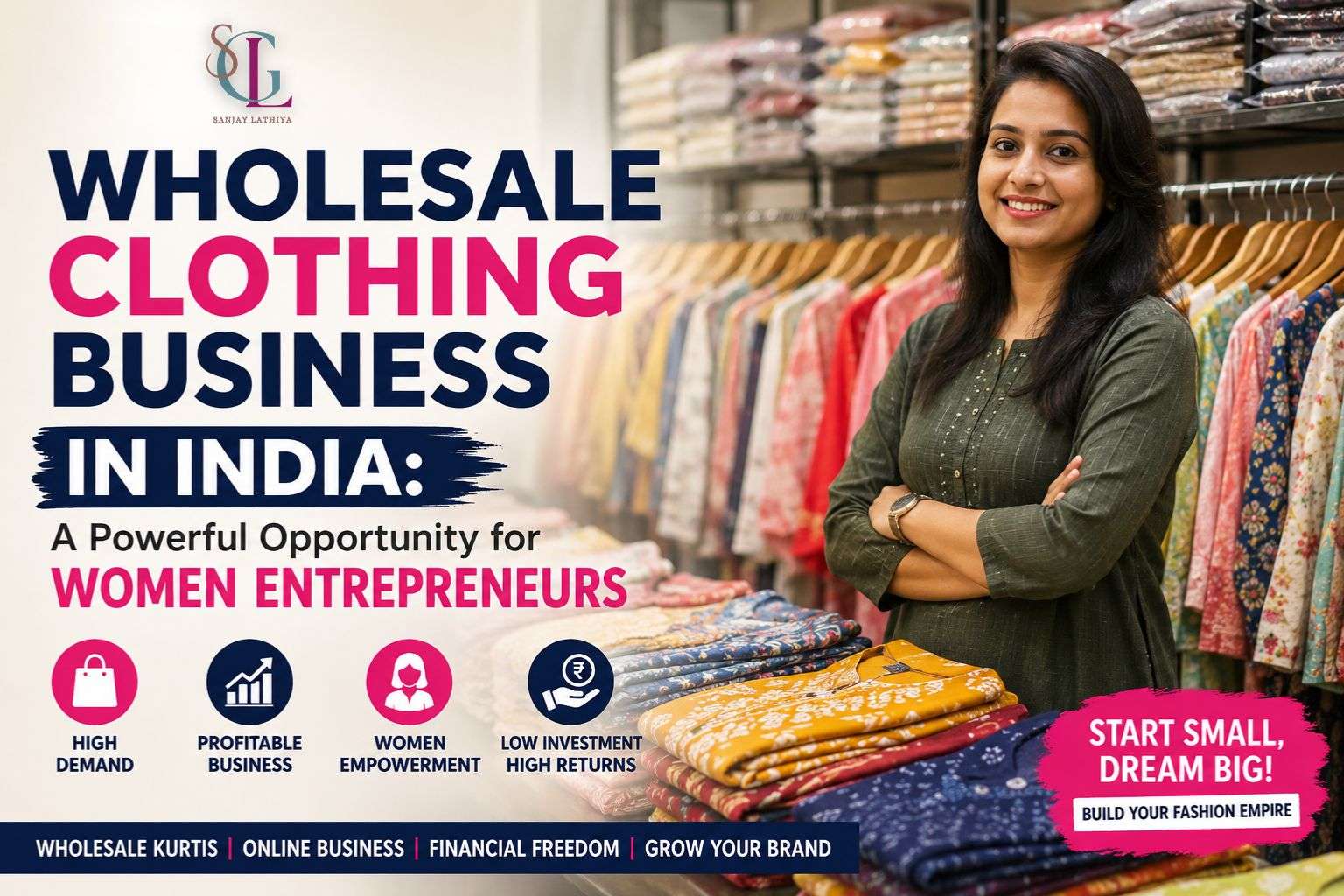
Wholesale Clothing Business in India: A Powerful Opportunity for Women Entrepreneurs
May 28, 2026
The wholesale clothing business in India is becoming one of the fastest-growing business sectors for aspiring entrepreneurs, especially women. India has always been known for textiles, garments, ethnic wear, and fashion manufacturing, but the digital revolution has completely transformed how this industry operates today. From Surat and Jaipur to Delhi and Tirupur, wholesale garment markets are supplying fashion products across India and even internationally. The increasing popularity of online shopping, affordable fashion trends, and social media marketing has opened huge opportunities for new business owners who want to enter the clothing market without massive investment.
According to recent industry reports, India’s textile and apparel sector continues to expand rapidly due to rising domestic demand and export growth. Tirupur alone contributes nearly 55% of India’s knitwear exports, showing how strong the garment ecosystem has become in the country. This growth is not only creating profits for manufacturers but also generating opportunities for resellers, boutique owners, and online wholesalers. Today, even a small home-based business can become a nationwide clothing brand with the help of Instagram, WhatsApp Business, Shopify stores, and marketplace platforms.
If you are planning to start a fashion-related venture, the wholesale clothing business in India offers flexibility, scalability, and strong profit margins. Whether you focus on sarees, kurtis, western wear, or kidswear, there is enormous potential to build a successful brand in today’s fashion market. You can also explore fashion trends and sourcing opportunities through India Brand Equity Foundation Textile Industry Report and the official Ministry of Textiles India for market insights and business updates.
Why the Indian Fashion Industry Is Growing Rapidly
India’s fashion market is no longer limited to big cities. Smaller towns and tier-2 cities are now becoming major fashion consumers because of affordable internet access and the rise of e-commerce platforms. Young buyers want trendy clothing at affordable prices, and wholesalers are fulfilling this demand faster than ever before. The popularity of ethnic wear, fusion outfits, and casual fashion has created a continuous demand cycle throughout the year. Festivals, weddings, office wear, and daily fashion trends keep the clothing industry active in every season.
Social media platforms have also changed consumer behavior dramatically. Fashion influencers on Instagram and YouTube are influencing purchasing decisions daily. A simple kurti design can become a nationwide trend overnight because of viral content. This creates huge opportunities for resellers and wholesalers who can quickly adapt to changing styles. Many entrepreneurs now run successful clothing businesses entirely from home by using reels, live selling, and WhatsApp catalogs.
India’s textile industry is also benefiting from government initiatives, digital payments, and MSME support programs. Reports show that women-led manufacturing businesses are increasing rapidly, especially in apparel and textiles. Around 60% of women-led informal manufacturing firms in India are connected to sectors like clothing and textiles. This proves that fashion and apparel remain one of the strongest industries for future business growth.
Women Entrepreneurs in India Are Changing the Business World
The rise of women entrepreneurs in India is one of the most inspiring transformations happening in the business ecosystem today. Earlier, women mainly participated in small home-based businesses, but now they are building scalable fashion brands, export companies, and online marketplaces. Digital technology has reduced traditional barriers and allowed women to manage businesses from anywhere. From social media marketing to online payments, everything can now be handled using a smartphone.
Recent surveys reveal that women-owned enterprises are growing rapidly in manufacturing and apparel sectors across India. Nearly 27% of proprietary establishments in India are now women-led businesses. Many of these businesses are involved in clothing production, reselling, tailoring, and garment wholesaling. This growth is not just improving financial independence but also creating employment opportunities for other women.
One reason fashion businesses attract female entrepreneurs is flexibility. Women can start small, manage operations from home, and scale gradually without huge investment. Clothing businesses also allow creativity, branding, and direct customer engagement, which makes them highly rewarding. The rise of digital marketplaces and courier services has made it easier than ever to reach customers across India.
The journey of women entrepreneurs in India also reflects changing social attitudes. Families are increasingly supporting women-led startups and fashion ventures. Government schemes like Mudra loans, MSME registration, and women entrepreneurship initiatives are helping business owners access funding and training. These developments are creating a stronger ecosystem where women can confidently enter the wholesale garment industry.
Best Women Entrepreneurs in India and Their Inspiration
When discussing the best women entrepreneurs in India, names like Falguni Nayar, Kiran Mazumdar-Shaw, and Richa Kar inspire millions of aspiring business owners. These women transformed industries by identifying opportunities and building strong brands through innovation and persistence. Their stories prove that success in business does not depend only on investment; it depends on vision, consistency, and understanding customer demand.
Fashion and beauty businesses especially attract women because these sectors allow both creativity and commercial growth. Many successful entrepreneurs started with small operations and later expanded into nationwide brands. This journey is highly relatable for people planning to start a wholesale clothing venture. The clothing market allows entrepreneurs to test products quickly, adapt to trends, and create strong customer loyalty.
The best women entrepreneurs in India also teach an important lesson about branding. Customers today do not only buy products; they buy stories, trust, and identity. Whether you are selling wholesale kurtis or designer ethnic wear, creating a recognizable brand helps build long-term customer relationships. Social media branding, professional packaging, and customer service are now as important as product quality.
Many women entrepreneurs are also focusing on sustainability and ethical fashion. Customers increasingly prefer eco-friendly fabrics, handmade designs, and locally sourced products. Businesses that combine fashion trends with sustainable practices are gaining popularity rapidly. This creates a massive opportunity for new entrepreneurs who want to build modern fashion brands with long-term growth potential.
Wholesale Kurtis for Business – A High Demand Fashion Segment
Among all apparel categories, wholesale kurtis for business remains one of the most profitable and stable segments in India. Kurtis are versatile, affordable, comfortable, and suitable for women of all age groups. They are worn in offices, colleges, casual outings, and festivals, which ensures year-round demand. The best part is that kurtis can be sold both online and offline with excellent profit margins.
The demand for ethnic fashion continues to rise because Indian consumers prefer outfits that combine comfort with tradition. Cotton kurtis, rayon prints, embroidered designs, and Pakistani-style suits are especially popular in the Indian market. Fashion trends evolve regularly, but kurtis continue to remain a timeless product category. This makes them ideal for wholesalers and resellers who want stable sales.
If you are planning to enter the garment industry, focusing on wholesale kurtis for business can be a smart decision. Surat, Jaipur, Ahmedabad, and Delhi are major sourcing hubs for kurti wholesalers. These cities offer thousands of designs at competitive prices. Entrepreneurs can buy directly from manufacturers and sell products through Instagram pages, online stores, WhatsApp groups, or retail boutiques.
Profit margins in the kurti business often depend on branding and presentation. High-quality photography, attractive catalogs, and influencer marketing can significantly increase sales. Many small sellers have turned into successful fashion brands simply by focusing on customer trust and trending designs. In today’s competitive market, presentation matters just as much as product quality.
Problems of Women Entrepreneurs in India
Despite rapid growth, there are still several problems of women entrepreneurs in India that need attention. Access to funding remains one of the biggest challenges. Many women struggle to secure business loans due to lack of collateral or financial history. Even when business ideas are strong, investment opportunities are often limited compared to male-led ventures.
Social expectations also create difficulties for women entrepreneurs. Managing household responsibilities along with business operations can become overwhelming. Many women face challenges in balancing work-life responsibilities, especially during the early stages of business growth. Limited networking opportunities and lack of mentorship can also slow down business expansion.
Another major issue is digital competition. The online fashion market is crowded with thousands of sellers competing for visibility. Without proper SEO, branding, and advertising strategies, new businesses may struggle to attract customers. This is why learning digital marketing, content creation, and customer engagement has become essential for modern entrepreneurs.
The problems of women entrepreneurs in India are gradually reducing because of increasing awareness and support systems. Government programs, online learning platforms, and women entrepreneur communities are helping business owners gain confidence and skills. Today, women are proving that challenges can be transformed into opportunities with determination and smart business planning.
How to Start Wholesale Clothing Business in India
Learning how to start wholesale clothing business in India begins with selecting the right product niche. You need to identify what customers are currently demanding in the market. Ethnic wear, kurtis, co-ord sets, kidswear, and oversized fashion are some of the trending categories today. Choosing a focused niche helps build brand identity faster.
The next step in understanding how to start wholesale clothing business in India is supplier sourcing. Reliable manufacturers are the backbone of every successful wholesale business. Always check fabric quality, stitching standards, pricing, and delivery timelines before partnering with suppliers. Visiting wholesale markets or connecting with verified manufacturers online can help reduce risks.
Creating an online presence is now mandatory for every clothing business. Instagram, Facebook Marketplace, WhatsApp Business, and Shopify stores are powerful tools for generating sales. Posting daily fashion content, customer reviews, and styling videos can help attract potential buyers organically. Fashion businesses that consistently create engaging content often grow faster than those relying only on paid ads.
Customer trust is another major success factor. Transparent pricing, easy returns, quick delivery, and responsive communication can turn first-time buyers into loyal customers. The clothing industry is highly competitive, but businesses that focus on customer satisfaction usually survive long term. Fashion trends may change every season, but trust always remains valuable.
Online Kurti Business Wholesalers and Digital Fashion Growth
The rise of online kurti business wholesalers has completely transformed the fashion industry. Earlier, wholesalers depended mainly on physical markets and exhibitions. Today, digital platforms allow sellers to connect with customers across India instantly. Even small businesses from Surat or Jaipur can now sell products nationwide using social media and courier networks.
Instagram live selling has become especially popular in the ethnic wear market. Fashion sellers showcase new collections in real time and receive orders directly through WhatsApp or DM inquiries. This method reduces marketing costs while creating stronger customer engagement. Influencer collaborations and fashion reels also help increase visibility quickly.
The success of online kurti business wholesalers depends heavily on consistency and branding. Customers trust businesses that regularly update collections, respond quickly, and maintain product quality. Fashion brands that understand customer preferences and seasonal trends often perform better than competitors. Building a recognizable brand identity can eventually lead to higher pricing power and customer loyalty.
Digital advertising also plays a major role in scaling fashion businesses today. Facebook Ads and Instagram promotions allow entrepreneurs to target specific audiences based on age, location, and interests. Combined with SEO-focused blog content and website optimization, these strategies can generate long-term organic traffic and online sales growth.
For trusted wholesale fashion sourcing and garment business opportunities, visit Sanjay Lathiya Official Website to explore fashion business insights and wholesale opportunities.
Conclusion
The Indian fashion industry is entering a powerful growth phase, and entrepreneurs who act early can build highly profitable businesses in the coming years. The wholesale clothing business in India offers low entry barriers, scalable opportunities, and strong demand across online and offline markets. From ethnic wear to trendy kurtis, fashion products continue to attract customers throughout the year.
Women entrepreneurs are becoming major contributors to India’s apparel industry, proving that determination and creativity can create successful businesses even with limited investment. Digital platforms have made it easier than ever to start, market, and scale fashion ventures from home. Whether you are a reseller, boutique owner, or aspiring wholesaler, this is the perfect time to enter the clothing market.
If you focus on quality products, strong branding, customer trust, and consistent marketing, your fashion business can grow faster than expected. The opportunities are enormous for entrepreneurs who are ready to adapt to trends and build a professional online presence.