

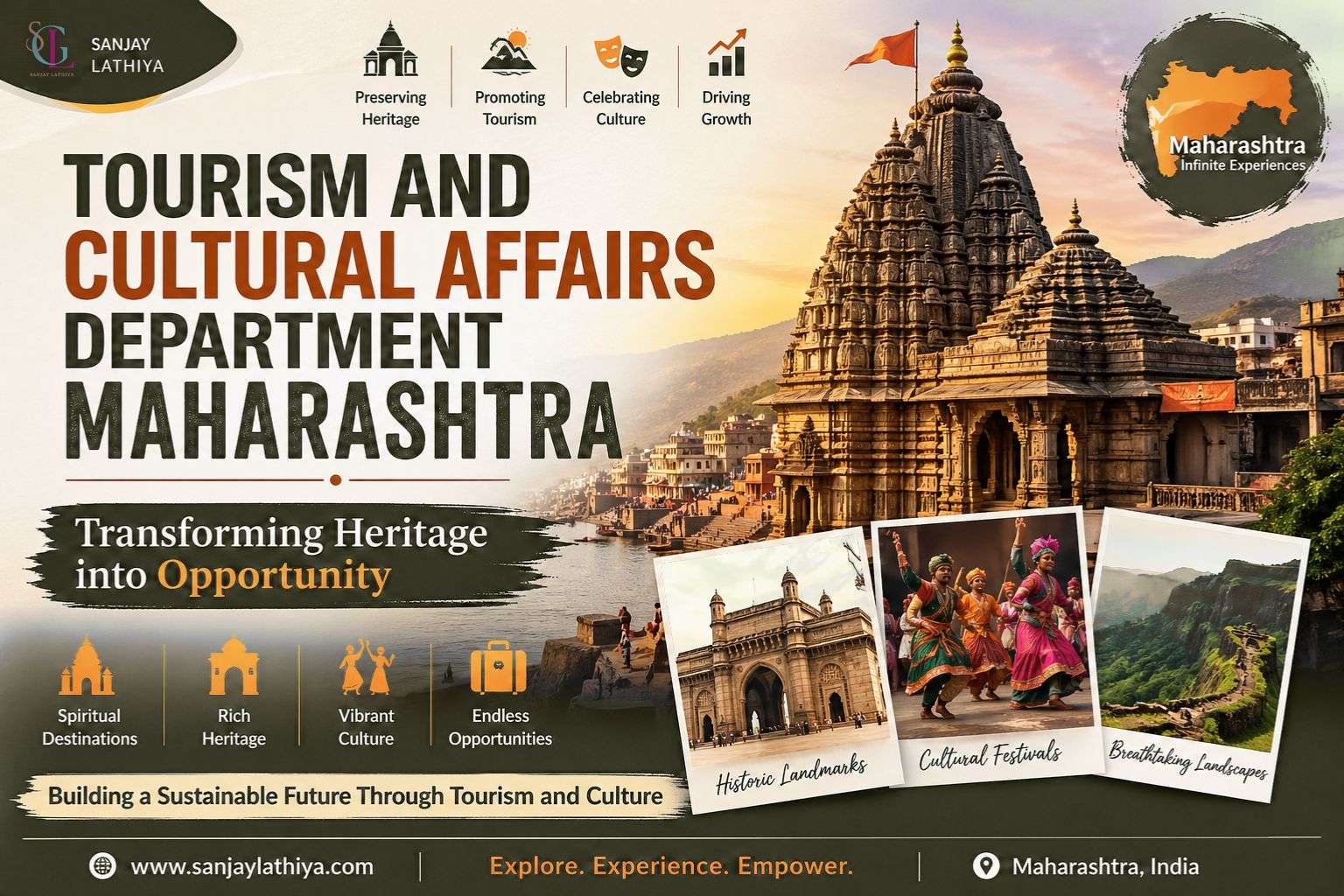
Tourism and Cultural Affairs Department Maharashtra: Transforming Heritage into Opportunity
April 28, 2026
If you’ve ever wondered how a single region can blend spirituality, culture, economy, and tourism so seamlessly, then the tourism and cultural affairs department maharashtra is the perfect example to explore. This department plays a crucial role in shaping Maharashtra into one of India’s most visited states, especially when it comes to religious and cultural tourism. From iconic pilgrimage destinations like Nashik to large-scale events like Kumbh Mela, the department actively promotes tourism while preserving centuries-old traditions.
What makes this even more interesting is how tourism here is not just about sightseeing—it’s about experiencing heritage, spirituality, and local economies all at once. The department focuses on infrastructure development, tourist facilities, and cultural promotion, ensuring that visitors have a seamless experience. According to recent updates, preparations for events like Kumbh Mela 2027 include setting up multiple tourist centers and deploying trained guides to improve visitor experience .
But here’s the bigger picture—tourism in Maharashtra isn’t just about attracting visitors. It’s about creating jobs, boosting local businesses, and strengthening the hospitality industry. Whether you’re a traveler, investor, or blogger, understanding how this ecosystem works gives you a clear edge in leveraging tourism trends for growth.
Role of Tourism Authorities in Maharashtra
The tourism and cultural affairs department maharashtra operates like the backbone of the state’s tourism ecosystem. It doesn’t just promote destinations—it builds entire experiences. From developing heritage circuits to enhancing connectivity between major cities and pilgrimage centers, the department ensures that tourism becomes a sustainable economic driver.
One of the most impactful initiatives is the focus on infrastructure. Better roads, improved rail connectivity, and upgraded tourist facilities have made cities like Nashik more accessible than ever. Nashik, for instance, is located strategically between Mumbai and Pune, making it a convenient destination for both domestic and international tourists .
The department also works closely with local communities. Why does that matter? Because tourism thrives when locals benefit. From promoting handicrafts to encouraging local guides, the department ensures that tourism income reaches grassroots levels. This approach not only preserves culture but also creates a sustainable model for economic growth.
And let’s not ignore digital transformation. Online booking platforms, virtual tours, and tourism apps have made planning trips easier than ever. The department is actively integrating technology to improve user experience, which is a big win for modern travelers.
Temple in Nashik City
When it comes to spiritual destinations, the temple in nashik city scene is nothing short of extraordinary. Nashik is often called the spiritual heart of Maharashtra, and for good reason. Located on the banks of the Godavari River, the city is deeply rooted in mythology, particularly the Ramayana. It is believed that Lord Rama spent part of his exile here, making it a sacred destination for millions of devotees .
The temples here are not just places of worship—they are living pieces of history. Each temple tells a story, whether it’s about ancient dynasties, spiritual practices, or cultural evolution. For instance, the Trimbakeshwar Temple is one of the twelve Jyotirlingas, making it one of the most important Shiva temples in India. Pilgrims from across the country visit this temple to seek blessings and perform rituals.
But Nashik isn’t just about one temple. The city is dotted with numerous धार्मिक sites, including Panchvati, Kalaram Temple, and Sita Gufa. These places are deeply connected to Hindu mythology and attract millions of visitors every year. The presence of ghats along the Godavari River adds to the spiritual atmosphere, making Nashik a complete pilgrimage experience.
Interestingly, Nashik also hosts the Kumbh Mela every 12 years, one of the largest religious gatherings in the world. Millions of devotees gather here, turning the city into a vibrant hub of spirituality and culture.
Historical Importance of Nashik Temples
The history behind every temple in nashik city is fascinating. Many of these temples date back to the 11th and 12th centuries, built during the reign of the Yadava dynasty. These structures are not just religious centers—they are architectural masterpieces that reflect the craftsmanship of ancient India .
Take the example of Trimbakeshwar Temple. Located at the origin of the Godavari River, it holds immense spiritual significance. Pilgrims believe that visiting this temple helps cleanse sins and bring spiritual peace. Similarly, Panchvati is believed to be the place where Lord Rama stayed during his exile, making it one of the most visited spots in Nashik.
What’s even more interesting is how these temples contribute to tourism. They attract not just devotees but also history enthusiasts, architects, and international tourists. This multi-dimensional appeal makes Nashik a unique destination that combines religion, history, and culture seamlessly.
Pilgrimage Tourism in India
Let’s zoom out a bit. The concept of pilgrimage tourism in india goes far beyond Nashik. India is home to some of the world’s oldest and most visited religious sites, attracting millions of tourists every year. From Varanasi to Tirupati, spiritual tourism is a major contributor to the country’s economy.
Recent data shows that cities like Varanasi recorded over 72 million visitors in a single year, highlighting the massive scale of pilgrimage tourism . This surge is driven by improved infrastructure, better connectivity, and increased awareness among younger generations.
But why is pilgrimage tourism so powerful? Because it’s not just about travel—it’s about faith, tradition, and emotional connection. People don’t just visit these places; they experience them. This emotional factor makes pilgrimage tourism one of the most sustainable and growing segments in the travel industry.
The tourism and cultural affairs department maharashtra plays a significant role in this ecosystem by promoting destinations like Nashik, Shirdi, and Pandharpur. By doing so, it contributes to the larger network of spiritual tourism in India.
Famous Pilgrimage Tourism in India
When discussing famous pilgrimage tourism in india, a few destinations always stand out—Varanasi, Tirupati, Shirdi, and Nashik. These places are not just popular; they are iconic. Each destination has its own unique story, rituals, and cultural significance.
For example, Shirdi attracts over 50,000 devotees daily, making it one of the busiest pilgrimage sites in India . Similarly, Nashik’s Kumbh Mela attracts millions of visitors, turning it into a global spiritual hub.
Here’s a quick comparison:
| Destination | Key Attraction | Annual Visitors |
|---|---|---|
| Varanasi | Kashi Vishwanath Temple | 70M+ |
| Shirdi | Sai Baba Temple | 50K daily |
| Nashik | Kumbh Mela & Temples | Millions |
| Tirupati | Balaji Temple | 30M+ |
These destinations not only promote spirituality but also drive economic growth by boosting local businesses, transportation, and hospitality sectors.
Growth of Hospitality Industry in India
The rise of growth of hospitality industry in india is directly linked to tourism, especially pilgrimage tourism. As more people travel for religious and cultural experiences, the demand for hotels, restaurants, and travel services continues to grow.
Cities like Nashik are prime examples of this transformation. With increasing tourist inflow, the city has seen rapid development in hotels, resorts, and guesthouses. Even smaller towns are now investing in hospitality infrastructure to accommodate pilgrims.
The tourism and cultural affairs department maharashtra supports this growth by encouraging investments and improving facilities. Initiatives like developing MICE hubs and promoting wine tourism are creating new opportunities in the hospitality sector.
What’s fascinating is how this growth creates a ripple effect. More tourists mean more jobs, better infrastructure, and increased revenue for local businesses. It’s a cycle that benefits everyone—from large hotel chains to small street vendors.
Growth of Tourism and Hospitality Industry
The growth of tourism and hospitality industry in India is not just steady—it’s accelerating. With government initiatives, improved infrastructure, and digital advancements, the industry is experiencing unprecedented growth.
Tourism contributes significantly to India’s GDP, and pilgrimage tourism plays a major role in this. Events like Kumbh Mela and major festivals attract millions of visitors, creating massive demand for accommodation and services.
In Maharashtra, the tourism and cultural affairs department maharashtra is actively working to enhance this growth by developing tourist circuits, improving connectivity, and promoting lesser-known destinations. This balanced approach ensures that tourism benefits multiple regions rather than just a few hotspots.
Impact of Festivals on Indian Economy
Now let’s talk about something exciting—the impact of festivals on indian economy. Festivals in India are not just cultural events; they are economic powerhouses. From Diwali to Holi, each festival drives massive spending across sectors like retail, travel, and hospitality.
For instance, Holi celebrations in 2026 attracted over 4.4 million visitors in certain regions, significantly boosting local economies . Similarly, Kumbh Mela generates billions in revenue through tourism, transportation, and local businesses.
In Nashik, festivals play a crucial role in attracting tourists. The Kumbh Mela, in particular, transforms the city into a global destination. This influx of visitors creates opportunities for hotels, restaurants, transport services, and even small vendors.
The tourism and cultural affairs department maharashtra leverages these festivals to promote tourism and generate economic growth. By organizing events and improving infrastructure, the department ensures that festivals become a major driver of the state’s economy.
India as a Festive Economy
The idea of india as a festive economy is gaining traction, and for good reason. Festivals are deeply embedded in Indian culture, and they drive significant economic activity. From shopping to travel, festivals influence consumer behavior in a big way.
Think about it—during festivals, people travel more, spend more, and participate in cultural activities. This creates a surge in demand for goods and services, benefiting multiple industries.
The tourism and cultural affairs department maharashtra understands this dynamic and actively promotes festival tourism. By doing so, it not only preserves cultural traditions but also boosts the economy.
Conclusion
The journey through Maharashtra’s tourism landscape reveals something powerful—tourism is not just about destinations; it’s about experiences, culture, and economic growth. The tourism and cultural affairs department maharashtra plays a pivotal role in shaping this ecosystem, ensuring that tourism benefits both visitors and local communities.
From the spiritual charm of Nashik temples to the booming hospitality industry, every aspect of tourism contributes to India’s growth story. Whether you’re exploring pilgrimage tourism or analyzing economic trends, one thing is clear—tourism is a driving force behind India’s development.
If you’re looking to leverage this trend, now is the perfect time to dive in. And if you want expert insights, visit Sanjay Lathiya to explore more opportunities in tourism and business growth.