

Technology and Mental Health: Balancing Screen Time & Wellbeing in the Digital Age
August 12, 2025
Technology and Mental Health
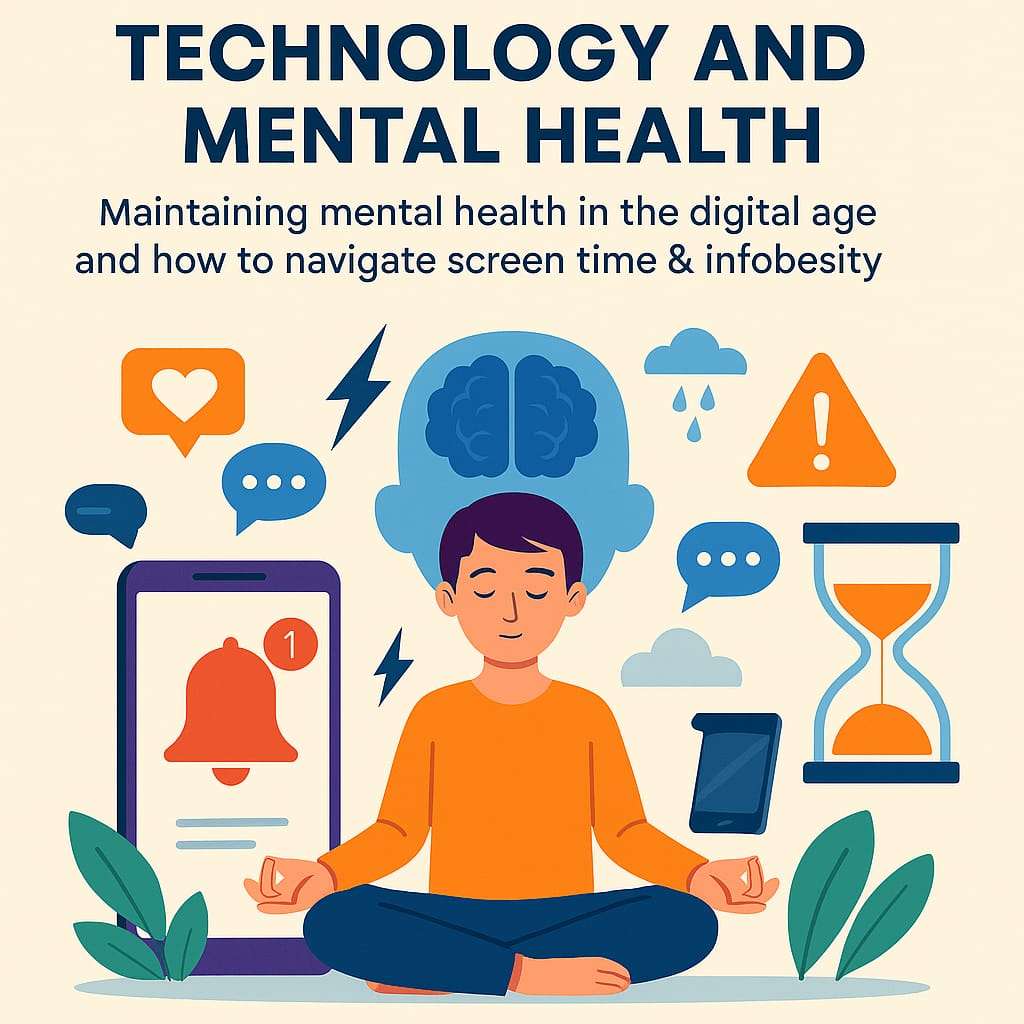
Maintaining mental health in the digital age and how to navigate screen time & infobesityIn this day and age, the way technology and mental health interact (technology addiction is a real possibility amongst youth as well) or even the impact of social media on anxiety are highly debatable arguments. Notifications and updates on your digital devices seem never-ending. While technology facilitates connection and is highly practical, it comes at a price for mental health. In the digital age, striking a balance between technology benefits and one's mental health is crucial.
Mental Health and Digital Technology
Mental health and digital technology has altered our lifestyle, how we work, and even how we learn. It has brought with it, instant means of communication, remote jobs, and access to endless reservoirs of information. The availability of internet and social media has enabled connectivity across the globe and has fostered mental health awareness, therapy, and even self-help on demand. Though on the upside, technology fosters interactions, it along with constant connectivity, perpetuates the stress of reliance and the prevalence of doomscrolling. Without mindful usage, the increasing reliance on technology leads to emotional and mental imbalances.Technology Addiction and Mental Health
Technology addiction and mental health is a modern age concerns, and this is the fear of missing out without technology. People, for example, compulsively feel and check their mobile phones, feel anxious, need to refresh, or get a little uncomfortable in their seats. There may be notifications that help to improve a person's mood, either through comments or likes, which make it quite engaging. In the modern age, there is so much content that getting hooked is common. The ability of technology to impact psychology, sleep, is common. But with the constant distraction of scrolling from modern phones, sleep disturbances, heightened anxiety, and even low mood are on the rise. This form of addiction is bound to change all of this.Technology and Children's Mental Health
Technology and children's mental health is becoming a critical area of concern. Kids are living in a world where phones and tablets are absolutely everywhere. A child’s social and emotional skills might be hindered by education apps and online learning. Technology’s overuse can interfere with a child’s ability to have healthy friendships and face challenges in real life. In addition, children are facing the negative effects of unattainable online standards, resulting in low self-worth, body image issues, and early onset of anxiety and self-doubt.Impact of Social Media on Anxiety
While social media has pros, the cons are worrying as well. It brings anxiety and gives people opportunities to comment and share. While this offers a lot of conveniences, it can also aggravate a person’s anxiety levels. Social Media platforms tend to promote a painstakingly crafted version of reality, which is used to gauge, compare, and refine a person’s life. As if this wasn’t enough, the constant buzz of “likes” and comments only adds to the proverbial icing on the cake. In addition, contemporary online bullying and stalking has contributed more than enough to emotional stress.Benefits of Digital Detox
A benefits of digital detox isn’t just turning off your phone; it’s also one way of clearing and reclaiming mental space. Giving a break from technology grants an opportunity for the brain to reset. A break can enhance focus and boost creativity, as well as improve relationships in the real world. Regularly engaging in digital detoxes improves anxiety, sleep, and positivity. Removing digital ties helps to “reset” the brain, as well as helps to realize life can be fully lived by not being constantly connected 24/7.Screen Addiction Symptoms
Screen addiction symptoms usually begin gradually, starting from extended online browsing until a time comes when an individual becomes compulsively online. Distance from the device can trigger the feeling of anxiety and also irritability. The addiction can be expensive in the long run by damaging work and relationships, as well as impacting health. Commonly associated with the addiction are also headaches, straining of the eyes, and bad posture. If one recognizes the signs and symptoms, it is possible to reverse the “damaged” effects of the addiction.Ways to Reduce Screen Time
Making an effort to ways to reduce screen time doesn’t mean getting rid of technology entirely; it just means managing its use better. Striving to achieve daily goals, offline hobbies, and blocked screen hours can help attain better control. Also, avoiding screen time during the first few hours after waking up can help improve rest. These changes, though small, can significantly improve the offline and online balance.Blue Light Effect on Sleep
Blue light effect on sleep is one of the main reasons screens interfere with the sleep of the human body. Televisions and mobile phones are not the only devices that interfere with the sleep cycle; rather, the blue light emitted from devices is the main culprit that disrupts the order. Sleep is important for all living beings. Lack of sleep can result in poor mood, lack of concentration, and enhancement of stress. To combat poor sleep, blue light glasses and the night mode feature of smartphones can be used. The screens of smart devices can also be kept an hour before sleep.Information Fatigue
Because of new technology, the average person receives more information than the average person so much information will lead to mental exhaustion. Information fatigue can lead to trouble focusing, retaining information, or making mental decisions. The ceaseless stream of breaking news, fresh social media posts, and round-the-clock notifications propels the mind to perpetual overdrive and leaves no space for contemplation or restore.Information Fatigue Syndrome
When rest periods are neglected and the syndrome is recurring, it can lead to information fatigue syndrome. IOS is marked by rest and meditation, indecisiveness, and a vague sense of chronic overload. IOS sufferers are unable to make decisions or set priorities and feel the urge to struggle to unwind. To counter these issues, IOS sufferers need to proactively employ strict “Do Not Disturb” periods, establish rigid content guidelines, and stop all mental activity.Online Burnout Recovery
The feeling of being “burned out” online refers to feeling mentally and emotionally drained from being online for long periods of time. Online burnout recovery begins with acknowledging the signs, like a fuzzy brain, feeling spacey, or being emotionally flat, and trying to turn off devices for a while. Balance can be restored and mental energy can be recharged by exercising, pursuing hobbies that don't require a screen, and spending time outdoors.Mindfulness for Digital Balance
Mindfulness for digital balance can be an effective remedy to control online activities. Mindful scrolling, for example, allows a person to be aware of the content that they are scrolling through, and ask if the content being scrolled through is adding value, and to close the app if it no longer serves their wellbeing. Intention setting while going online and self-checking with the intention reinforces self-limits and motivates a more fruitful relationship with devices and technology.Tech-Life Balance Strategies
Tech-life balance strategies require ongoing commitment and vigilance. Tech-life interacts here with technology while setting the use of screen time with family activities, setting boundaries, and purposeful use of devices. Strategic use of technology with a sound mental framework from the individual enhances the fruitful use of technology while keeping their relationships and mental wellbeing intact.Digital Stress Management
Digital stress management addresses the result of modern-day burdens, including work expectations, the need to always be connected, or the constant pressure of social media. Relaxation techniques such as deep breathing, meditation, or physical movement offer solutions to mitigate such stress. Digital devices and the internet are the main contributors to relaxation stress. Thus, ensuring a non-digital space free of distractions would be helpful.Effects of Smartphones on Mental Health
While smartphones are a source of productivity, their constant accessibility is a source of cerebral overstimulation and dependency. Moreover, the constant bombardment of notifications leads to a decreased ability to concentrate on the task at hand, accompanied by increased social anxiety. The overstimulation mentioned above can also have detrimental effects of smartphones on mental health.Managing Work-from-Home Screen Time
Although remote work is flexible, it usually results in increased work-related screen time. Managing work-from-home screen time is essential as defined frameworks are also harder to distinguish, leading to work hours trailing into personal hours, which results in work-related fatigue. Break intervals, ergonomic computer use, and appropriate lighting are some measures which enhance remote work behavior while assuring the subject’s mental and physical wellbeing.Mental Health Tips for the Digital Era
Mindful practices for daily mental health tips for the digital era. Better rest, less screen time, and more physical exercise likewise advantage emotional well-being. How important it is to unplug and enjoy reading, cooking, or simply doing nothing.Technology can definitely be a wonderful creation, but like any creation, it has to be handled with care. Balance is not a luxury to have in the modern, constantly evolving digital world. We can have healthy minds, enjoy the best that technology has to offer, if we detect when digital fatigue rears its head, create safe boundaries and relationships offline.
News & Information: sanjaylathiya.com