

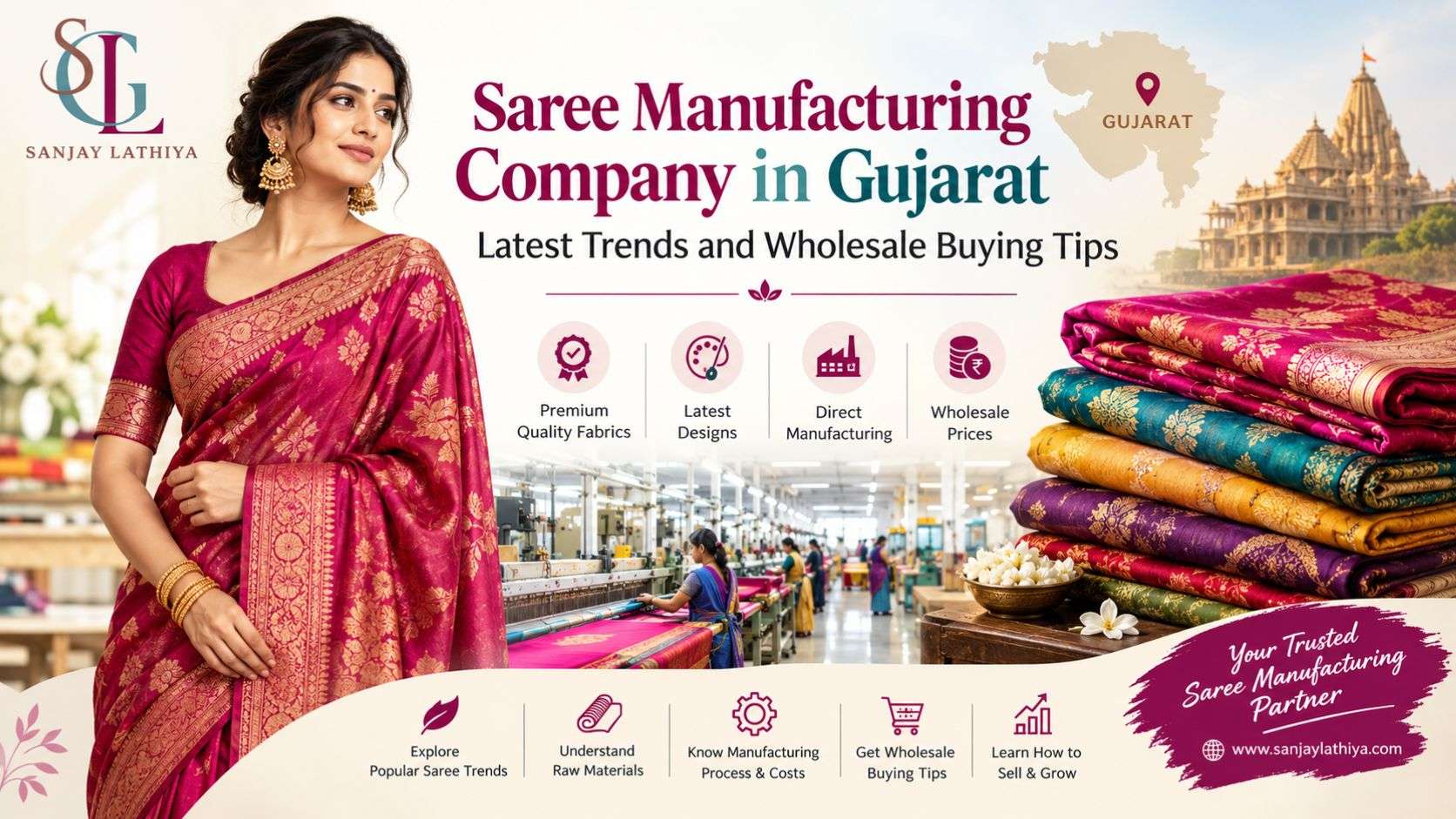
Saree Manufacturing Company in Gujarat: Latest Trends and Wholesale Buying Tips
October 10, 2026
Gujarat is one of India's important textile and garment production hubs, offering opportunities for retailers, boutique owners, wholesalers, and online sellers. From traditional printed sarees to embroidered party-wear collections, buyers can explore a wide variety of designs at different price points. Choosing the right saree manufacturing company can help businesses source quality products, manage costs, and build a reliable inventory.
Whether you want to launch a saree business or expand an existing clothing store, understanding current trends, manufacturing processes, raw materials, and wholesale purchasing strategies is essential. This guide explains how to evaluate suppliers, estimate costs, and sell sarees profitably.
Saree Manufacturers in India: Understanding the Market
India's saree industry includes handloom weavers, powerloom units, printing businesses, embroidery workshops, and large garment manufacturers. Each supplier offers different production capabilities, minimum order quantities, designs, and prices. Buyers should compare these factors before placing bulk orders.
A reliable saree manufacturing company should provide clear product specifications, consistent quality, transparent pricing, and realistic delivery timelines. Request fabric details, available colours, size specifications, and product photographs before confirming an order.
For general textile-industry information, explore the Ministry of Textiles, which provides information about India's textile sector, policies, and industry initiatives.
Surat Saree Manufacturing Company List: How to Evaluate Suppliers
Surat is widely known for its synthetic fabrics, saree processing, printing, embroidery, and wholesale textile markets. Buyers can find suppliers offering georgette, chiffon, silk-blend, satin, and embellished sarees for different customer segments.
When preparing a surat saree manufacturing company list, compare manufacturers according to product specialisation, fabric quality, production capacity, wholesale rates, and shipping arrangements. Verify business details and request samples where possible. A supplier that offers attractive prices may not necessarily provide the consistency your customers expect.
Before selecting a manufacturer, ask these questions:
-
Does the supplier manufacture sarees directly or trade products from other businesses?
-
What is the minimum order quantity for each design?
-
Can the manufacturer provide custom colours, prints, or embroidery?
-
Are sample orders available before bulk purchasing?
-
What are the payment, dispatch, return, and defect policies?
These checks can reduce purchasing risks and help you build long-term supplier relationships.
Surat Saree Manufacturing Company: Latest Designs and Production Options
A surat saree manufacturing company may specialise in printed sarees, fancy party-wear styles, embroidered designs, traditional patterns, or lightweight daily-wear collections. Selecting a manufacturer that matches your customer preferences helps you avoid slow-moving inventory.
Current design opportunities include floral prints, lightweight festive sarees, contemporary colour combinations, traditional motifs, and embellished occasion-wear styles. Retailers should review actual samples rather than relying only on catalogue photographs because colour, fabric texture, and finishing can differ.
When comparing manufacturers, consider whether they support repeat orders and can maintain consistent quality across production batches. This is particularly important for retailers and online sellers who want to replenish popular designs.
Latest Saree Trends Retailers Should Consider
Saree buyers often look for a balance of style, comfort, quality, and affordability. Retailers can develop a more versatile collection by stocking products for different occasions rather than investing their entire budget in one category.
Everyday sarees: Cotton, rayon, and lightweight printed options appeal to customers seeking comfortable clothing for regular use.
Festive sarees: Rich colours, decorative borders, jacquard patterns, and subtle embellishments can attract buyers preparing for celebrations.
Wedding and party-wear sarees: Embroidery, sequins, zari work, and premium-looking fabrics can suit customers with higher budgets.
Contemporary designs: Minimalist patterns, pastel shades, modern prints, and lightweight drapes may appeal to younger shoppers.
Study local demand, customer feedback, and sales records before making large purchases. Trends vary by season, location, and target audience, so smaller test orders can help identify products that sell well.
Raw Materials Used in Saree Manufacturing
Producing a saree involves several materials and processes. The final product cost depends on the fabric, design complexity, labour, finishing, and quantity produced.
Common raw materials include:
-
Cotton yarn and fabric: Used for breathable everyday sarees and traditional cotton collections.
-
Polyester and georgette fabrics: Popular choices for lightweight and affordable fashion sarees.
-
Silk and silk-blend fabrics: Used for premium, festive, and traditional designs.
-
Dyes and printing materials: Add colours, patterns, and decorative effects.
-
Zari, thread, sequins, and embroidery materials: Used to create borders and embellished designs.
-
Packaging materials: Protective bags, labels, cartons, and shipping supplies help prepare products for distribution.
Manufacturers may source greige fabric or yarn, arrange weaving or knitting where relevant, and then undertake dyeing, printing, embroidery, finishing, inspection, and packaging. The exact process varies with the fabric and saree style.
How Much Does It Cost to Manufacture a Saree?
There is no single manufacturing cost for every saree. A simple printed saree can cost substantially less to produce than a premium silk saree with intricate embroidery. Prices also vary with order volume, material quality, labour, and customisation.
To estimate your cost, include:
-
Fabric or yarn procurement.
-
Weaving, dyeing, or printing charges.
-
Embroidery, borders, and decorative materials.
-
Cutting, finishing, quality checks, and labour.
-
Packaging, transport, taxes, and other applicable expenses.
For example, if your total landed cost is ₹400 per saree and you sell it for ₹600, your gross profit is ₹200 per saree before other business expenses. This equals a 33.3% gross margin on the selling price, not a net profit of 33.3%. Always calculate costs using actual supplier quotations and applicable taxes.
How to Buy Sarees Wholesale Successfully
A dependable saree manufacturing company can support your business with repeatable quality, suitable pricing, and access to new collections. Before committing to a large order, compare multiple suppliers and confirm all commercial terms in writing.
Start with a focused selection of designs and quantities. Check fabric composition, colour consistency, stitching, border finishing, and embellishment quality. Ask whether damaged items can be replaced and whether popular designs will remain available for repeat orders.
Buyers who need broader product information can also consult the India Handloom Brand website to learn about handloom products and related quality-oriented initiatives. Remember that handloom and powerloom products are different, and product claims should always be verified.
How to Sell Sarees and Grow Your Business
After purchasing your inventory, choose sales channels that fit your budget and audience. You can sell through a physical retail shop, boutique, reseller network, social media, online marketplaces, or your own e-commerce website.
Use clear product photographs, accurate fabric descriptions, transparent prices, and straightforward shipping policies. Offer collections for everyday wear, festivals, weddings, and gifting to reach different customer groups. Monitor which designs generate enquiries and repeat purchases, then reorder according to actual demand.
If you manufacture your own products, calculate a selling price that covers materials, labour, overhead, packaging, shipping, taxes, and marketing while leaving a reasonable profit. If you resell finished sarees, compare the landed wholesale cost with the price customers are willing to pay.
For more information about the business and its services, visit Sanjay Lathiya's website.
Conclusion
Gujarat offers diverse opportunities for saree retailers and wholesale buyers, especially those exploring Surat's textile ecosystem. Choosing the right saree manufacturing company requires more than comparing prices: evaluate product quality, production capabilities, order quantities, delivery reliability, and after-sales support.
Start with market research, source appropriate raw materials or finished products, calculate total costs, and test customer demand before scaling up. A practical buying and selling strategy can help your saree business manage inventory, serve customers effectively, and pursue sustainable growth.