

Robots in Car Manufacturing Industry | Smart Manufacturing Robots Revolutionizing Auto Production
October 10, 2025
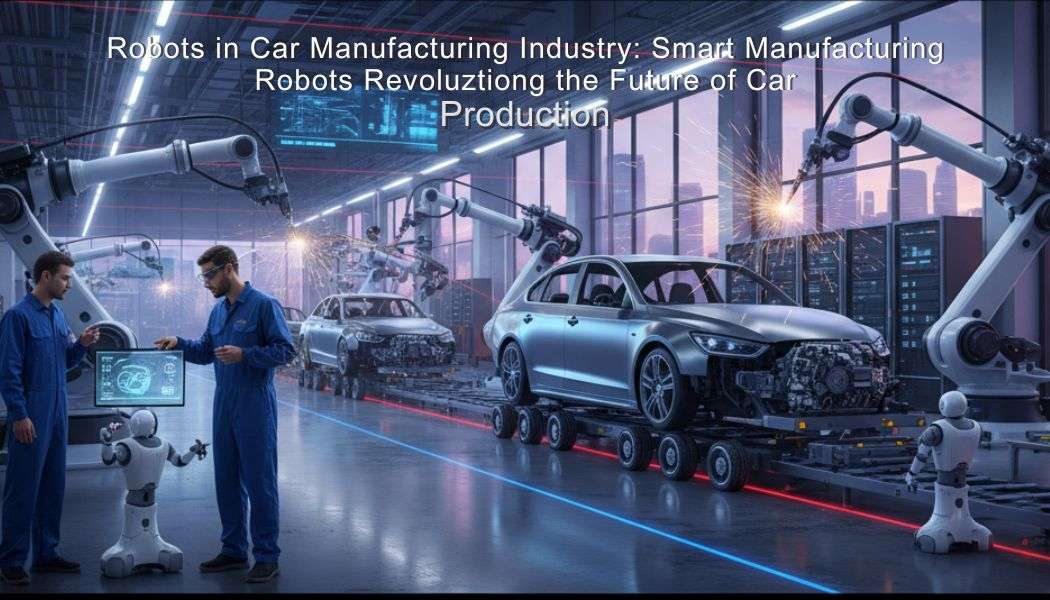
Robots in Car Manufacturing Industry: Smart Manufacturing Robots Revolutionizing the Future of Car Production
The intelligent smart manufacturing robots are here to stay and the automotive production industry is on the cutting edge. From welding to assembling and painting, robots have revolutionized the way automobiles are built. In the present competitive auto industry, automation is no longer something you can afford; it's an essential. With these sophisticated robots, there is always accuracy, increased speed in production, and less human error. They also increase the safety of the workers by performing heavy and dangerous work. Modern robots can become adaptable to more complicated designs and execute a variety of tasks with the help of the implementation of AI. A more innovative, cost-effective, and sustainable future of car manufacturing is being created through the use of smart manufacturing robots.
The Rise of Robots in the Car Manufacturing Industry
Modern robots in car manufacturing industry are more sophisticated, more efficient, quicker, and smarter than ever. They can handle tasks that used to be challenging for human beings. They carry out repetitive tasks in a manner that is fast, precise and secure. Robots from industrial robots make the auto manufacturing process more efficient, cost-effective and adaptable.
In India, the demand for automated machines has risen quickly. Numerous industrial robot manufacturers in India are creating innovative solutions for the production of automobiles. Companies such as ABB, Fanuc, and KUKA are investing in robotics to address the growing demands of automakers. The integration of robotics in automobile manufacturing isn't only a trend, it's the basis of intelligent manufacturing.
Applications of Robots in Manufacturing Industries
Application of robots in manufacturing industries can be seen across various sectors. Robots are all over manufacturing production industry and perform crucial functions which ensure high productivity. The applications of robots within manufacturing industries encompass a broad range of purposes:
-
Assembly and welding: Robots can handle complicated welding tasks with unparalleled precision.
-
Material Handling: Automated robots move the heavy components efficiently, decreasing the risk of injury to workers.
-
Coating and painting: Robots help in making the best output, mainly due to which ends up making the car look brand new at the end of the making process.
-
Quality and inspection: Computer software used ensures that any imperfections are identified, if any, are kept at the lowest accurate level.
These are the kinds of software that make the manufacturing process more and more efficient.
Human Robot Collaboration in Manufacturing
The idea that combined human efforts will manufacture robots is no longer a matter of the future. Unlike traditional robots, cobots can work in a danger-free manner within humans. They have a higher level of intelligence, and sensor-based AI can work safely and in conjunction.
In car plants, they help workers in reducing the weight of routines and humans; reduce the time they can do—this whole process increases productivity and humanity. Combining human intelligence and the efficiency of robotics is what makes human robot collaboration in manufacturing smart and efficient in today’s industry.
Benefits of Robots in Manufacturing
The benefits of robots in manufacturing are endless. Automation provides the sameness, speed, and precision that human labour is unable to achieve. Let's take a look at the key benefits:
-
Increased effectiveness: Robots operate 24/7 with no fatigue, ensuring constant production.
-
Savings on costs: Although the initial expenditure is costly, the longer-term savings from fewer mistakes and waste are substantial.
-
Increased protection: Robots handle hazardous jobs, while minimizing injuries to workers.
-
Better quality: Automation assures uniform product quality, hence less rework.
-
Scalability: The use of robots that are flexible allows the rapid adjustment of the company to the needs of the market.
With the implementation of smart manufacturing robots, industry is not just saving money and time, but also increasing their reliability and technological innovation.
Smart Manufacturing of Agile Robotics and Things
The future of manufacturing is in the smart manufacturing of agile robotics and things. This idea combines Artificial Intelligence (AI), the Internet of Things (IoT), and robotics to build fully automated systems.
Smart factories make use of interconnected machines that are able to communicate in real-time to enable automated maintenance and seamless workflow. For example, a robot arm that is equipped with AI can determine the time it will require maintenance before it fails.
In the manufacturing of automobiles, this flexibility allows factories to create customized vehicles quicker and more effectively. Every step of the process, from design through final inspection, is connected by data and automation.
Why Smart Manufacturing Robots Are the Future
The trend towards smart manufacturing robots has transformed how manufacturing is conducted globally. They are modifiable to the dynamic needs of production and thus ideal to industries that are vibrant like the automotive.
In a time when sustainability and efficiency are priorities, robotics help to reduce waste, improve the use of resources, and reduce energy use. Additionally, AI-powered robots continually improve and learn, enhancing their capabilities and resulting in more intelligent decision-making.
In India, the country's Indian government's "Make in India" initiative has led to the rapid adoption of advanced manufacturing systems. Industrial robot manufacturers in India are creating new technologies to meet global standards and are providing efficient solutions for automakers as well as different industries.
The Role of Artificial Intelligence in Smart Manufacturing Robots
Artificial Intelligence acts as the mind behind today's smart manufacturing robots for manufacturing. AI enables robots to recognize patterns, improve performance, and take decisions without human input.
For instance, machine-learning algorithms let robots detect imperfections in automobile parts with near-perfect precision. They are also able to alter speed and force in accordance with the materials they work with. This ability to adapt makes AI-driven robotics indispensable for factories that can be future-proofed.
Thanks to IoT integration, the data gathered from sensors allows manufacturers to keep track of their operations in real-time. This improves efficiency but also guarantees sustainability and energy efficiency in manufacturing.
Conclusion: Moving the Future by Utilizing Smart Manufacturing Robots
The automobile industry is growing more quickly than ever before and smart manufacturing robots are driving this evolution. They bring together technology, automation, and human robot collaboration in manufacturing to produce efficient and scalable production systems.
From the application of robots in manufacturing industries to collaborative robots with humans, every aspect of modern-day manufacturing has been reinvented. As industrial robot manufacturers in India are continuing to develop new technologies, the future of automobile manufacturing is brighter, more intelligent, and more connected than ever before.
The age of smart manufacturing of agile robotics and things has arrived—transforming not just how we make cars, but how we think about manufacturing itself.