
Kurti, Saree, Dress & Lehenga HSN Code Guide for Textile Businesses in India
May 25, 2026
Kurti, Saree, Dress & Lehenga HSN Code Guide in India
The textile and apparel business in India is growing rapidly, especially in ethnic wear categories like kurtis, sarees, dress materials, lehenga choli, and readymade garments. Whether you are a wholesaler, retailer, manufacturer, reseller, or online seller, understanding the correct HSN code is extremely important for GST billing, e-invoicing, accounting, and smooth business operations.
Many garment businesses face GST notice issues simply because of incorrect HSN classification. Therefore, choosing the correct HSN code for products like kurtis, sarees, dresses, and unstitched dress materials is essential for legal compliance and proper taxation.
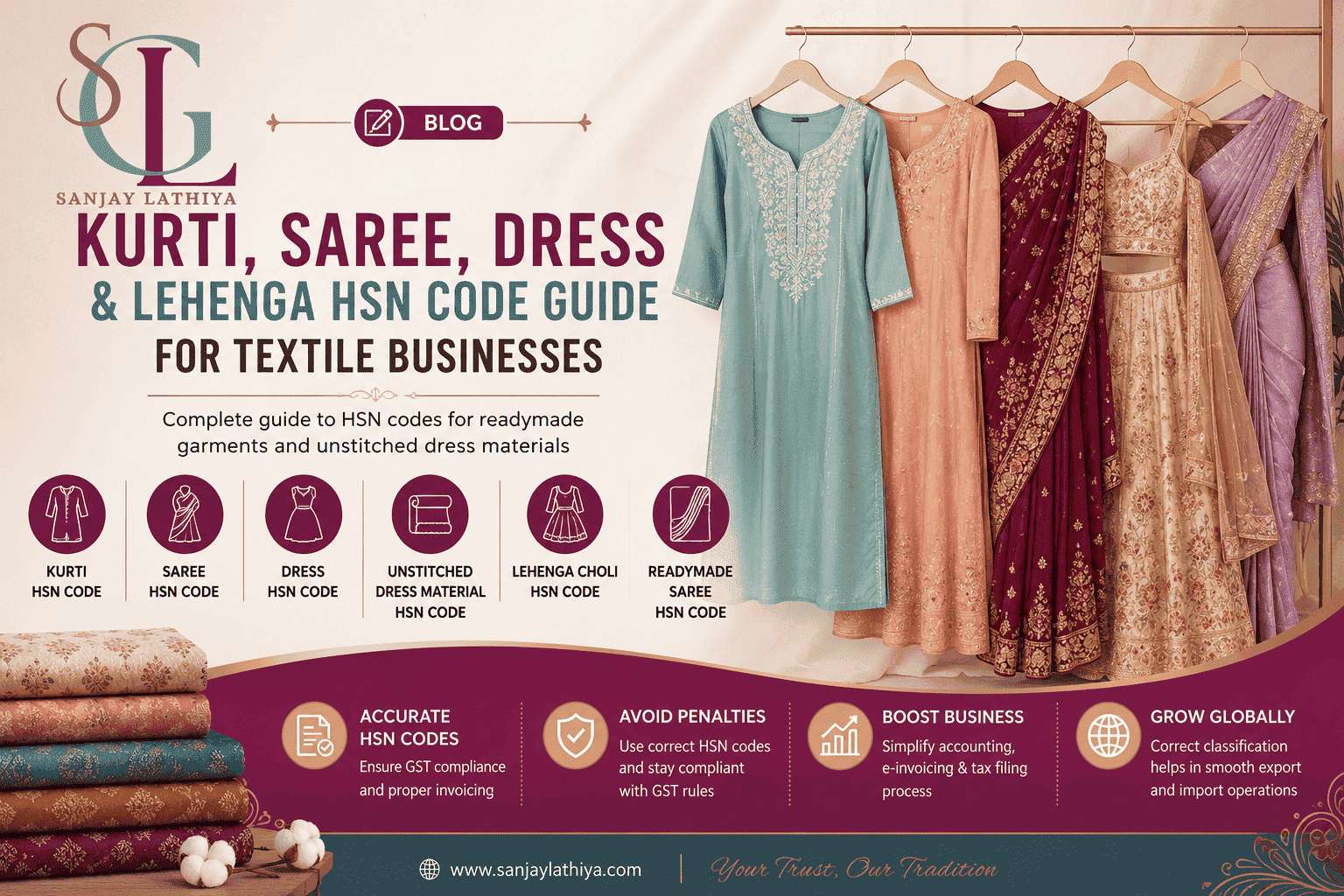
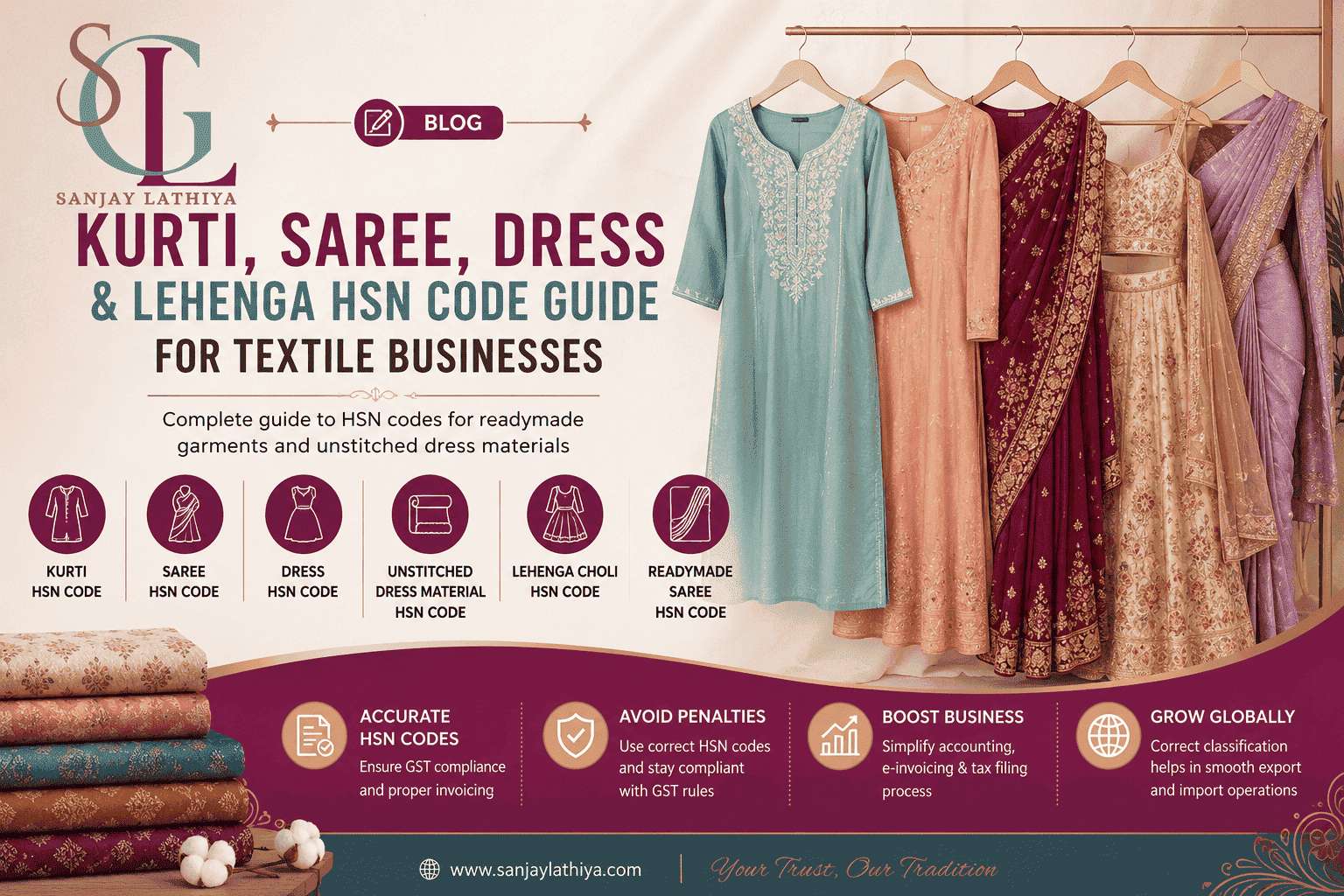
In this detailed guide, we will explain the commonly used HSN codes for:
-
Kurti HSN Code
-
Saree HSN Code
-
Dress HSN Code
-
Unstitched Dress Material HSN Code
-
Lehenga Choli HSN Code
-
Readymade Saree HSN Code
This guide is useful for textile wholesalers, boutique owners, garment exporters, ecommerce sellers, and GST-registered businesses across India.
What is an HSN Code?
HSN stands for Harmonized System of Nomenclature. It is an internationally accepted product classification system used for taxation and trade. In India, HSN codes are used under the GST system to classify goods and determine applicable GST rates. (cleartax)
Every textile and apparel category has a separate HSN code depending on:
-
Fabric type
-
Product category
-
Whether the item is stitched or unstitched
-
Knitted or woven construction
-
Readymade or fabric material
Using the correct HSN code helps businesses:
-
Generate proper GST invoices
-
Avoid tax penalties
-
Simplify export-import documentation
-
Improve accounting accuracy
-
Maintain GST compliance
Kurti HSN Code
Kurtis are among the most popular women’s ethnic wear products in India. The HSN code for kurtis generally falls under women’s readymade garments category.
Common Kurti HSN Code
| Product | HSN Code |
|---|---|
| Readymade Kurti | 6204 |
| Cotton Kurti | 6206 / 6204 |
| Knitted Kurti | 6104 |
The most commonly used HSN code for ladies readymade kurtis is 6204. (ENTERSLICE PRIVATE LIMITED)
Some classifications may differ depending on:
-
Cotton fabric
-
Synthetic material
-
Knitted garments
-
Embroidery work
GST on kurtis is usually charged at 5% or 12% depending on pricing and classification. (ENTERSLICE PRIVATE LIMITED)
Saree HSN Code
Sarees are classified according to their fabric composition. Cotton sarees, silk sarees, and synthetic sarees may all have different HSN codes.
Common Saree HSN Codes
| Saree Type | HSN Code |
|---|---|
| Cotton Saree | 5208 / 520859 |
| Silk Saree | 5007 / 500790 |
| Synthetic Saree | 5407 / 540754 |
Cotton sarees generally fall under HSN 5208 series, while silk sarees are classified under 5007. Synthetic sarees usually come under 5407. (https://www.bajajfinserv.in)
Businesses selling:
-
Banarasi sarees
-
Linen sarees
-
Cotton sarees
-
Georgette sarees
-
Fancy sarees
-
Designer sarees
must select HSN codes based on fabric type.
Dress HSN Code
Women’s dresses and western garments usually fall under Chapter 62 of GST classification.
Common Dress HSN Code
| Product | HSN Code |
|---|---|
| Ladies Dress | 6204 |
| Cotton Dress | 620442 |
| Synthetic Dress | 620443 |
Women’s dresses made from woven fabric generally use HSN code 6204. (cleartax)
This category includes:
-
One-piece dresses
-
Ethnic dresses
-
Casual dresses
-
Fashion dresses
-
Designer dresses
The GST rate is commonly 5% or 12% depending on product value and classification.
Unstitched Dress Material HSN Code
Unstitched dress materials are widely sold in wholesale textile markets. Since these products are fabric-based and not stitched garments, the HSN classification differs from readymade apparel.
Common Unstitched Dress Material HSN Codes
| Product | HSN Code |
|---|---|
| Cotton Dress Material | 5208 |
| Synthetic Dress Material | 5407 |
| Unstitched Suit Material | 5515 / 5407 |
Unstitched fabrics are classified according to textile composition. (Vakilsearch)
This includes:
-
Salwar suit materials
-
Pakistani suits
-
Cotton suit sets
-
Lawn suits
-
Printed dress materials
-
Designer unstitched suits
If the product includes:
-
Kurti fabric
-
Bottom fabric
-
Dupatta fabric
it is still usually categorized under textile fabric chapters rather than readymade garment chapters.
Lehenga Choli HSN Code
Lehenga choli sets are considered readymade garments when sold as stitched apparel.
Common Lehenga Choli HSN Code
| Product | HSN Code |
|---|---|
| Lehenga Choli | 6204 |
| Designer Lehenga | 620443 |
| Bridal Lehenga | 6204 |
Most stitched lehenga choli products fall under HSN 6204 as women’s garments. (cleartax)
The classification may vary based on:
-
Fabric type
-
Embroidery
-
Readymade or semi-stitched condition
Semi-stitched lehenga products may sometimes be classified differently depending on the invoice structure and product composition.
Readymade Saree HSN Code
Readymade sarees or pre-stitched sarees are gaining popularity because they are easy to wear and fashionable.
Common Readymade Saree HSN Code
| Product | HSN Code |
|---|---|
| Readymade Saree | 6204 |
| Ready-to-Wear Saree | 6204 |
Since these sarees are stitched garments, they generally fall under women’s readymade apparel category. (Vakilsearch)
Pre-stitched sarees:
-
Ready pleated sarees
-
Party wear ready sarees
-
Designer ready sarees
are commonly billed under garment HSN categories instead of fabric chapters.
GST Rates on Kurtis, Sarees & Dress Materials
The GST rate on garments and textile products depends on:
-
Product type
-
Fabric composition
-
Selling price
-
Readymade or fabric classification
Common GST Slabs
| Product Type | GST Rate |
|---|---|
| Basic Textile Fabrics | 5% |
| Readymade Garments | 5% / 12% |
| Premium Designer Wear | Higher slabs may apply |
Recent GST discussions also mention different slabs depending on price thresholds. (CAclubindia)
Businesses should always verify:
-
Latest GST notifications
-
Product category
-
Invoice value
-
Fabric details
before final billing.
Importance of Correct HSN Codes for Garment Businesses
Using the correct HSN code offers multiple advantages for wholesalers and retailers.
1. Proper GST Filing
Correct HSN codes simplify:
-
GSTR-1 filing
-
E-way bills
-
GST returns
-
E-invoicing
2. Avoid Tax Notices
Incorrect HSN classification can lead to:
-
GST penalties
-
Input tax credit mismatch
-
Department notices
3. Better Accounting
Accurate HSN coding improves:
-
Inventory management
-
Billing systems
-
Product categorization
4. Easier Export Documentation
For exporters, HSN codes are essential for:
-
Shipping bills
-
Customs clearance
-
International trade documentation
HSN Code Selection Tips for Textile Businesses
If you run a textile or garment business, follow these important tips:
Identify Fabric Type
Cotton, silk, rayon, polyester, and blended fabrics all have different classifications.
Check Product Condition
-
Stitched garments use garment HSN codes
-
Unstitched products use fabric HSN codes
Mention HSN on Invoice
GST invoices should clearly display:
-
Product name
-
HSN code
-
GST percentage
Consult GST Experts
For bulk wholesale businesses, consulting a GST professional helps avoid classification mistakes.
Common Mistakes While Using HSN Codes
Many garment sellers make errors such as:
-
Using the same HSN for all products
-
Classifying fabrics as readymade garments
-
Ignoring fabric composition
-
Using outdated GST rates
These mistakes can create compliance problems during GST audits.
Textile Industry Growth in India
India is one of the world’s largest textile and garment manufacturing hubs. Products like:
-
Kurtis
-
Sarees
-
Pakistani suits
-
Dress materials
-
Lehenga choli
-
Designer ethnic wear
have huge demand across domestic and export markets.
Wholesale textile businesses are increasingly moving online, making GST compliance and HSN accuracy even more important for ecommerce growth.
Final HSN Code Summary
| Product | Common HSN Code |
|---|---|
| Kurti | 6204 |
| Saree | 5208 / 5407 / 5007 |
| Dress | 6204 |
| Unstitched Dress Material | 5208 / 5407 |
| Lehenga Choli | 6204 |
| Readymade Saree | 6204 |
Conclusion
Understanding the correct HSN codes for kurtis, sarees, dresses, lehenga choli, and unstitched dress materials is extremely important for textile businesses in India. Proper HSN classification ensures smooth GST filing, accurate invoicing, better compliance, and hassle-free business operations.
Whether you are a manufacturer, wholesaler, retailer, reseller, or ecommerce seller, always verify the correct HSN code based on:
-
Fabric type
-
Product category
-
Stitching condition
-
GST guidelines
As the Indian textile industry continues to grow, maintaining proper GST compliance will help businesses build trust, avoid penalties, and scale successfully in both domestic and international markets. (cleartax)