

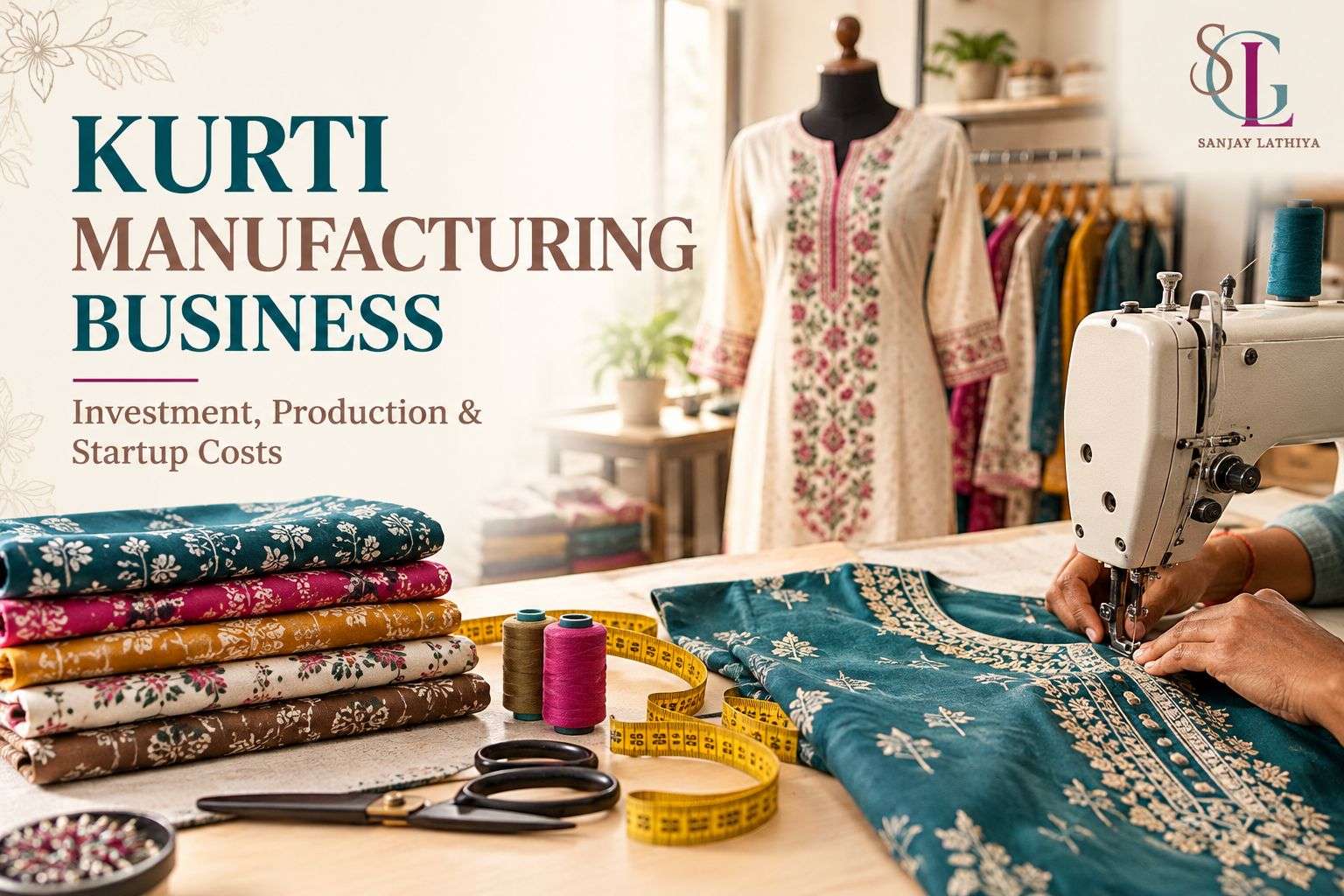
Kurti Manufacturing Business Investment and Startup Costs
October 13, 2026
Starting a kurti manufacturing business can be an opportunity for entrepreneurs who want to enter India's growing women's apparel market. Kurtis are popular among retailers, boutiques, online sellers, and clothing wholesalers because they are available in different fabrics, designs, sizes, and price ranges. However, starting successfully requires proper planning, investment, reliable suppliers, skilled workers, and an effective sales strategy.
Before starting, you should understand how to purchase raw materials, manufacture finished products, calculate production costs, and sell kurtis to wholesale buyers. A clear business plan helps you control expenses, reduce wastage, and build a sustainable clothing business.
Ladies Designer Kurti Wholesaler and Manufacturer: Business Opportunities
Becoming a ladies designer kurti wholesaler and manufacturer involves producing kurtis or sourcing them from manufacturing units and supplying them to retailers, boutiques, resellers, and online businesses.
You can choose from three business models:
-
Manufacturing: Purchase fabric, arrange stitching, and produce kurtis under your own brand.
-
Wholesale trading: Purchase ready-made kurtis in bulk and resell them to retailers.
-
Private label: Work with a manufacturer to produce kurtis under your own brand name.
If your budget is limited, you can begin by outsourcing stitching and focusing on design, quality control, and sales. As demand increases, you can invest in machines and establish your own production unit.
Wholesale Kurti Manufacturers in India: Finding Suppliers
Reliable wholesale kurti manufacturers in India can help new entrepreneurs source finished products, compare designs, and understand current wholesale pricing.
When selecting suppliers, compare fabric quality, stitching standards, minimum order quantities, delivery timelines, size consistency, and payment terms. Request samples before placing large orders. If you plan to manufacture independently, identify dependable fabric wholesalers and accessory suppliers before finalising your product range.
Working with suitable wholesale kurti manufacturers in India can also help you test market demand before committing substantial funds to machinery and production facilities.
Women Kurtis Wholesaler and Manufacture: Choosing Your Business ModelA women kurtis wholesaler and manufacture business should focus on products that match its target customers. For example, you could specialise in cotton daily-wear kurtis, rayon kurtis, office-wear designs, festive collections, or embroidered designer pieces.
Start with a focused collection instead of producing too many designs. Research your competitors, compare wholesale prices, and identify which products offer a realistic margin after accounting for all expenses.
Investment for a Medium-Scale Manufacturing Business
The investment required depends on your location, production capacity, machinery, workforce, and whether you own or rent the premises.
For planning purposes, a small outsourced-production model may start with approximately ₹50,000–₹2 lakh, while a small in-house manufacturing setup could require around ₹3–₹10 lakh or more. A medium-scale unit may need ₹10–₹30 lakh or more, depending on its equipment, premises, inventory, and working capital. These are illustrative planning ranges, not supplier quotations or guaranteed costs.
A medium-scale entrepreneur should prepare a budget covering machinery, fabric inventory, employee salaries, rent, electricity, packaging, marketing, and transportation.
Before investing, prepare a monthly sales forecast and calculate how many kurtis you must sell to cover your operating expenses.
Cost of Machines, Fabric, Labour, Rent, and Packaging
The main expenses in a kurti manufacturing business include the following:
| Expense category | Illustrative budget |
|---|---|
| Sewing and overlock machines | ₹1–₹3 lakh |
| Cutting tables and tools | ₹25,000–₹75,000 |
| Initial fabric and accessories | ₹1–₹3 lakh |
| Rent deposit and workspace setup | ₹50,000–₹2 lakh |
| Initial labour and operating expenses | ₹50,000–₹1.5 lakh |
| Packaging, labels, and marketing | ₹25,000–₹75,000 |
These figures are indicative examples for preliminary budgeting. Actual costs depend on the number and type of machines, new or used equipment, local rents, fabric choices, staffing, and production volume. They should not be added together as a universal investment estimate.
Raw materials required: Purchase fabrics such as cotton, rayon, viscose, and georgette according to your designs. You may also need sewing thread, buttons, zippers, lace, lining fabric, embroidery materials, labels, and packaging bags.
Manufacturing process: Start with design selection and pattern making. Measure and cut the fabric, stitch the garment, add embroidery or other finishing details, inspect the product, iron it, and package it for delivery.
Working Capital and Emergency Funds
Working capital and emergency funds are essential because expenses continue even when customer payments are delayed. Keep enough money available for fabric purchases, wages, electricity, transport, rent, and unexpected repairs.
Maintain a separate business account and track every purchase and sale. Avoid spending your entire budget on machines or inventory. A cash reserve helps you fulfil repeat orders and manage seasonal changes in demand.
For business formalisation, review the government's official Udyam registration guidelines. Udyam registration is free through the official portal. Also review the GST registration portal and confirm the tax requirements applicable to your business with a qualified professional.
How to Calculate Kurti Manufacturing Costs and Selling Prices
To price products correctly, calculate the total cost of producing one kurti. Include fabric, stitching, accessories, printing or embroidery, finishing, packaging, wastage, and an appropriate share of overhead expenses.
For example, suppose one kurti costs ₹180 for fabric, ₹70 for stitching, ₹30 for accessories, ₹20 for finishing and packaging, and ₹30 for overheads. The total estimated production cost is ₹330 per piece.
If you sell it for ₹450, your gross contribution before other selling expenses and applicable taxes is ₹120 per kurti. Actual profit will depend on discounts, returns, delivery charges, unsold inventory, and other business costs.
As a ladies designer kurti wholesaler and manufacturer, compare your prices with competing products while maintaining consistent quality. Do not set prices based on fabric cost alone.
How to Sell Finished Kurtis and Find Wholesale Buyers
Once production begins, focus on acquiring repeat customers. Prepare a professional catalogue containing product photographs, fabric details, available sizes, colours, minimum order quantities, and wholesale prices.
Approach clothing retailers, boutiques, resellers, distributors, and online sellers. You can promote your products through WhatsApp Business, Instagram, B2B marketplaces, and your own website.
Offer clear order terms, reliable dispatch timelines, and consistent sizing. Begin with manageable production quantities, collect feedback from buyers, and expand your collection according to actual demand.
For more business insights and entrepreneurial resources, visit Sanjay Lathiya's website.
Build a Profitable Kurti Manufacturing Business
Building a successful kurti manufacturing business requires more than purchasing machines and fabric. You need to understand your customers, control production costs, maintain product quality, and develop dependable wholesale relationships.
Start with a realistic budget, compare raw material suppliers, calculate the cost of every product, and test demand before expanding. Whether you choose outsourced production, wholesale trading, or an in-house manufacturing unit, disciplined financial management and consistent marketing can help you establish a sustainable business.
Ready to start? Prepare your investment plan, source quality raw materials, develop your first collection, calculate wholesale prices, and begin connecting with retailers and bulk buyers. Grow gradually as orders and cash flow become more predictable.