
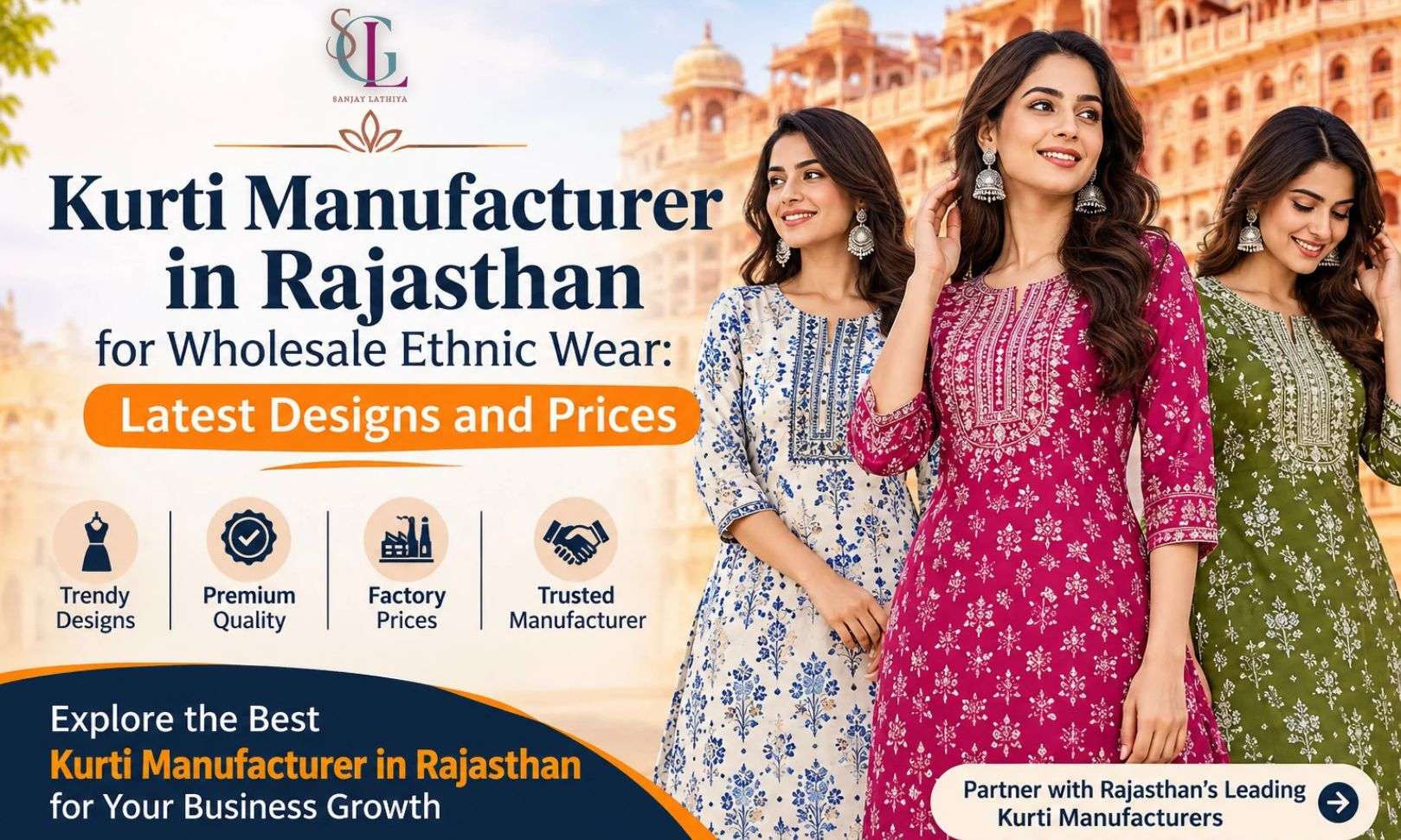
Kurti Manufacturers in Rajasthan for Wholesale Ethnic Wear: Latest Designs and Prices
November 19, 2026
The Indian ethnic wear industry continues to evolve as customers look for comfortable, stylish and affordable clothing for everyday use, festive occasions and special events. Kurtis have become one of the most popular clothing choices because they combine traditional Indian designs with modern fashion trends. From simple cotton kurtis to embroidered festive collections, there is a wide variety of styles available in the wholesale clothing market.
Rajasthan has an important place in India's textile and garment industry. The state is recognised for its traditional printing techniques, colourful fabrics, beautiful patterns and skilled artisans. Cities and textile clusters around Jaipur, Sanganer and Bagru are particularly known for their distinctive printed fabrics and traditional craftsmanship.
For boutique owners, clothing retailers, resellers and online fashion businesses, finding a reliable kurti manufacturer in rajasthan can be an opportunity to source attractive ethnic wear collections and build a competitive clothing business.
Whether you are looking for cotton daily-wear kurtis, printed office-wear outfits, designer pieces or festive collections, understanding the manufacturing landscape, fabric options, wholesale prices and supplier selection process can help you make better purchasing decisions.
This guide explores popular kurti designs, manufacturing locations, wholesale buying considerations and practical tips for selecting the right supplier.
Why Rajasthan Is Popular for Wholesale Ethnic Wear
Rajasthan has a rich textile heritage that influences its fashion and garment industry. Traditional printing techniques, regional patterns and colourful designs make its fabrics attractive to ethnic wear brands and clothing retailers.
The state is particularly associated with textile crafts such as Sanganeri printing, Bagru printing, Bandhani and Leheriya. These techniques are used to create distinctive patterns that can be incorporated into modern kurti collections.
Some important reasons why Rajasthan attracts wholesale ethnic wear buyers include:
1. Traditional printing techniques
Rajasthan's textile industry is known for handcrafted and printed fabrics. Floral patterns, geometric motifs and traditional colour combinations are widely used in ethnic clothing.
2. Variety of fabrics
Manufacturers and suppliers offer different fabric options, including cotton, rayon, cambric, muslin, georgette and other blended materials.
3. Different price categories
Wholesale buyers can explore budget-friendly daily-wear collections, mid-range fashion kurtis and premium designer-inspired outfits.
4. Regional craftsmanship
Traditional techniques and local textile knowledge provide opportunities to create clothing collections with distinctive regional identities.
5. Growing fashion demand
Kurtis are popular among women across different age groups. Their versatility makes them suitable for casual outings, workplaces, family functions and festive celebrations.
For retailers, sourcing from a kurti manufacturer in rajasthan can provide access to regional designs and a wide selection of ethnic wear styles.
Popular Kurti Designs Available in Rajasthan
Fashion preferences change regularly, but some kurti styles remain popular throughout the year. Wholesale buyers should understand these categories before selecting a collection.
1. Jaipuri Printed Kurtis
Jaipuri printed kurtis are appreciated for their colourful patterns, floral motifs and traditional appearance. They are suitable for everyday wear, casual outings and summer collections.
Popular design options include:
-
Floral printed kurtis
-
Small buti pattern kurtis
-
Geometric printed designs
-
Traditional ethnic motifs
-
Cotton straight-cut kurtis
-
Three-quarter sleeve printed kurtis
These styles are particularly suitable for retailers targeting customers who prefer comfortable traditional clothing.
2. Cotton Kurtis
Cotton kurtis are a practical choice for daily wear, particularly in warmer climates. They are available in different cuts, prints and lengths.
Popular varieties include straight kurtis, A-line kurtis, short cotton kurtis, long cotton kurtis and office-wear designs.
Retailers can consider stocking multiple colour combinations and sizes to appeal to a wider customer base.
3. Anarkali Kurtis
Anarkali kurtis feature a flared silhouette that creates an elegant traditional appearance. They are popular for family functions, celebrations and festive occasions.
Common options include printed Anarkali kurtis, embroidered styles, rayon Anarkali designs and festive collections.
4. Rayon Kurtis
Rayon kurtis are popular because of their soft texture and attractive drape. They are available in both casual and semi-formal designs.
Retailers can explore printed rayon kurtis, long rayon kurtis, office-wear styles and coordinated ethnic outfits.
5. Designer and Embroidered Kurtis
Designer kurtis often feature decorative elements such as embroidery, lace, mirror work, buttons and fabric detailing.
These collections are generally suitable for customers looking for outfits for festivals, parties and special occasions.
Finding a Jaipuri Kurti Manufacturer
Jaipur is one of the important destinations for traditional Rajasthani textiles. Its surrounding textile clusters, including Sanganer and Bagru, are associated with distinctive printing traditions.
A jaipuri kurti manufacturer may offer collections inspired by traditional regional patterns as well as contemporary fashion preferences.
When exploring manufacturers, buyers should consider:
-
Available fabric varieties
-
Printing and design techniques
-
Stitching quality
-
Size and colour availability
-
Minimum order quantity
-
Customisation facilities
-
Packaging and shipping arrangements
One of the most recognisable textile traditions associated with Jaipur is Sanganeri hand block printing. It is known for fine floral motifs, detailed patterns and traditionally printed fabrics.
For more information about this craft, explore the Sanganeri hand block printing tradition.
Buyers interested in traditional ethnic collections can also explore Bagru-inspired prints, which are known for their distinctive printing techniques and earthy design combinations.
Choosing a supplier with a good understanding of these regional textile styles can help retailers develop a more attractive ethnic wear collection.
Choosing a Kurti Manufacturer in India for Your Business
India has a large garment manufacturing ecosystem, with different regions specialising in different fabrics, printing methods and clothing categories.
A kurti manufacturer in india can offer various types of ethnic wear, including cotton kurtis, rayon outfits, printed collections, embroidered garments and contemporary fusion styles.
However, choosing a supplier should not depend only on attractive catalogue photographs or low wholesale prices.
Before placing an order, consider the following factors:
Manufacturing experience: Check how long the supplier has been operating and whether it regularly produces ethnic wear collections.
Product quality: Request fabric samples or product videos to understand the material, stitching, finishing and overall garment quality.
Design availability: Look for suppliers offering different styles, prints, colours and sizes.
Production capacity: Confirm whether the supplier can fulfil small and large orders according to your requirements.
Business communication: A reliable supplier should provide clear information about pricing, payment terms, delivery timelines and return policies.
Order flexibility: Ask whether the supplier offers ready-stock collections, bulk manufacturing and customised designs.
Retailers should compare multiple suppliers before finalising a long-term sourcing partnership.
Latest Fabrics Used in Wholesale Kurtis
Fabric selection plays an important role in determining the appearance, comfort, durability and price of a kurti.
Different fabrics suit different customer preferences and seasons.
| Fabric | Key Features | Suitable For |
|---|---|---|
| Cotton | Breathable and comfortable | Daily wear |
| Rayon | Soft texture and good drape | Casual and semi-formal wear |
| Cambric | Lightweight cotton fabric | Summer collections |
| Muslin | Soft and lightweight | Premium casual wear |
| Georgette | Flowing appearance | Party and festive wear |
| Chanderi | Elegant and lightweight | Festive collections |
| Cotton blends | Practical and versatile | Everyday fashion |
Wholesale buyers should check fabric composition, colour consistency, shrinkage and washing instructions before purchasing in bulk.
Exploring the Jaipur Kurti Wholesale Market Online
The jaipur kurti wholesale market online provides buyers with another way to discover ethnic wear collections without travelling to physical markets.
Online wholesale sourcing can be useful for retailers operating in different Indian cities, boutique owners and entrepreneurs starting an online clothing business.
Before purchasing through an online supplier, check these important details:
1. Product catalogue
A detailed catalogue should include product photographs, available sizes, fabric information, colours and wholesale prices.
2. Minimum order quantity
Some suppliers accept small wholesale orders, while others require buyers to purchase multiple pieces or complete sets. Always confirm the minimum order quantity.
3. Actual product photographs
Ask for real product images or videos instead of relying entirely on edited catalogue photographs.
4. Payment security
Verify the supplier's business details and payment terms before transferring money.
5. Shipping information
Confirm dispatch timelines, courier charges, delivery coverage and packaging standards.
6. Return and exchange policies
Understand the supplier's policy for defective products, incorrect sizes and damaged shipments.
Online sourcing can save time, but buyers should conduct proper verification before making large purchases.
The Rajasthan Tourism website also provides an overview of the state's traditional textile styles, including Bagru, Sanganeri, Bandhani and Leheriya. These regional influences can help buyers understand the variety of designs available in Rajasthani ethnic wear.
Wholesale Kurti Prices in Rajasthan: What Determines the Cost?
Wholesale kurti prices depend on several factors, including fabric quality, printing techniques, garment construction, embellishments, order quantity and supplier pricing policies.
There is no single fixed price for all wholesale kurtis. Buyers should request current quotations based on their preferred designs and order requirements.
The following table provides illustrative sourcing categories rather than verified market quotations.
| Kurti Category | Price Position | Main Cost Factors |
|---|---|---|
| Basic cotton printed kurtis | Budget | Fabric and simple stitching |
| Rayon printed kurtis | Budget to mid-range | Fabric and design |
| Cambric cotton kurtis | Budget to mid-range | Fabric quality and finishing |
| Designer printed kurtis | Mid-range | Printing and detailing |
| Embroidered kurtis | Mid-range to premium | Embroidery and workmanship |
| Festive Anarkali kurtis | Mid-range to premium | Fabric, flare and embellishments |
Factors That Influence Wholesale Prices
Fabric quality: Premium fabrics generally increase the overall garment cost.
Printing technique: Detailed printing and specialised techniques can affect production expenses.
Stitching and finishing: Better construction, neat seams and finishing require attention during manufacturing.
Order quantity: Larger orders may qualify for different pricing arrangements, depending on the supplier.
Customisation: Special colours, measurements, embroidery and private-label requirements can increase the final cost.
Transportation: Shipping, packaging and other logistics expenses should be included when calculating the final purchase cost.
Retailers should compare the total landed cost rather than looking at the product price alone.
How to Find a Kurti Manufacturer Online
Finding a reliable kurti manufacturer online can make wholesale sourcing easier for retailers and boutique owners.
Digital catalogues, business websites and wholesale platforms allow buyers to compare different collections and contact suppliers directly.
Here are some practical ways to identify suitable manufacturers.
Search using specific product keywords
Instead of searching only for general clothing suppliers, use specific terms related to your requirements, such as cotton kurtis, printed kurtis, designer kurtis and wholesale ethnic wear.
Check business credentials
Look for business addresses, contact information, company details and customer feedback. Request GST details where applicable and verify the information before making a bulk purchase.
Request samples
Ordering samples can help you evaluate the fabric, stitching, sizing and actual product appearance.
Compare product collections
Compare different designs, fabric options, colour choices and wholesale rates before selecting a supplier.
Discuss bulk order requirements
Confirm the minimum order quantity, available stock, production capacity and delivery schedule.
Maintain supplier communication
Clear communication helps prevent misunderstandings regarding product specifications, payment and dispatch.
A well-verified supplier can become a valuable long-term business partner.
Latest Wholesale Kurti Trends Retailers Should Consider
Fashion retailers should regularly update their collections to match changing customer preferences.
Some popular styles worth considering include:
Floral printed kurtis: Floral patterns remain a versatile option for casual and everyday clothing.
Minimalist ethnic designs: Subtle prints and simple silhouettes appeal to customers who prefer understated fashion.
Co-ord ethnic sets: Matching top-and-bottom combinations provide a coordinated appearance and are increasingly relevant to contemporary ethnic fashion.
Straight-cut kurtis: These are practical for everyday use and office wear.
Festive embroidered kurtis: Decorative detailing makes these suitable for celebrations and special occasions.
Pastel colour collections: Soft shades such as mint, peach, lavender and powder blue offer an alternative to traditional bright colours.
Traditional Rajasthani prints: Bagru-inspired patterns, Sanganeri florals and Bandhani designs bring regional character to ethnic wear.
Retailers can combine traditional and contemporary styles to create a balanced product catalogue.
Buying Branded Kurtis Wholesale Online
Retailers who want to develop a recognisable clothing business may consider sourcing branded kurtis wholesale online.
Branded collections can help businesses create a consistent product identity and offer customers a more organised shopping experience.
Before selecting branded wholesale collections, consider:
-
Brand reputation and authenticity
-
Product quality and fabric details
-
Available size ranges
-
Wholesale pricing and margins
-
Packaging and labelling
-
Brand authorisation and resale conditions
-
Replacement and return policies
If you plan to launch your own clothing label, discuss private labelling, customised tags, packaging and design exclusivity with the manufacturer.
Avoid purchasing products marketed as branded unless their authenticity and resale permissions can be verified.
How Retailers Can Choose the Right Wholesale Supplier
Selecting the right manufacturing partner is one of the most important decisions for a clothing business.
A supplier offering low prices may not necessarily provide the best long-term value. Product consistency, delivery reliability and communication also matter.
Consider this checklist before confirming your wholesale order:
-
Compare at least three potential suppliers.
-
Review their current product catalogues.
-
Request physical samples where possible.
-
Check stitching, fabric and finishing quality.
-
Confirm size charts and available colours.
-
Discuss minimum order quantities.
-
Understand payment and shipping terms.
-
Verify return and replacement policies.
-
Calculate your expected retail profit margin.
-
Start with a manageable order before increasing purchase quantities.
A careful sourcing process can help reduce purchasing risks and improve inventory planning.
Why Choose a Rajasthan-Based Ethnic Wear Supplier?
Rajasthan's traditional textile heritage provides inspiration for a wide range of ethnic clothing designs.
Working with a suitable regional supplier can help retailers access printed fabrics, traditional patterns and contemporary kurti collections.
A reliable kurti manufacturer in rajasthan should ideally provide transparent pricing, consistent quality, suitable order quantities and dependable communication.
Retailers should also evaluate whether the supplier can support their future requirements, including seasonal collections, repeat orders and customised designs.
For businesses targeting customers across different regions of India, combining traditional Rajasthani aesthetics with modern silhouettes can create a distinctive product range.
Conclusion
Rajasthan offers an interesting combination of traditional textile craftsmanship and modern ethnic fashion. Its well-known printing styles, colourful fabrics and regional design influences make it an important destination for buyers exploring wholesale kurti collections.
From everyday cotton kurtis and rayon outfits to printed Anarkali styles and festive designer collections, retailers have several options to build a diverse clothing catalogue.
Whether you operate a boutique, retail store or online fashion business, selecting the right manufacturing partner requires attention to fabric quality, stitching, wholesale prices, order quantities and delivery arrangements.
Before finalising your next bulk purchase, compare available collections, request samples and verify supplier credentials. A well-planned sourcing strategy can help your business maintain product quality, manage costs and meet changing customer preferences.