

Kanpur Leather Industry: History, Manufacturers, Factories & Global Export Market
March 10, 2026
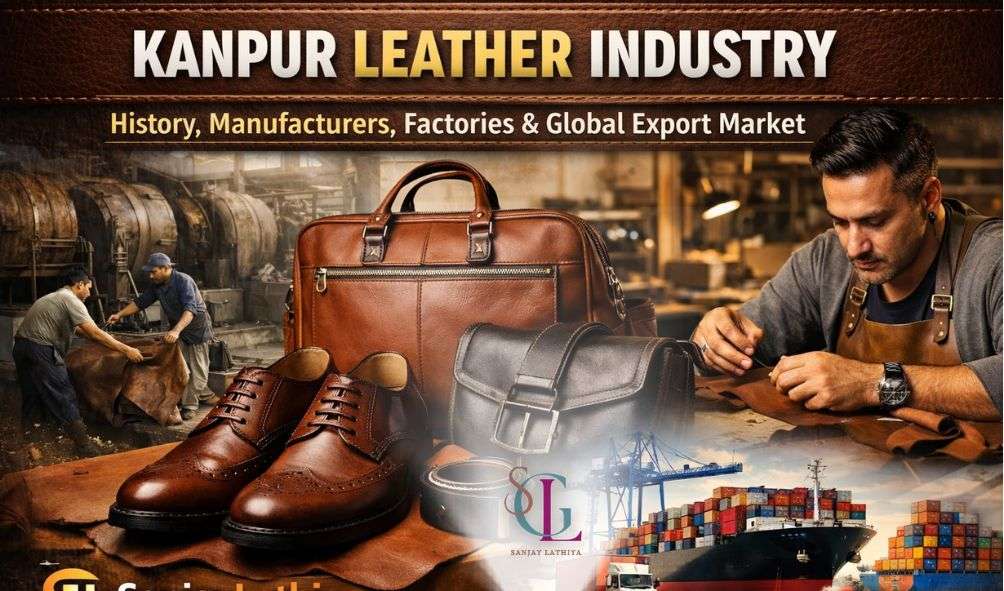
The kanpur leather industry has long been considered one of the most important manufacturing sectors in India. Located in the state of Uttar Pradesh, the city of Kanpur has built a global reputation for producing high-quality leather products including shoes, saddlery, belts, bags, and industrial leather goods. Over the decades, the kanpur leather industry has transformed from small traditional workshops into a powerful export-oriented cluster supplying products to Europe, the United States, and the Middle East.
Today, the kanpur leather industry is valued at around ₹12,000 crore annually and provides employment to nearly one million people directly and indirectly across Kanpur and nearby districts like Unnao. The industry consists of hundreds of tanneries, manufacturing units, exporters, and trading companies that collectively drive India’s leather economy.
The city’s dominance in the leather sector did not happen overnight. Its growth was shaped by colonial history, skilled craftsmanship, and a strong export network that connected Kanpur to international markets. The city became famous worldwide for producing durable buffalo leather and high-quality saddlery equipment used in horse riding and military gear.
Even today, global buyers consider Kanpur a reliable hub for leather goods. Whether it is industrial safety shoes, equestrian products, handbags, or fashion footwear, the kanpur leather industry continues to influence India’s export performance in this sector. In the following sections, we will explore how the leather industry evolved in Kanpur, who the major manufacturers are, how the market works, and what the future holds for this historic industry.
Leather Industry in Kanpur
The leather industry in Kanpur is one of India’s oldest industrial ecosystems. From tanning raw hides to producing finished leather goods, the city houses an integrated manufacturing chain that covers every stage of production. Most leather processing units are located in the Jajmau industrial area, which has been the heart of Kanpur’s leather manufacturing for decades.
The leather industry in Kanpur includes more than 1,600 production units that manufacture footwear, saddlery equipment, upholstery leather, bags, and accessories. Many of these businesses are family-owned enterprises that have passed down leather craftsmanship skills for generations.
Kanpur’s leather sector has also been highly export-driven. Historically, the city accounted for around 15% of India’s leather exports, which demonstrates its strong presence in the global leather trade. Buyers from countries like Germany, Italy, the United Kingdom, and the United States frequently source leather products from Kanpur manufacturers.
The reason behind the success of the leather industry in Kanpur lies in its combination of skilled labour, raw material availability, and export infrastructure. Skilled artisans are capable of producing everything from heavy industrial leather boots to high-fashion leather handbags.
The growth of modern technology has also influenced production processes. Many factories now use automated cutting machines and imported tanning equipment from countries like Germany and Italy to maintain international quality standards.
History of Leather Industry in Kanpur
The roots of the leather industry in Kanpur go back more than 200 years to the British colonial period. During the 19th century, Kanpur became an important military base for the British Army. The army required large quantities of leather boots, saddles, harnesses, and belts for soldiers and horses.
To meet this demand, British administrators established leather tanning units and manufacturing workshops in Kanpur. Over time, these units evolved into a full-fledged industrial ecosystem. Skilled workers were trained in leather processing, and Kanpur quickly developed expertise in producing durable buffalo leather products.
By the early 20th century, Kanpur had already gained recognition as a major leather production center in India. After independence, Indian entrepreneurs took over many of the factories and expanded the industry into global export markets.
The city gradually became known worldwide for saddlery and harness equipment used in equestrian sports. In fact, Kanpur accounts for nearly 95% of India’s saddlery exports, which is a remarkable achievement for a single industrial cluster.
Today, the legacy of the historic kanpur leather industry still continues. Although modern technology and global competition have changed the manufacturing landscape, the traditional craftsmanship of Kanpur artisans remains one of the industry's strongest advantages.
Why Kanpur is Known as the Leather City of India
Kanpur is widely known as the “Leather City of India.” This title reflects the city’s long history of leather manufacturing and its massive contribution to the country’s export economy.
Several factors explain why Kanpur earned this reputation. First, the city has a highly concentrated cluster of tanneries and leather goods factories. At one point, Kanpur had nearly 350 leather tanneries, making it one of the largest tanning clusters in Asia.
Second, Kanpur specializes in multiple leather product categories. The city produces footwear, saddlery, safety shoes, industrial leather gloves, bags, and upholstery leather. This diversity allows the industry to serve different global markets.
Another reason is the city’s strong export network. For decades, international buyers have trusted Kanpur exporters for quality leather products. The city has maintained trade relationships with buyers in Europe, North America, and the Middle East.
The reputation of the kanpur leather industry is also supported by its skilled workforce. Thousands of artisans possess deep knowledge of leather cutting, stitching, and finishing techniques that are difficult to replicate elsewhere.
Because of these strengths, Kanpur continues to be recognized as one of India’s most important leather manufacturing hubs.
Kanpur Leather Manufacturers
The success of the kanpur leather manufacturers network is one of the main reasons the city dominates India’s leather sector. Hundreds of manufacturers operate in Kanpur, ranging from small family-run workshops to large export-oriented companies.
The kanpur leather manufacturers produce a wide variety of products including leather shoes, belts, handbags, jackets, saddlery equipment, and industrial safety gear. These companies cater to both domestic and international markets.
Many manufacturers focus on specialized products. For example, some companies concentrate on equestrian equipment such as saddles and harnesses, while others focus on fashion leather goods like handbags and footwear.
International buyers often prefer working with Kanpur manufacturers because of their ability to handle bulk orders while maintaining quality standards. Many factories operate under international certifications to ensure compliance with global regulations.
Top Leather Companies in Kanpur
Some well-known leather companies based in Kanpur include:
| Company | Product Category |
|---|---|
| Mirza International | Leather footwear |
| Superhouse Group | Safety shoes & leather goods |
| AKI India | Saddlery & harness |
| Red Chief | Leather footwear |
| Farida Group | Industrial leather products |
These companies have played a crucial role in building the reputation of the kanpur leather industry worldwide.
Leather Factories in Kanpur
The leather factories in Kanpur are mainly located in Jajmau, Unnao, and the Banthar industrial area. These factories handle various stages of leather production including tanning, dyeing, cutting, stitching, and finishing.
The leather factories in Kanpur produce a wide range of products such as safety shoes, fashion footwear, leather jackets, bags, belts, and saddlery equipment. Many factories are export-oriented and operate under strict quality control systems.
Modern leather factories also use advanced machinery to increase productivity and reduce environmental impact. Effluent treatment plants and eco-friendly tanning processes are gradually becoming common across the industry.
Leather Market in Kanpur
The leather market in Kanpur is one of the most active trading hubs for leather goods in India. Traders, exporters, wholesalers, and retailers come here to buy and sell leather products in large quantities.
The leather market in Kanpur is famous for offering a wide range of products including leather shoes, jackets, belts, bags, and equestrian equipment. Wholesale markets attract buyers from different parts of India as well as international traders.
Many exporters source finished goods directly from local manufacturers and then ship them to international clients. This close connection between manufacturers and traders helps maintain competitive prices and high product quality.
Kanpur Leather Export Industry
The kanpur leather export industry plays a significant role in India’s international trade. Leather products manufactured in Kanpur are exported to several countries including the United States, Germany, Italy, and the United Kingdom.
Exports from Kanpur’s leather sector are estimated at around ₹6,000 crore annually, highlighting the city’s importance in global leather supply chains.
The kanpur leather export industry includes products such as leather footwear, saddlery equipment, fashion accessories, and industrial safety gear. Many exporters also participate in international trade fairs to promote their products globally.
For businesses interested in exploring leather manufacturing partnerships or sourcing opportunities, you can also explore industry insights on Sanjay Lathiya.
Additionally, organizations like the Council for Leather Exports provide guidance and support for exporters entering global markets.
Economic Importance of the Kanpur Leather Industry
The kanpur leather industry is one of the largest employment generators in Uttar Pradesh. The sector supports millions of livelihoods including factory workers, artisans, traders, exporters, and transport workers.
Apart from employment, the industry also contributes significantly to India’s foreign exchange earnings. Leather exports from India have grown steadily over the years, reaching billions of dollars in global trade.
Kanpur’s leather cluster is also an important contributor to the regional economy. Local businesses such as packaging, logistics, machinery suppliers, and chemical producers depend on the leather sector.
Challenges Facing the Leather Industry
Despite its success, the kanpur leather industry faces several challenges today. Environmental regulations have forced many tanneries to adopt cleaner production methods, which often require expensive technological upgrades.
Global competition is another major challenge. Countries like Bangladesh, Vietnam, and Pakistan have become strong competitors in leather exports, offering lower production costs.
Trade policies and international tariffs can also impact export demand. For example, export restrictions or tariff changes in major markets sometimes reduce orders for Indian manufacturers.
Future of the Kanpur Leather Industry
The future of the kanpur leather industry depends on innovation, sustainability, and global market expansion. Government policies such as the Uttar Pradesh Footwear and Leather Development Policy aim to support investment in leather manufacturing and exports.
Technology adoption will also play a key role in improving efficiency and reducing environmental impact. Many companies are investing in eco-friendly tanning methods and advanced machinery.
At the same time, rising global demand for high-quality leather goods provides new opportunities for Kanpur manufacturers. By focusing on design innovation and branding, the city can strengthen its position in international markets.
Conclusion
The kanpur leather industry remains one of India’s most historic and influential manufacturing sectors. From its origins during the British colonial era to its present-day global export network, the industry has played a crucial role in shaping the economic identity of Kanpur.
With hundreds of manufacturers, thriving export businesses, and skilled artisans, Kanpur continues to hold its title as the Leather City of India. While the industry faces challenges such as environmental regulations and global competition, its strong foundation and craftsmanship ensure that it will remain a key player in the global leather market.
If you want to learn more about leather manufacturing, export opportunities, or industry insights, visit https://www.sanjaylathiya.com/ and explore expert resources.
If you are a leather buyer, exporter, or entrepreneur looking for reliable industry information and sourcing opportunities, start exploring the Kanpur leather market today and connect with trusted manufacturers.