

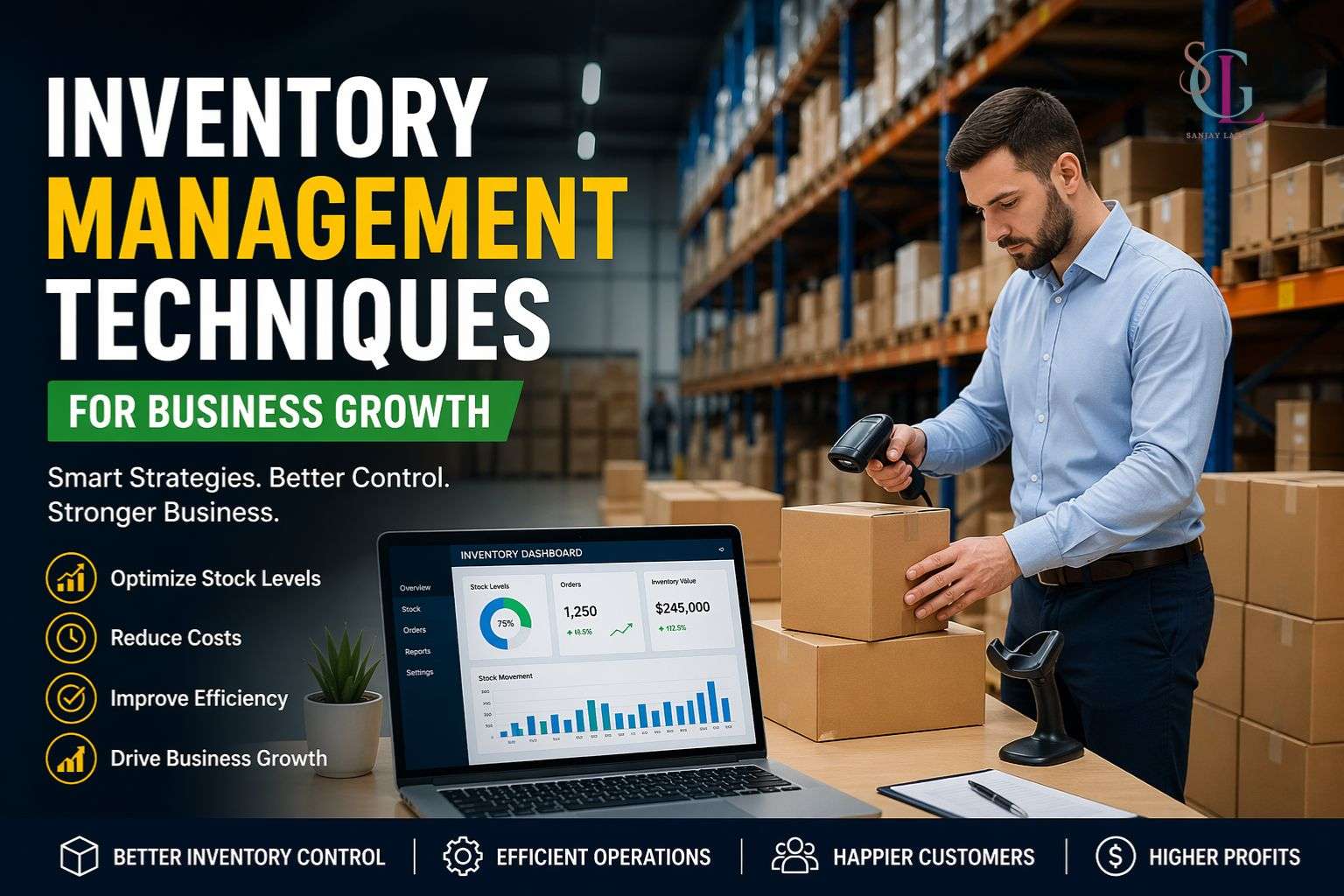
Inventory Management Techniques for Business Growth
April 21, 2026
Managing inventory is like walking a tightrope—too much stock and your capital gets stuck, too little and you risk losing customers. That’s where inventory management techniques come into play. Whether you're running a retail store, wholesale business, or eCommerce platform, mastering these techniques can transform your operations completely. In today’s competitive market, businesses that fail to optimize inventory often struggle with inefficiencies, delayed deliveries, and unnecessary costs.
Think about your inventory as the heartbeat of your business. If it’s not flowing correctly, everything else starts to collapse—sales, customer satisfaction, and even brand reputation. By implementing the right strategies, you not only maintain balance but also unlock growth opportunities. Many successful companies rely on structured inventory systems to reduce waste and improve decision-making. If you're serious about scaling your business, understanding inventory management techniques is not optional—it’s essential.
Inventory Control Techniques in Operations Management
When we talk about inventory control techniques in operations management, we’re diving into the backbone of efficient business operations. These techniques ensure that the right products are available at the right time, without overstocking or understocking. From Economic Order Quantity (EOQ) to Just-In-Time (JIT), businesses have multiple approaches to manage stock effectively.
Imagine running a warehouse where products are constantly moving in and out. Without proper control techniques, chaos becomes inevitable. Inventory control helps streamline procurement, storage, and distribution processes. It also reduces carrying costs and minimizes the risk of obsolete inventory. Businesses that adopt these techniques often experience smoother workflows and better financial performance. This is why inventory control techniques in operations management are widely used across industries—from manufacturing to retail.
Explain Inventory Management Techniques
To truly explain inventory management techniques, we need to break them down into practical strategies that businesses can implement easily. These techniques include ABC analysis, safety stock management, reorder point systems, and demand forecasting. Each method serves a specific purpose and helps businesses maintain optimal inventory levels.
Think of ABC analysis like organizing your wardrobe—you prioritize frequently used items over rarely used ones. Similarly, businesses categorize inventory based on importance and value. This allows them to focus on high-priority items and allocate resources efficiently. Another key technique is safety stock, which acts as a buffer during unexpected demand spikes. By applying these methods, companies can reduce stockouts and improve customer satisfaction.
Inventory Optimization StrategyAn effective inventory optimization strategy focuses on balancing supply and demand while minimizing costs. It involves analyzing historical data, predicting future demand, and aligning inventory levels accordingly. Businesses often use software tools to automate this process and gain real-time insights.
Imagine having a system that tells you exactly how much stock you need and when to reorder—it’s like having a crystal ball for your business. That’s the power of optimization. Companies that invest in strong optimization strategies often see reduced waste, improved cash flow, and increased profitability. This makes inventory optimization strategy a critical component of modern business operations.
Inventory Control Techniques in Operations Management (Advanced Insights)
Taking a deeper look at inventory control techniques in operations management, advanced strategies include automation, real-time tracking, and integrated supply chain systems. These techniques go beyond basic inventory control and focus on improving overall efficiency.
Businesses today are leveraging technology to gain a competitive edge. Automated systems can track inventory levels, generate purchase orders, and even predict demand trends. This reduces manual errors and saves time. Companies that adopt these advanced techniques often outperform competitors who rely on traditional methods.
Explain Inventory Management Techniques (Practical Use)
When we explain inventory management techniques in practical terms, it’s about applying theory to real-world scenarios. For example, a retail store might use POS systems to track sales and update inventory instantly. Similarly, eCommerce businesses rely on warehouse management systems to handle large volumes of products.
The key is to choose techniques that align with your business model. Not every strategy works for every company. By experimenting and analyzing results, businesses can identify the most effective methods. This approach ensures continuous improvement and long-term success.
Inventory Optimization Strategy for Scaling BusinessesScaling businesses require a more advanced inventory optimization strategy. As operations grow, managing inventory becomes more complex. This is where data analytics and AI-powered tools come into play.
Businesses can analyze customer behavior, seasonal trends, and market demand to optimize inventory levels. This not only improves efficiency but also enhances customer experience. A well-implemented strategy ensures that businesses can handle growth without compromising quality or performance.
Demand Forecasting Methods
Demand forecasting is the backbone of inventory planning. Without accurate predictions, businesses risk overstocking or running out of products. Modern forecasting methods combine historical data with advanced analytics to improve accuracy.
Barometric Method of Demand Forecasting
The barometric method of demand forecasting uses economic indicators to predict future demand. These indicators act like signals, helping businesses anticipate market trends. For example, changes in consumer spending or employment rates can influence demand.
This method is particularly useful for industries that are heavily influenced by external factors. By analyzing these indicators, businesses can make informed decisions and adjust inventory levels accordingly. The barometric method of demand forecasting is widely used for long-term planning.
Statistical Method of Demand Forecasting
The statistical method of demand forecasting relies on mathematical models and historical data to predict future demand. Techniques such as regression analysis, time series analysis, and machine learning are commonly used.
This method provides more accurate results compared to traditional approaches. Businesses can identify patterns and trends, allowing them to make data-driven decisions. The statistical method of demand forecasting is essential for companies looking to improve forecasting accuracy and reduce risks.
Supply Chain Optimization
Supply chain optimization focuses on improving the efficiency of the entire supply chain—from procurement to delivery. It involves coordinating various processes to ensure smooth operations.
Supply Chain Optimization Tools
Modern supply chain optimization tools help businesses streamline operations and improve visibility. These tools provide real-time data, enabling better decision-making.
For example, ERP systems integrate various business functions, while inventory management software tracks stock levels. Businesses can also use analytics tools to identify inefficiencies and optimize processes. Investing in the right supply chain optimization tools can significantly improve performance.
Supply Chain Optimization Technologies
Advanced supply chain optimization technologies include AI, IoT, and blockchain. These technologies enhance transparency, reduce errors, and improve efficiency.
AI-powered systems can predict demand, optimize routes, and automate processes. IoT devices provide real-time tracking, while blockchain ensures secure transactions. By adopting these technologies, businesses can stay ahead of the competition.
Benefits of Modern Inventory Systems
Modern inventory systems offer numerous benefits, including improved accuracy, reduced costs, and better customer satisfaction. Businesses can track inventory in real-time, reducing the risk of errors.
These systems also provide valuable insights, helping businesses make informed decisions. By leveraging technology, companies can optimize operations and achieve sustainable growth.
Challenges in Inventory Management
Despite the benefits, inventory management comes with challenges such as demand fluctuations, supply chain disruptions, and data inaccuracies. Businesses must address these issues to maintain efficiency.
Best Practices for Businesses
To succeed, businesses should adopt best practices such as regular audits, accurate forecasting, and efficient storage systems. These practices help maintain optimal inventory levels.
Choosing the Right Inventory System
Selecting the right system depends on your business needs. Factors such as size, industry, and budget should be considered. A well-chosen system can significantly improve efficiency.
Role of Automation and AI
Automation and AI are transforming inventory management. These technologies reduce manual work and improve accuracy. Businesses can automate repetitive tasks and focus on strategic activities.
Industry Use Cases
Different industries use inventory management techniques in unique ways. Retail businesses focus on fast-moving goods, while manufacturing companies manage raw materials and finished products.
Cost Reduction Techniques
Effective inventory management helps reduce costs by minimizing waste and optimizing resources. Businesses can improve profitability by implementing efficient strategies.
Real-Time Inventory Tracking
Real-time tracking provides instant visibility into inventory levels. This helps businesses make quick decisions and respond to market changes.
Future Trends in Inventory Management
The future of inventory management lies in advanced technologies such as AI, IoT, and predictive analytics. These innovations will continue to improve efficiency and accuracy.
Conclusion
Mastering inventory management techniques is the key to building a successful and scalable business. From demand forecasting to supply chain optimization, every aspect plays a crucial role in ensuring efficiency and profitability. Businesses that invest in modern tools and strategies are better equipped to handle challenges and seize opportunities. If you’re looking to improve your operations, now is the time to implement these techniques and stay ahead of the competition.
For more insights and expert solutions, visit inventory management techniques and explore advanced strategies tailored for your business.