

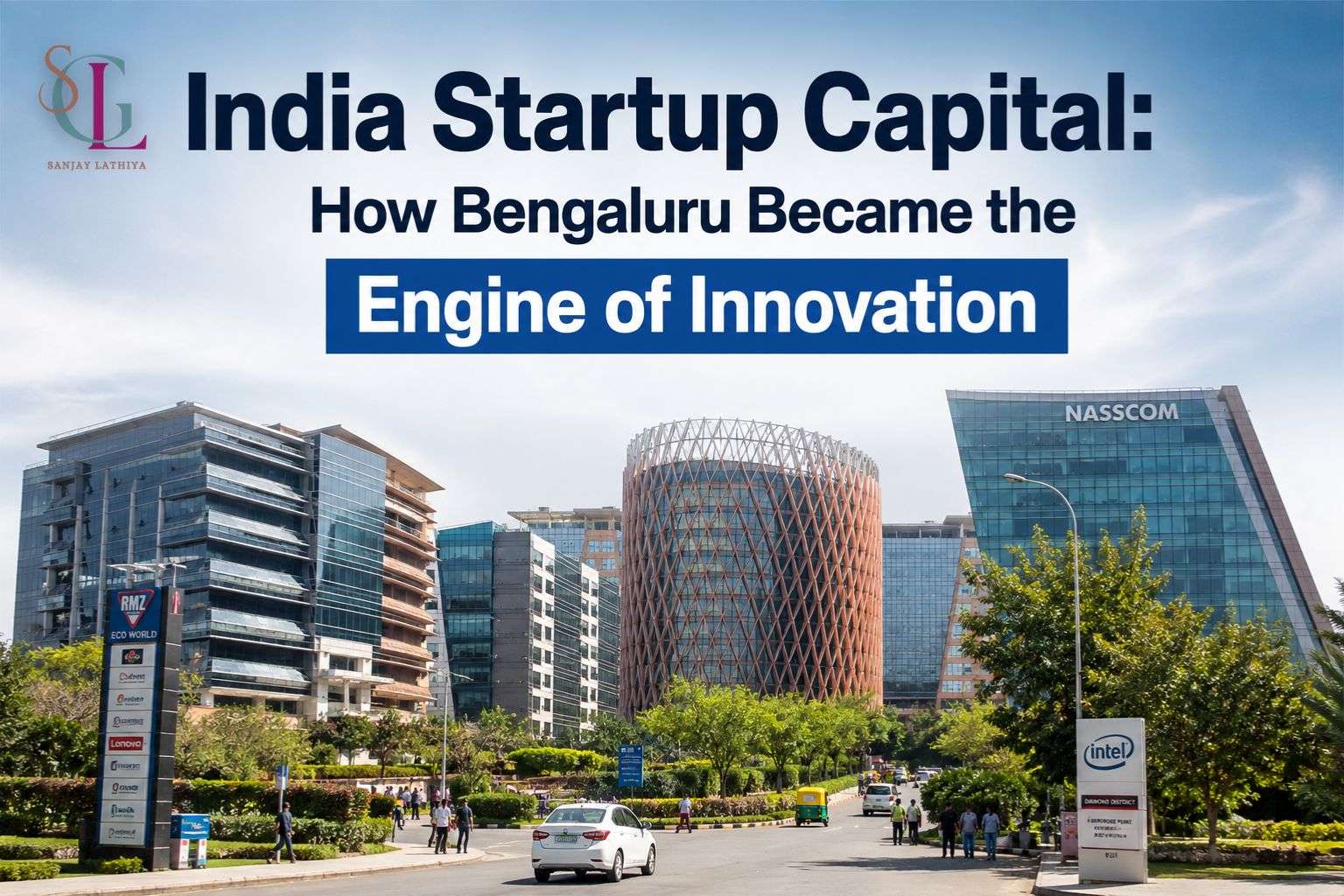
India Startup Capital: How Bengaluru Became the Engine of Innovation
May 14, 2026
India has transformed into one of the world’s fastest-growing startup ecosystems, and Bengaluru proudly stands at the center of this revolution. Today, when people discuss the India startup capital, they instantly think about innovation, unicorns, venture capital, and technology-driven businesses that are reshaping industries worldwide. From small garage-based ideas to billion-dollar companies, India’s startup journey has become a symbol of ambition and opportunity. Cities like Bengaluru, Hyderabad, Pune, and Mumbai contribute significantly, but Bengaluru continues to dominate because of its strong IT infrastructure, global talent pool, and investor-friendly environment.
The rise of the India startup capital did not happen overnight. It evolved through years of technological advancement, government initiatives, and the hunger of ambitious founders who wanted to build global products from India. According to recent startup ecosystem reports, India now has over 2.3 lakh DPIIT-recognized startups, making it one of the largest startup hubs in the world. The growth of AI, fintech, SaaS, e-commerce, and deep-tech startups has accelerated India’s position in the global market.
Businesses today are not only focused on local customers. Indian startups are competing internationally, attracting funding from Silicon Valley investors, and creating products used across continents. If you want to understand the future of innovation, entrepreneurship, and economic transformation, studying India’s startup ecosystem is the perfect place to begin.
Why Bengaluru Became the Heart of Indian Innovation
Bengaluru is often called the Silicon Valley of India, and for good reason. The city has consistently attracted talented engineers, software developers, startup founders, and global investors who see enormous potential in the Indian market. The city’s infrastructure, technology culture, and access to skilled professionals have made it the ideal launchpad for innovative companies. From global IT giants to emerging AI startups, Bengaluru has created an environment where ideas can grow rapidly.
One major reason Bengaluru became dominant is the presence of multinational technology companies that established operations there decades ago. These companies trained thousands of professionals who later became startup founders themselves. This cycle created a powerful entrepreneurial ecosystem where experienced professionals could leave corporate jobs and launch disruptive ventures. The network effect became so strong that startups began attracting investors from around the world.
The city’s startup-friendly policies also played a major role. Karnataka continues supporting innovation through incubators, funding programs, and tech summits. Recent initiatives like ELEVATE NxT and Bengaluru Tech Summit 2025 show how aggressively the state is investing in emerging technologies like AI, blockchain, robotics, and deep tech. Bengaluru’s ecosystem now extends beyond technology into healthcare, climate tech, fintech, and manufacturing startups.
Growth of the Bengaluru IT industry
The Bengaluru IT industry laid the foundation for India’s startup revolution. Companies like Infosys and Wipro created a strong technological workforce that later powered the startup ecosystem. Skilled software engineers, data scientists, and IT consultants became the backbone of emerging startups. Over time, this transformed Bengaluru into a global technology destination where international companies and venture capital firms actively invest.
The Bengaluru IT industry also helped India build trust in the international market. Global businesses recognized Indian talent, which opened doors for outsourcing, software exports, and eventually startup investments. Today, AI-focused businesses, SaaS platforms, and fintech startups are thriving because the city already has the technical expertise needed for scaling innovative products globally.
indian entrepreneurs and Their Global Vision
The success of modern India would be impossible without the determination of indian entrepreneurs who continuously challenge traditional business models. These founders are no longer thinking small. They are building products for global audiences while solving local problems at scale. Whether it is fintech, edtech, health tech, or AI, Indian founders are demonstrating exceptional innovation and adaptability.
What makes indian entrepreneurs unique is their ability to operate in highly competitive environments with limited resources. Many startups begin with bootstrapped budgets yet manage to grow into massive enterprises through creativity and execution. Indian founders often balance affordability with scalability, which helps them succeed in emerging markets worldwide.
Recent startup conferences and venture capital summits show increasing international interest in Indian businesses. Events like the World Fintech Summit Bengaluru and Startup School by Y Combinator highlight India’s growing reputation among global investors. Investors are now actively searching for Indian startups capable of becoming the next global technology leaders.
How Young Founders Are Changing Business
Young founders are redefining entrepreneurship in India. Unlike previous generations that focused heavily on traditional industries, today’s entrepreneurs are creating digital-first companies with global scalability. Social media, AI tools, cloud computing, and digital marketing allow startups to reach millions of customers without massive infrastructure investments.
These young founders are also more willing to experiment with innovative business models. Subscription platforms, direct-to-consumer brands, AI automation services, and creator-led businesses are becoming mainstream. This mindset shift is one reason India’s startup ecosystem continues growing despite economic uncertainties.
how did indian entrepreneurs survive During Economic Challenges
One of the most fascinating questions in modern business is how did indian entrepreneurs survive during financial crises, market crashes, and intense competition. The answer lies in adaptability, cost efficiency, and relentless innovation. Indian founders are known for building lean businesses capable of surviving challenging conditions while continuing to scale.
The COVID-19 pandemic, funding slowdowns, and global economic uncertainty forced startups to rethink operations. Businesses reduced unnecessary spending, focused on profitability, and embraced digital transformation. Many startups that once depended heavily on investor funding shifted toward sustainable revenue models. This adaptability became a major survival strategy.
Another key factor behind how did indian entrepreneurs survive is the support ecosystem available today. Startup incubators, mentorship programs, and government-backed funding initiatives provide crucial guidance during difficult times. Communities of founders often collaborate, share strategies, and support each other through business challenges, creating a stronger entrepreneurial culture.
Funding Struggles and Market Competition
Startup competition in India is intense because new businesses emerge every day. Investors now expect clear revenue models, strong customer acquisition strategies, and scalable operations before providing funding. Founders must prove long-term sustainability rather than chasing rapid growth alone.
This competitive environment has also improved the quality of startups entering the market. Businesses are becoming more customer-focused, technologically advanced, and operationally efficient. The pressure to innovate has strengthened India’s startup ecosystem overall.
Startup culture in Bengaluru
The famous Startup culture in Bengaluru is one of the strongest reasons entrepreneurs from across India move to the city. Bengaluru offers more than office spaces and investors. It provides a collaborative environment where founders, developers, marketers, and mentors constantly interact and exchange ideas. The city almost feels like a giant innovation laboratory where every coffee shop discussion could become the next unicorn startup.
The modern Startup culture in Bengaluru thrives because networking opportunities are everywhere. Tech conferences, startup meetups, accelerator programs, and investor events happen throughout the year. Founders gain direct access to industry experts, venture capitalists, and experienced entrepreneurs who help guide early-stage companies toward growth.
Another unique aspect of Bengaluru’s startup culture is its willingness to embrace failure. Unlike traditional business environments where failure is seen negatively, startup founders here treat it as a learning experience. This mindset encourages experimentation and risk-taking, which are essential for innovation.
Coworking Spaces and Startup Communities
Coworking spaces have become the heartbeat of startup networking in Bengaluru. These environments allow founders from different industries to collaborate, share resources, and exchange ideas. Startups often discover partnerships, investors, and even co-founders within these communities.
Communities also help first-time founders avoid costly mistakes. Mentorship programs, startup workshops, and founder groups provide valuable insights into funding, scaling, hiring, and marketing strategies. This collaborative ecosystem is one reason Bengaluru continues leading India’s startup growth.
startup india global venture capital summit
The startup india global venture capital summit has become an important platform connecting Indian startups with international investors. These summits bring together founders, venture capital firms, policymakers, and industry leaders to discuss innovation, funding opportunities, and future technologies shaping global business.
The growing importance of the startup india global venture capital summit reflects India’s increasing influence in the global startup ecosystem. Investors worldwide now recognize the scale of the Indian market and the potential of technology-driven businesses emerging from the country. AI, fintech, climate tech, and deep-tech startups are receiving massive attention from investors looking for high-growth opportunities.
Events like Bengaluru Tech Summit, EVOLVE AI Edition, and global fintech conferences are helping Indian startups build international visibility. These platforms create opportunities for funding partnerships, mentorship, and strategic collaborations that accelerate startup growth.
Startup incubators in Bengaluru
Startup incubators play a critical role in nurturing early-stage businesses. Bengaluru hosts some of India’s most influential incubators, accelerators, and innovation hubs that support entrepreneurs through mentorship, networking, and funding access. These incubators help startups validate ideas, improve business models, and connect with investors.
Many university-backed incubators in Bengaluru are producing highly innovative startups focused on AI, robotics, fintech, biotechnology, and sustainability. Institutions collaborate with venture capital firms and industry experts to guide founders through the difficult early stages of business development.
Government-backed programs are also expanding rapidly. Karnataka’s startup initiatives focus heavily on emerging technologies and regional development beyond Bengaluru. This expansion ensures innovation opportunities reach smaller cities while strengthening the overall startup ecosystem.
| Incubator Type | Main Focus | Benefits |
|---|---|---|
| University Incubators | Student Startups | Mentorship & Research |
| Corporate Accelerators | Scalable Businesses | Funding & Networking |
| Government Programs | Innovation Support | Grants & Infrastructure |
| Private Incubators | Early-Stage Startups | Investor Access |
digital economy in india
The rapid expansion of the digital economy in india has transformed how businesses operate and how consumers interact with services. Digital payments, e-commerce platforms, online education, and AI-driven services are reshaping every industry. India’s affordable internet access and smartphone penetration have accelerated this transformation dramatically.
The growth of the digital economy in india is closely connected to startup innovation. Thousands of startups are building products that simplify online transactions, logistics, healthcare, education, and financial services. This digital transformation has created millions of new opportunities for entrepreneurs and skilled professionals.
India’s fintech adoption rate is among the highest globally, with digital payment systems becoming part of everyday life. Consumers today expect instant digital experiences, which pushes businesses to innovate continuously. Startups capable of meeting these expectations gain significant competitive advantages.
Digital Payments and Fintech Revolution
Fintech has become one of India’s strongest startup sectors. Digital wallets, UPI transactions, online lending, and AI-powered financial services are revolutionizing the banking experience. Startups in this space continue attracting strong investor interest because of India’s massive consumer base.
The fintech revolution is also helping small businesses participate in the digital economy. Entrepreneurs can now accept payments online, access business loans digitally, and market products nationwide through e-commerce platforms.
impact of digital india on indian economy
The impact of digital india on indian economy is visible across every sector today. Government-led digital initiatives improved internet access, encouraged online services, and accelerated digital adoption among businesses and consumers. This transformation created opportunities for startups while improving economic efficiency nationwide.
The strongest impact of digital india on indian economy can be seen in employment generation and technology-driven business growth. Startups are creating jobs in software development, digital marketing, logistics, AI, customer support, and e-commerce. Small businesses are also benefiting from online visibility and digital payment systems that expand their customer reach.
India’s startup ecosystem now contributes significantly to GDP growth and global innovation. AI adoption, digital infrastructure investments, and expanding venture capital activity are expected to accelerate this momentum even further. Google’s recent exploration of AI infrastructure investments in India highlights the country’s growing technological importance globally.
Future of India’s Startup Ecosystem
The future looks extremely promising for India’s startup ecosystem. AI, climate tech, robotics, deep tech, and SaaS businesses are expected to dominate the next decade. Investors are increasingly focusing on sustainable businesses with scalable technologies and global potential.
Bengaluru will likely remain the center of startup innovation, but emerging cities are also gaining momentum. Tier-2 and Tier-3 cities are producing talented founders and cost-effective startup operations, which could decentralize innovation across India over time.
For entrepreneurs, this is one of the best times to build businesses in India. The combination of digital infrastructure, investor interest, skilled talent, and government support creates enormous opportunities for startups capable of solving real-world problems.
You can also explore entrepreneurial insights and startup strategies on Sanjay Lathiya Official Website and learn more about India’s innovation ecosystem through Startup India and Karnataka Digital Economy Mission.
Conclusion
India’s startup ecosystem has evolved into a global powerhouse driven by innovation, technology, and ambitious founders who refuse to think small. Bengaluru continues leading this transformation with its unmatched IT infrastructure, investor network, and collaborative startup culture. The rise of AI, fintech, and digital businesses is pushing India toward becoming one of the world’s most influential innovation economies.
Entrepreneurs today have access to opportunities that previous generations could only imagine. Government initiatives, startup incubators, venture capital interest, and digital transformation are creating the perfect environment for scalable businesses. As technology continues reshaping industries, India’s startup journey is only getting started.
Whether you are a founder, investor, freelancer, or aspiring entrepreneur, understanding India’s startup ecosystem can help you identify emerging opportunities before they become mainstream. The future belongs to businesses capable of combining innovation with real-world problem solving, and India is rapidly becoming the ideal place for that future to unfold.
FAQs
1. Why is Bengaluru called the startup capital of India?
Bengaluru is called the startup capital because it has a strong IT ecosystem, global investors, skilled professionals, incubators, and a highly collaborative startup culture.
2. How many startups are currently active in India?
India has more than 2.3 lakh DPIIT-recognized startups, making it one of the largest startup ecosystems globally.
3. Which sectors are growing fastest in India’s startup ecosystem?
AI, fintech, SaaS, climate tech, deep tech, healthcare, and e-commerce are among the fastest-growing sectors in India.
4. What role does Digital India play in startup growth?
Digital India improved internet access, digital payments, and online services, helping startups scale faster and reach wider audiences.
5. Are international investors interested in Indian startups?
Yes, global investors and venture capital firms are actively investing in Indian startups because of the country’s massive market and innovation potential.