

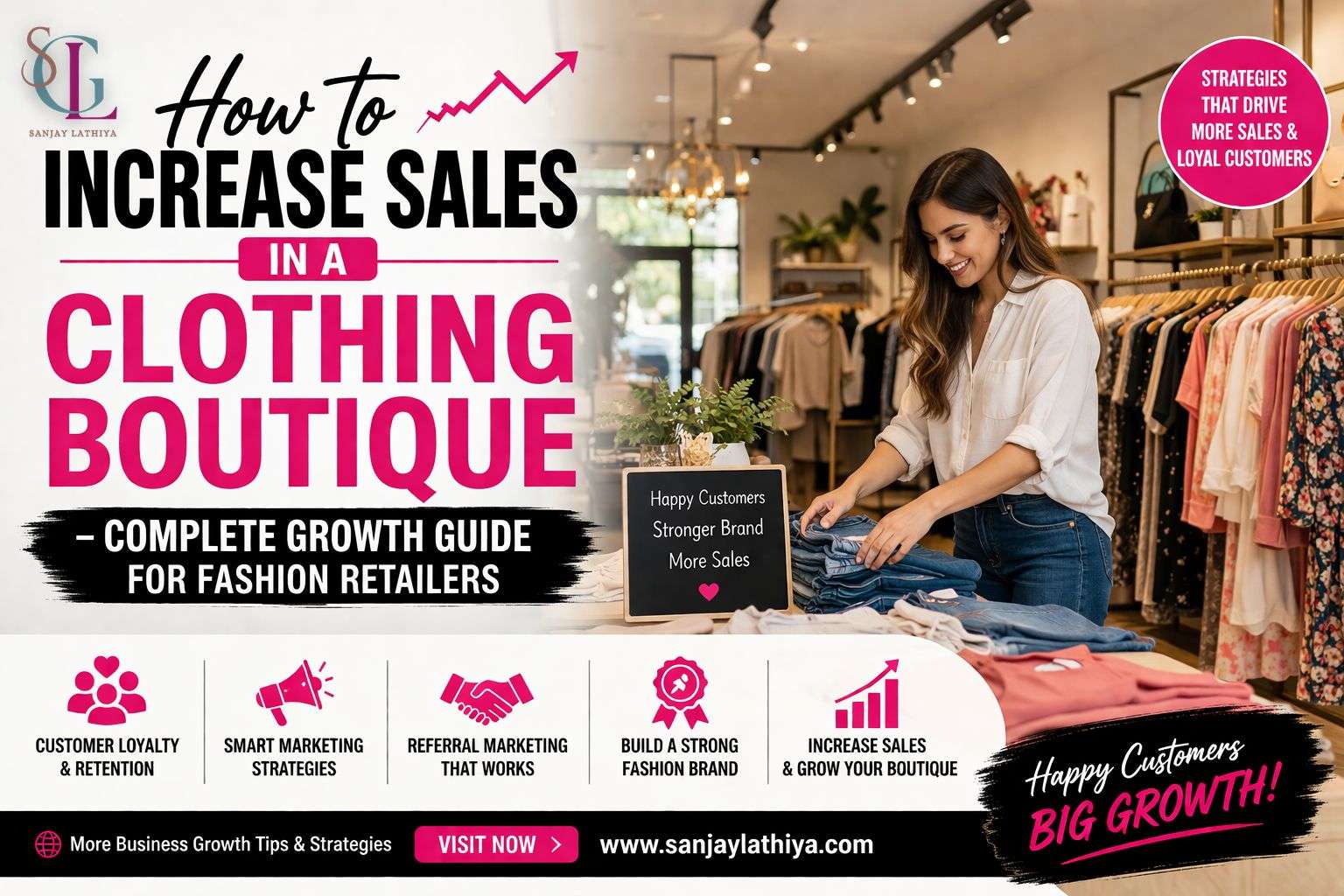
How to Increase Sales in a Clothing Boutique – Complete Growth Guide for Fashion Retailers
April 30, 2026
Running a boutique in today’s fashion market feels a little like walking a runway during a storm. Trends change overnight, customers scroll endlessly through Instagram, and competition grows every single day. That’s exactly why understanding how to increase sales in a clothing boutique has become one of the most important goals for fashion business owners in 2026. A boutique is no longer just about beautiful clothes on racks. It is now about customer experience, emotional connection, personalization, social proof, and smart digital marketing strategies that create repeat buyers instead of one-time shoppers.
Recent fashion retail reports show that nearly 73% of shoppers expect a consistent shopping experience across all channels, while 86% are willing to pay more for better customer experience. These numbers clearly prove that boutiques must go beyond selling products. Customers want styling advice, fast communication, engaging social media, loyalty rewards, and a memorable shopping atmosphere. If your boutique can provide all of that together, your sales growth becomes much faster and more sustainable.
The good news is that small boutiques actually have an advantage over giant fashion brands. Unlike mass retailers, boutiques can offer personal attention, curated collections, exclusive designs, and authentic relationships with buyers. That personal touch becomes your strongest weapon. Whether you own an online boutique, a physical fashion store, or both, the right combination of customer retention, referral marketing, branding, and digital promotion can dramatically increase your revenue within months.
If you want to grow your fashion business professionally, you can also explore expert fashion business insights at Sanjay Lathiya Official Website.
Why Boutique Sales Growth Matters in 2026
The fashion industry is evolving rapidly. Modern customers are no longer attracted only by discounts or flashy advertisements. They now look for authenticity, emotional connection, and convenience. According to recent fashion retail insights, independent boutiques are growing because customers increasingly prefer unique fashion collections over mass-produced fast fashion. This shift creates a huge opportunity for boutique owners who know how to build trust and customer loyalty.
One of the biggest reasons boutiques struggle is inconsistent marketing. Many store owners focus only on getting new customers while ignoring existing buyers. That approach is expensive because acquiring a new customer costs significantly more than retaining an old one. Successful boutiques focus on repeat customers because loyal buyers spend more money, recommend the store to friends, and engage more on social media.
Another important factor is digital influence. Studies show that nearly 70% of retail sales are digitally influenced today. That means customers often discover your boutique online before visiting your store physically. Your Instagram page, website design, Google reviews, and WhatsApp communication all directly affect your sales performance. Even a beautiful boutique can lose customers if its online presence looks outdated or inactive.
Understanding these trends helps boutique owners create long-term strategies instead of temporary sales spikes. The boutiques that survive and grow in 2026 are the ones combining technology, customer experience, and emotional branding together.
Understanding Your Boutique Customers
Before applying any marketing strategy, you must deeply understand your audience. Think about it this way: you cannot sell luxury heels to someone searching for affordable casual wear. Many boutique owners make the mistake of targeting everyone, but successful businesses focus on a specific customer type and serve them exceptionally well.
Start by building customer personas. Identify the age group, fashion preferences, shopping habits, budget range, and lifestyle of your ideal customers. Are they college students looking for trendy outfits? Working professionals searching for elegant office wear? Brides shopping for premium ethnic collections? Every category requires different messaging and product presentation.
Customer behavior tracking is equally important. Watch which products receive the most inquiries, which Instagram posts generate more saves, and which collections sell faster during festivals or wedding seasons. Data reveals patterns that help you stock smarter and market more effectively. Boutique owners who understand customer psychology usually outperform competitors even with smaller advertising budgets.
Modern shoppers also value convenience. Fast replies on WhatsApp, easy return policies, and personalized recommendations improve customer satisfaction significantly. According to fashion retail customer experience reports, poor staff engagement directly contributes to missed sales opportunities. This means every interaction matters. A single friendly conversation can convert a casual browser into a loyal customer.
Learning customer behavior also improves inventory management. You can avoid dead stock, invest in high-demand designs, and predict seasonal trends more accurately. In fashion retail, understanding the customer is not optional anymore—it is the foundation of growth.
Customer Loyalty and Retention Strategy
Every boutique owner wants more sales, but smart business owners focus on customer retention first. A strong customer loyalty and retention strategy can transform occasional buyers into lifetime customers. Imagine having hundreds of loyal customers who automatically check your new arrivals before shopping anywhere else. That kind of loyalty creates stable revenue and reduces dependence on expensive advertisements.
Loyalty programs work because they tap into emotional psychology. People naturally enjoy feeling valued and rewarded. Offering points, cashback, birthday discounts, VIP access, or exclusive styling sessions encourages customers to return regularly. Fashion retailers across the world are now investing heavily in loyalty-focused experiences because emotional engagement increases long-term profitability.
Personalization is another major factor. Customers love hearing their names, receiving outfit suggestions based on previous purchases, and getting personalized festival recommendations. Even small gestures like handwritten thank-you notes inside shopping bags create memorable experiences. These details separate premium boutiques from ordinary clothing stores.
A successful customer loyalty and retention strategy should also include communication consistency. Send updates about new arrivals, festive offers, and exclusive previews through WhatsApp broadcasts or email newsletters. However, avoid spamming customers. Communication should feel helpful and exciting, not annoying. Boutique owners who maintain warm relationships often experience higher repeat purchases without increasing ad spend.
Fashion is emotional. People buy clothes not only because they need them but because fashion makes them feel confident, stylish, and expressive. When customers emotionally connect with your boutique, price becomes less important. Loyalty becomes your competitive advantage.
Strategies to Build Customer Loyalty
Strong strategies to build customer loyalty focus on emotional relationships instead of aggressive selling. One of the easiest ways to create loyal customers is by building a fashion community around your boutique. Social media platforms like Instagram and Facebook are not just sales tools anymore—they are community platforms where customers interact with brands personally.
Posting styling videos, customer transformations, behind-the-scenes content, and real customer reviews creates authenticity. People trust real experiences more than polished advertisements. Modern buyers especially love relatable content. Short-form video content showing outfit combinations, styling hacks, and “new arrivals try-on” videos often generates significantly more engagement than traditional product photos.
VIP memberships are another powerful retention method. Create exclusive clubs where members receive early access to launches, additional discounts, or free alterations. This makes customers feel special and emotionally connected to your boutique brand. Some successful boutiques even host small in-store events, styling workshops, or festive shopping nights for loyal buyers.
Another one of the most effective strategies to build customer loyalty is excellent customer service. Quick replies, honest suggestions, and friendly interaction can outperform expensive marketing campaigns. Customers remember how your boutique made them feel. If shopping feels enjoyable, they naturally return again and again.
Community engagement also strengthens social proof. Encourage customers to post their outfits and tag your boutique. User-generated content acts like free advertising while building trust among potential buyers. In fashion retail, social proof can influence purchasing decisions dramatically.
Marketing Strategy for Clothing Boutique
A smart marketing strategy for clothing boutique businesses must combine online visibility, storytelling, and local branding together. Simply posting random product pictures on Instagram is not enough anymore. Your marketing should create desire, excitement, and urgency.
Instagram Reels currently dominate fashion marketing because short videos attract higher engagement than static images. Simple content ideas like “3 Ways to Style This Kurti,” “Festive Outfit Under ₹1999,” or “Before and After Boutique Styling” work extremely well. Fashion buyers want inspiration, not just product catalogs.
WhatsApp marketing is another underrated tool for boutiques. Many Indian fashion businesses generate strong sales using WhatsApp catalogs, personalized recommendations, and direct customer communication. Unlike traditional email marketing, WhatsApp feels more personal and immediate. Customers often respond faster and ask questions directly.
An effective marketing strategy for clothing boutique growth also includes local SEO optimization. Your boutique should appear on Google Maps with updated photos, reviews, contact details, and business hours. Positive Google reviews improve trust and increase store visits significantly. Local search visibility matters because nearby customers frequently search terms like “best women boutique near me” or “designer ethnic wear store.”
Collaborating with local influencers can also accelerate boutique visibility. You do not always need celebrities. Even micro-influencers with loyal local audiences can generate strong engagement and targeted traffic. The key is authenticity. Choose creators whose fashion style matches your boutique identity.
For more retail growth insights, you can also explore Fashion Retail Growth Strategies.
Physician Referral Marketing Strategies
At first glance, physician referral marketing strategies may sound unrelated to fashion boutiques. However, the psychology behind referral systems works across every industry. Doctors grow through trust-based recommendations, and boutiques can use the exact same principle to increase customer acquisition.
People trust recommendations from friends more than advertisements. That is why referral marketing works so effectively in fashion retail. Offer incentives when customers refer friends to your boutique. For example, both the referrer and new customer can receive shopping credits or discounts. This creates a win-win situation that encourages organic growth.
Fashion influencers also work like digital referrals. When trusted creators wear your products, their followers automatically become interested in your boutique. Customers perceive influencer recommendations as social proof, especially when the content looks natural instead of overly promotional.
Another way to apply physician referral marketing strategies in fashion is by creating partnerships with wedding planners, makeup artists, salons, photographers, and event organizers. These professionals interact with fashion-conscious customers regularly and can recommend your boutique naturally. Such referral ecosystems create highly targeted leads with strong purchase intent.
Referral-based marketing is powerful because it reduces customer acquisition costs while increasing trust. Instead of chasing cold audiences, you grow through warm recommendations. That approach feels more human and sustainable in the long term.
Referral Marketing Strategy B2B
A successful referral marketing strategy b2b approach can open entirely new revenue channels for your boutique. Many boutique owners focus only on direct consumers, but B2B collaborations can dramatically increase visibility and profitability.
Start by partnering with complementary businesses. Jewelry stores, salons, photographers, makeup artists, fashion stylists, and wedding planners all serve similar customer groups. Cross-promotions allow both businesses to benefit. For example, a salon can recommend your boutique for bridal outfits while you recommend the salon for wedding styling.
Wholesale and supplier relationships also matter. Boutique owners who maintain strong supplier connections often receive better pricing, early trend access, and exclusive collections. These advantages improve competitiveness and profitability.
A modern referral marketing strategy b2b should also include collaborative events. Host festive exhibitions, pop-up fashion events, or styling workshops with other local brands. These events attract new audiences while strengthening community recognition. Customers enjoy discovering multiple fashion-related services in one place.
B2B networking is not just about sales. It builds reputation. When respected local businesses recommend your boutique, customer trust increases automatically. In fashion retail, trust directly influences buying decisions.
Brand Loyalty in Fashion Industry
Building brand loyalty in fashion industry markets requires emotional storytelling, consistency, and authenticity. Fashion is deeply personal. People wear clothing to express identity, confidence, and social image. That emotional connection creates opportunities for strong brand loyalty.
Your boutique should have a recognizable personality. Whether your style is elegant ethnic wear, luxury bridal fashion, affordable streetwear, or minimalist western outfits, consistency matters. Customers should immediately recognize your boutique’s aesthetic across Instagram, website visuals, store interiors, and packaging.
Storytelling is another powerful branding tool. Share the inspiration behind collections, introduce team members, and highlight customer success stories. Buyers connect more strongly with brands that feel human and relatable.
One major trend in brand loyalty in fashion industry research is personalization. Customers increasingly expect curated recommendations and customized experiences. Fashion retailers who invest in personalization often achieve higher repeat purchases and customer satisfaction.
Consistency across online and offline channels is equally important. If your Instagram looks luxurious but your store experience feels unorganized, customers lose trust. Every touchpoint should communicate the same brand personality. Strong branding creates emotional memory, and emotional memory creates repeat customers.
Conclusion
Growing a successful boutique today requires much more than selling stylish clothes. Boutique owners who truly understand how to increase sales in a clothing boutique focus on relationships, branding, customer experience, and strategic marketing together. Modern shoppers want emotional connection, convenience, authenticity, and personalization. If your boutique delivers those consistently, growth becomes much easier.
The strongest boutiques are the ones that combine digital visibility with human interaction. Loyalty programs, referral marketing, influencer collaborations, WhatsApp communication, and strong branding all work together to create repeat customers and long-term profitability. Instead of competing only on price, focus on creating memorable shopping experiences that customers genuinely enjoy.
Fashion trends will always change, but customer psychology remains the same. People return to brands that make them feel confident, valued, and understood. Build trust first, and sales will naturally follow.