

Handloom Textile Industry in India: Major Hubs, Products, and Market Opportunities
August 18, 2026
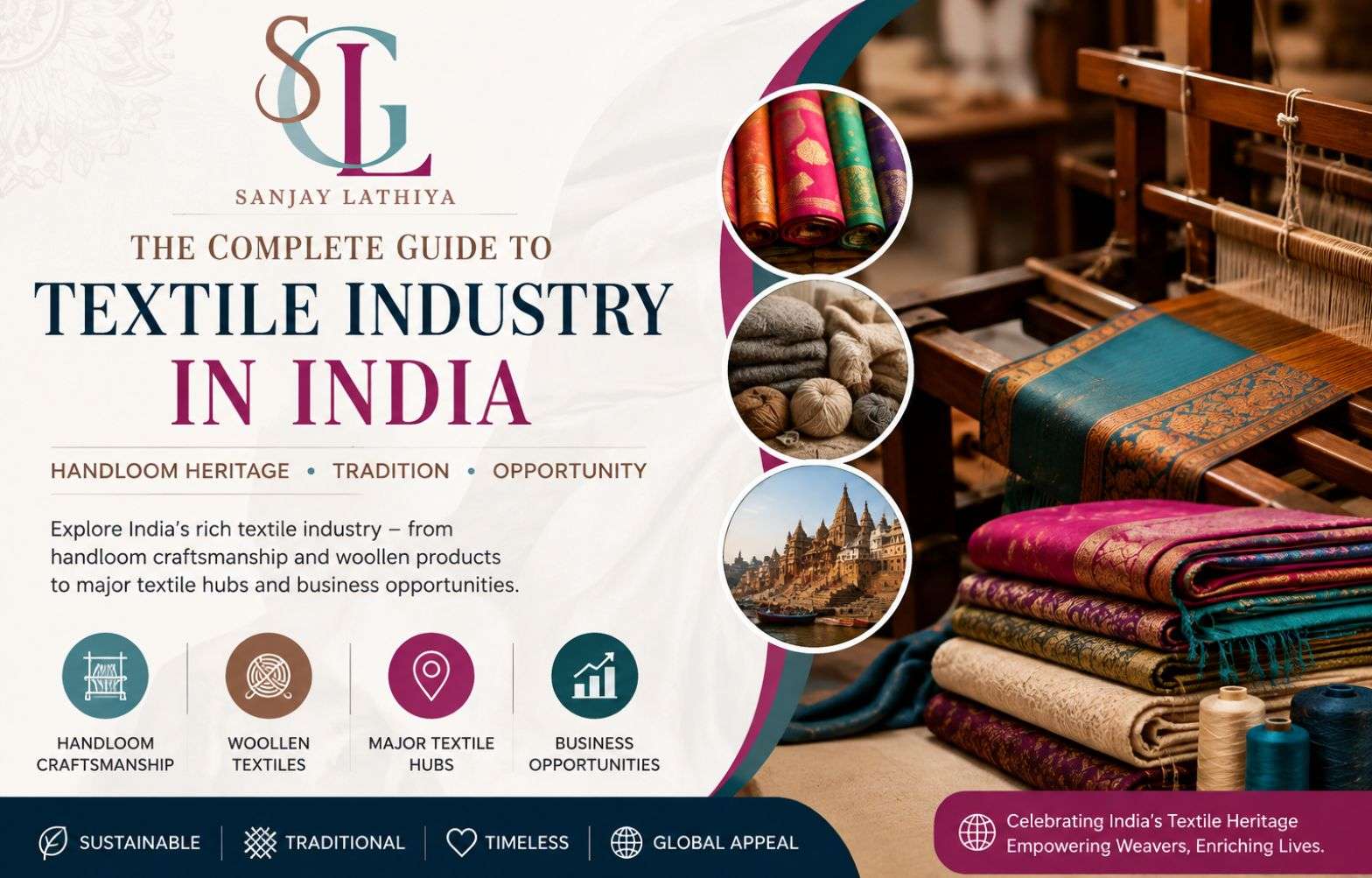
India's textile heritage is deeply connected with handloom weaving, traditional craftsmanship, natural fibres, and region-specific designs. The textile industry in india is one of the country's important economic sectors, supporting manufacturers, artisans, traders, exporters, retailers, and millions of livelihoods across the value chain. Within this broad sector, handloom products continue to attract consumers because of their craftsmanship, cultural identity, and unique designs.
For buyers and businesses, understanding the textile industry in india means looking beyond large-scale manufacturing and exploring the regional handloom clusters that produce sarees, dress materials, fabrics, home textiles, woollen products, and silk textiles.
handloom textile industry in india
The handloom textile industry in india represents a diverse network of weavers and producer groups spread across different states. Major weaving traditions include Banarasi, Kanchipuram, Chanderi, Kota, Bhagalpur, Pochampally, Jamdani, Assam silk, and many other regional varieties.
The Government of India's Development Commissioner (Handlooms) focuses on cluster development, marketing assistance, skill development, product diversification, design support, raw-material access, and better market opportunities for weavers.
For entrepreneurs, this sector creates opportunities in wholesale trading, online retail, fashion brands, home décor, export markets, and private-label businesses. Government-supported handloom programmes also encourage product development, exhibitions, marketing activities, and cluster-level infrastructure.
handloom textile industry in india
The handloom textile industry in india is particularly valuable because every region has its own weaving identity. Businesses can source products according to fabric type, design, customer segment, and price range.
For example, cotton handlooms are suitable for everyday apparel and summer collections, while silk and premium woven fabrics can target wedding, festive, luxury, and occasion-wear markets. Home-textile products such as bedsheets, towels, curtains, table runners, and cushion covers also provide opportunities for retailers.
The sector is supported by organized handloom clusters and producer companies. The Development Commissioner (Handlooms) states that producer companies are being facilitated to help weavers work professionally and gain economies of scale.
woolen textile industry in india
The woolen textile industry in india has an important position in regions where wool production, cold-weather clothing, and traditional weaving have developed over generations. Woollen fabrics are used for shawls, blankets, sweaters, scarves, carpets, winter accessories, and other products.
Major opportunities exist in sourcing woollen products from northern and Himalayan regions and selling them through regional markets, online platforms, boutiques, and winter-fashion businesses. Product quality, fibre composition, finishing, and design are important factors when purchasing woollen products in bulk.
woolen textile industry in india
The woolen textile industry in india also offers opportunities for businesses interested in premium and traditional products. Woollen shawls, handwoven blankets, carpets, and winter accessories can be positioned as handcrafted, heritage-inspired, or sustainable products.
For wholesalers, success depends on selecting reliable suppliers, checking fabric quality, understanding minimum order quantities, and maintaining consistent product specifications. Online catalogues and digital marketing can further help suppliers reach retailers outside their traditional markets.
list of textile industry in indiaA list of textile industry in india categories can include cotton textiles, silk textiles, woollen textiles, synthetic fibres, blended fabrics, jute textiles, technical textiles, apparel, home textiles, and handloom products.
Some important textile and handloom centres include:
-
Varanasi: Banarasi silk and brocade weaving.
-
Kanchipuram: Traditional silk sarees.
-
Chanderi: Lightweight silk-cotton and cotton fabrics.
-
Kota: Kota Doria fabrics and sarees.
-
Bhagalpur: Silk and tussar-related textile products.
-
Pochampally: Ikat weaving.
-
Assam: Muga, Eri, and other silk traditions.
-
West Bengal: Cotton, silk, and Jamdani-related weaving.
-
Odisha: Ikat and traditional handwoven textiles.
-
Gujarat: Cotton textiles and traditional weaving traditions.
The official handloom database covers numerous states and territories, demonstrating the geographical breadth of India's weaving sector.
list of textile industry in indiaWhen preparing a list of textile industry in india for sourcing purposes, businesses should consider more than location. They should evaluate product specialization, raw materials, production capacity, craftsmanship, wholesale pricing, transportation, customization, and quality-control processes.
The presence of dedicated handloom clusters can make sourcing easier because businesses may access groups of artisans and supporting facilities in concentrated locations. The government also identifies mega handloom clusters for comprehensive development and infrastructure support.
challenges in textile industry in indiaThe challenges in textile industry in india include rising production costs, raw-material availability, competition from machine-made products, changing consumer preferences, limited market access, and the need for modern designs.
Handloom businesses can also face challenges related to productivity and scale because handmade production requires time and specialized skills. According to the Development Commissioner (Handlooms), several traditional weaves are facing structural, economic, and socio-cultural challenges, including an ageing weaver base, competition from powerloom and machine-made alternatives, weak market linkages, and raw-material constraints.
challenges in textile industry in indiaOther challenges in textile industry in india include maintaining consistent quality, building strong brands, reaching international customers, and adapting traditional products to contemporary fashion.
However, these challenges can also create commercial opportunities. Businesses that combine traditional craftsmanship with modern designs, professional packaging, e-commerce, digital promotion, and reliable customer service can build stronger brands.
Describe briefly the distribution of silk textile industry in india
To describe briefly the distribution of silk textile industry in india, it is useful to understand that silk production and weaving are distributed across several important regions rather than being concentrated in one location. Karnataka is a major silk-producing and weaving region, while West Bengal, Assam, Andhra Pradesh, Telangana, Tamil Nadu, Uttar Pradesh, and other states have important silk traditions.
Each region has developed distinctive fabrics, motifs, weaving methods, and cultural styles. Banarasi silk is strongly associated with Varanasi, Kanchipuram silk with Tamil Nadu, while Assam is known for distinctive silk traditions including Muga and Eri.
describe briefly the distribution of silk textile industry in indiaWhen businesses describe briefly the distribution of silk textile industry in india, they should also consider the difference between silk cultivation, yarn processing, weaving, dyeing, finishing, and garment production. These activities can take place in different locations within the overall supply chain.
This regional specialization gives wholesalers and retailers an opportunity to source directly according to product requirements. It also makes India's silk sector attractive for wedding wear, ethnic fashion, luxury sarees, scarves, furnishings, and premium textile collections.
Market Opportunities in India's Handloom Sector
The commercial potential of India's handloom sector is expanding through online shopping, social commerce, boutique fashion, export demand, and growing interest in traditional products. Businesses can create collections around regional identities, natural fabrics, handcrafted designs, and sustainable fashion.
Wholesale buyers should compare suppliers carefully before placing large orders. Important factors include fabric composition, weaving technique, finishing, colour consistency, packaging, production capacity, delivery timelines, and return or replacement policies.
Digital catalogues can also make traditional products easier to sell across cities and states. A supplier with strong product photography, clear descriptions, competitive pricing, and dependable logistics can reach retailers without relying entirely on physical markets.
The government's handloom initiatives also emphasize marketing, product diversification, design intervention, and expansion of domestic and international markets.
Why Handloom Products Can Be a Strong Business Opportunity
Handloom products can appeal to multiple customer groups, including ethnic-fashion shoppers, boutique owners, interior designers, gift buyers, exporters, and environmentally conscious consumers. Their regional stories and craftsmanship can provide additional branding value.
For wholesalers, the best approach is to build a focused product portfolio instead of purchasing every type of textile. Selecting a few high-demand categories can simplify inventory management and improve marketing.
If you are looking for digital business, branding, or professional information, you can also explore Sanjay Lathiya for additional resources.
Conclusion
India's handloom sector combines traditional craftsmanship with modern commercial possibilities. From cotton and woollen fabrics to silk sarees and home textiles, regional specialization gives buyers numerous sourcing options.
The textile industry in india continues to evolve as traditional manufacturers, artisans, wholesalers, retailers, and digital businesses adopt new ways of reaching customers. For entrepreneurs, the strongest opportunities lie in identifying reliable production clusters, understanding customer demand, maintaining quality, and creating differentiated product collections.
The textile industry in india can therefore be viewed not only as a traditional manufacturing sector but also as a growing marketplace for fashion, wholesale, e-commerce, exports, and heritage-focused brands.
Call to Action
Are you planning to enter the handloom, textile, or wholesale market? Start by researching the right product category, identifying reliable suppliers, comparing wholesale prices, and developing a focused product range. Build your online presence, showcase authentic products, and connect with buyers looking for quality Indian textiles. With the right sourcing and marketing strategy, India's rich handloom heritage can become a strong foundation for a profitable textile business.