

Famous Tourist Places in Delhi You Must Visit at Least Once in Your Life
May 26, 2026
Delhi is not just the capital city of India; it is a living museum where history breathes through every street, monument, and marketplace. Travelers from across the world visit Delhi to experience its royal architecture, colorful traditions, delicious street food, and vibrant nightlife. The city beautifully combines old-world charm with modern urban energy. From the majestic Red Fort to the buzzing lanes of Chandni Chowk, every corner of Delhi tells a story that stretches across centuries.
The popularity of famous tourist places in Delhi has increased rapidly in recent years because tourists now want destinations that offer culture, food, shopping, and history together. According to the Delhi tourism department, the city continues to attract millions of domestic and international visitors every year because of its strong heritage value and excellent connectivity. Delhi has ancient Mughal monuments, peaceful temples, lively markets, luxurious cafés, and modern entertainment hubs that appeal to every type of traveler.
If you are planning a Delhi trip, this guide will help you explore the best places, understand the city’s traditions, and discover why Delhi remains one of India’s most loved travel destinations.
Why Delhi Attracts Millions of Tourists Every Year
Delhi is one of those cities that surprises people constantly. One moment you are walking inside a 16th-century Mughal fort, and the next moment you are sitting inside a luxury café surrounded by skyscrapers and modern malls. This contrast gives Delhi a unique personality that very few cities in the world can match. Tourists enjoy the city because it offers multiple experiences in one place. Whether someone loves spirituality, architecture, food, shopping, nightlife, or photography, Delhi has something memorable waiting for them.
Tourism reports show that Delhi receives one of the highest numbers of international visitors in India because it serves as a major entry point for global travelers. The city is also connected through metro systems, airports, highways, and railway networks, making travel convenient for tourists. Another important reason behind Delhi’s popularity is affordability. Travelers can explore historical monuments, eat incredible food, and shop in local markets without spending huge amounts of money.
The beauty of Delhi lies in its diversity. A traveler can enjoy luxury hotels in New Delhi, street food in Old Delhi, peaceful spiritual places like Akshardham Temple, and cultural markets such as Dilli Haat in a single day. This mix of experiences keeps tourists coming back again and again.
Delhi Culture and Heritage
The soul of Delhi can truly be understood through its traditions, architecture, and local lifestyle. Delhi culture and heritage represent centuries of influence from Mughal rulers, British colonial history, Sikh traditions, and modern Indian culture. Walking through Delhi feels like reading different chapters of Indian history together. Every monument, market, and neighborhood reflects a different era and cultural identity.
One of the most fascinating things about Delhi culture and heritage is how smoothly ancient traditions coexist with modern lifestyles. People in Delhi celebrate festivals from all religions with equal excitement. Diwali lights brighten markets, Eid brings delicious Mughlai food to Jama Masjid streets, and Gurpurab celebrations fill Sikh temples with devotion and music. This cultural harmony makes Delhi emotionally rich as well as visually beautiful.
The city’s heritage is also visible in its architecture. Mughal structures such as Humayun’s Tomb and Jama Masjid showcase Persian-inspired design, while British-era buildings near Connaught Place reveal colonial elegance. Delhi Tourism highlights the city as a place where ancient and modern India blend naturally together. Travelers who enjoy history and culture often spend days exploring these heritage zones because every monument carries stories of kings, emperors, wars, and revolutions.
Famous Historical Places in Delhi
Delhi is home to some of India’s most iconic historical monuments. These attractions are not only beautiful but also deeply connected to India’s political and cultural journey. Exploring these sites helps visitors understand how Delhi became one of the most historically important cities in Asia.
Red Fort
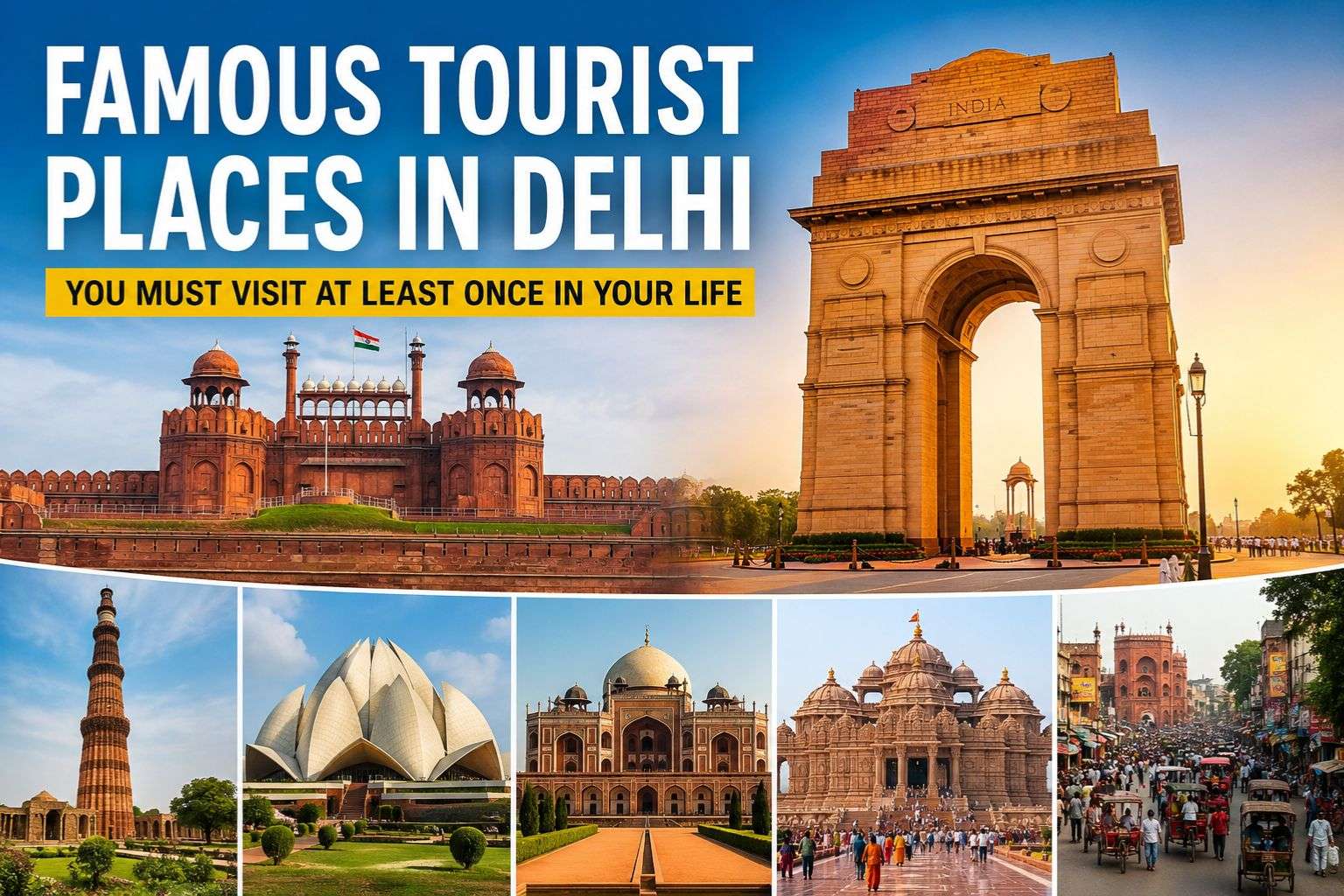
The Red Fort is one of the most visited monuments in India and remains a symbol of India’s independence and Mughal power. Built by Emperor Shah Jahan in the 17th century, this massive red sandstone fort reflects the brilliance of Mughal architecture. Every year, the Prime Minister hoists the Indian flag here on Independence Day, making the monument emotionally important for Indians.
Tourism reports show that the Red Fort continues to attract millions of visitors annually. The massive gates, royal halls, gardens, and museums inside the fort give tourists a glimpse into the luxurious lifestyle of Mughal emperors.
Qutub Minar
Qutub Minar stands tall as one of Delhi’s greatest architectural wonders. This UNESCO World Heritage Site attracts large numbers of foreign tourists every year because of its historical significance and unique design. Built in the 12th century, the tower reflects Indo-Islamic architecture and remains one of the tallest brick minarets in the world.
Visitors love the detailed carvings, surrounding ruins, and peaceful atmosphere around the monument. Photography lovers especially enjoy capturing the monument during sunset.
Humayun’s Tomb
Humayun’s Tomb is often called the inspiration behind the Taj Mahal because of its symmetrical Mughal architecture and stunning gardens. This monument perfectly showcases Persian design influences in India. The peaceful environment around the tomb makes it ideal for travelers who enjoy calm historical places away from heavy crowds.
India Gate
India Gate is one of Delhi’s most famous landmarks and a favorite evening destination for locals and tourists alike. Built in memory of Indian soldiers who died during World War I, the monument stands proudly in the heart of New Delhi. Families gather here during evenings to enjoy street snacks, cool weather, and beautiful lighting around the monument.
Famous Street Food Places in Delhi
Delhi’s food scene is legendary. The city is often called a paradise for food lovers because every street offers something delicious and unique. The charm of famous street food places in Delhi lies not only in taste but also in the experience. Food stalls filled with smoke, spices, sizzling sounds, and crowded lanes create an atmosphere that feels energetic and unforgettable.
The most iconic among the famous street food places in Delhi is Chandni Chowk. This old market area is filled with generations-old food shops serving parathas, jalebis, chaat, kebabs, and lassi. Walking through these narrow lanes feels like entering a giant open-air restaurant where every few steps introduce a new aroma. Food lovers especially visit Paranthe Wali Gali for stuffed parathas cooked in traditional style.
Connaught Place is another favorite destination for food lovers. Here tourists can enjoy a mix of traditional Indian snacks and modern cafés. From spicy chole bhature to gourmet coffee, the area offers something for every budget and taste. Delhi’s street food culture reflects the city’s diversity because recipes from Punjab, Uttar Pradesh, Mughal kitchens, and modern fusion cuisine all exist together.
If you want to explore more about Delhi tourism and travel planning, you can also visit Delhi Tourism for updated travel information and destination guides.
Night Street Food in Delhi
Delhi transforms into a completely different city after sunset. The streets become brighter, markets become more crowded, and food stalls begin serving late-night snacks that attract students, office workers, and tourists. The energy of night street food in Delhi is something every traveler should experience at least once.
One of the reasons why night street food in Delhi has become so popular is the city’s late-night culture. Areas like Chandni Chowk, Jama Masjid, Connaught Place, and Hudson Lane remain active till late night with food lovers exploring different flavors. Jama Masjid especially becomes a food paradise during evenings, where smoky kebabs, biryanis, and Mughlai dishes attract huge crowds.
Late-night food in Delhi is not limited to heavy meals. Tourists also enjoy momos, kulhad chai, rolls, pav bhaji, and sweet desserts sold through small roadside stalls. The beauty of Delhi’s night food culture is its affordability. Even budget travelers can enjoy rich flavors without spending much money.
Travel bloggers and tourists often compare Delhi’s food streets to giant food festivals because every lane offers a completely different experience. The sounds of cooking, people laughing, and vendors calling customers create an atmosphere that feels alive and authentic.
Why Is Delhi Called the Heart of India
Many people ask, why is Delhi called the heart of India? The answer lies in the city’s political, cultural, and historical importance. Delhi sits at the center of India’s national identity because it has served as the capital for multiple empires and modern governments across centuries.
The phrase why is Delhi called the heart of India also becomes clear when you see how the city connects different parts of the country. People from every Indian state live in Delhi, bringing their languages, traditions, food, and lifestyles with them. This creates a multicultural environment where India’s diversity becomes visible in everyday life.
Delhi is also India’s political center. Important institutions such as Parliament House, Rashtrapati Bhavan, and Supreme Court are located here. National decisions affecting millions of people are made in Delhi every day. Because of this, the city holds enormous emotional and administrative importance.
Another reason behind Delhi’s title as the heart of India is its historical legacy. Ancient rulers, Mughal emperors, British administrators, and modern Indian leaders have all shaped Delhi’s identity. Walking through Delhi feels like traveling through India’s timeline itself.
Famous Tourist Places in Delhi for Modern Travelers
Modern travelers want more than monuments. They want experiences that combine photography, shopping, relaxation, and entertainment. That is why the modern side of famous tourist places in Delhi has become increasingly popular among younger tourists.
Akshardham Temple is one example of modern spiritual tourism in Delhi. The temple combines grand architecture with exhibitions, musical fountains, and cultural storytelling. According to tourism reports, it remains one of the city’s biggest attractions for both domestic and foreign visitors.
Places like Dilli Haat offer visitors handmade crafts, regional food stalls, and cultural performances from different Indian states. Connaught Place attracts shoppers, café lovers, and nightlife enthusiasts. Lodhi Garden has become popular among fitness lovers, photographers, and couples because of its peaceful greenery and historical structures.
Tourists today also enjoy exploring hidden gems like Agrasen Ki Baoli and Mehrauli Archaeological Park because these places provide quieter experiences compared to heavily crowded monuments. Delhi continues evolving with modern tourism trends while still protecting its historical identity.
Cultural Importance of Delhi in India
The cultural importance of Delhi in India goes far beyond tourism. Delhi represents India’s ability to preserve ancient traditions while embracing modernization. The city influences fashion, food, literature, music, politics, education, and media across the country.
One major aspect of the cultural importance of Delhi in India is its festival culture. Events like Diwali, Holi, Durga Puja, Eid, Christmas, and Gurpurab are celebrated with equal enthusiasm. Cultural festivals, art exhibitions, fashion events, and literature festivals regularly attract visitors from around the world.
Delhi is also a major center for education and intellectual activity. Universities, museums, libraries, and art galleries contribute strongly to India’s cultural development. Areas like Hauz Khas and Lodhi Art District showcase modern creativity through street art, design cafés, and music events.
Experts believe Delhi’s cultural influence continues growing because the city constantly reinvents itself while protecting its heritage identity. Government investments in tourism and culture are also helping improve visitor experiences across major attractions.
For travelers who want to explore travel guides, digital marketing insights, and tourism-related content, you can also visit Sanjay Lathiya Official Website.
Best Time to Visit Delhi
The best time to visit Delhi is between October and March because the weather remains pleasant during these months. Winter mornings in Delhi feel magical, especially near monuments covered with light fog. Tourists can comfortably explore outdoor attractions, street markets, and food streets without extreme heat.
Summers in Delhi can become extremely hot, with temperatures sometimes crossing 45 degrees Celsius. Monsoon season brings relief from heat but also creates humidity and traffic challenges. Most tourists therefore prefer winter travel for sightseeing and cultural experiences.
Travelers visiting Delhi during festival seasons enjoy even richer experiences because markets become beautifully decorated and cultural programs take place across the city. Winter food festivals and night markets also attract large crowds during this period.
Conclusion
Delhi is more than a travel destination. It is an experience filled with stories, flavors, emotions, and contrasts. The city welcomes travelers with historical monuments, colorful markets, spiritual centers, and unforgettable street food. Whether you are exploring Mughal architecture, tasting late-night kebabs, shopping in local bazaars, or enjoying peaceful gardens, Delhi leaves a lasting impression on every visitor.
The charm of Delhi lies in its ability to connect the past with the present. Ancient forts stand beside modern skyscrapers, traditional food survives beside global cafés, and cultural diversity exists in every neighborhood. That is why millions of tourists continue visiting Delhi every year and why the city proudly remains the heart of India.
If you are planning your next travel adventure, Delhi deserves a place at the top of your list.
FAQs
1. What are the most famous tourist places in Delhi?
Some of the most famous tourist places in Delhi include Red Fort, Qutub Minar, India Gate, Humayun’s Tomb, Akshardham Temple, Lotus Temple, and Jama Masjid.
2. Why is Delhi famous for street food?
Delhi is famous for street food because it offers a huge variety of affordable and flavorful dishes influenced by Mughal, Punjabi, and North Indian cuisines.
3. Which is the best season to visit Delhi?
The best season to visit Delhi is winter, especially between October and March when the weather is pleasant for sightseeing.
4. Why is Delhi called the heart of India?
Delhi is called the heart of India because it is the country’s political capital, cultural hub, and historical center connecting people from all regions.
5. Is Delhi good for family tourism?
Yes, Delhi is excellent for family tourism because it offers historical monuments, cultural attractions, shopping markets, parks, museums, and delicious food suitable for all age groups.