

Fabric Manufacturing Company: A Complete Guide to Quality Fabrics, Production, and Wholesale Supply
October 16, 2026
Fabric manufacturing company
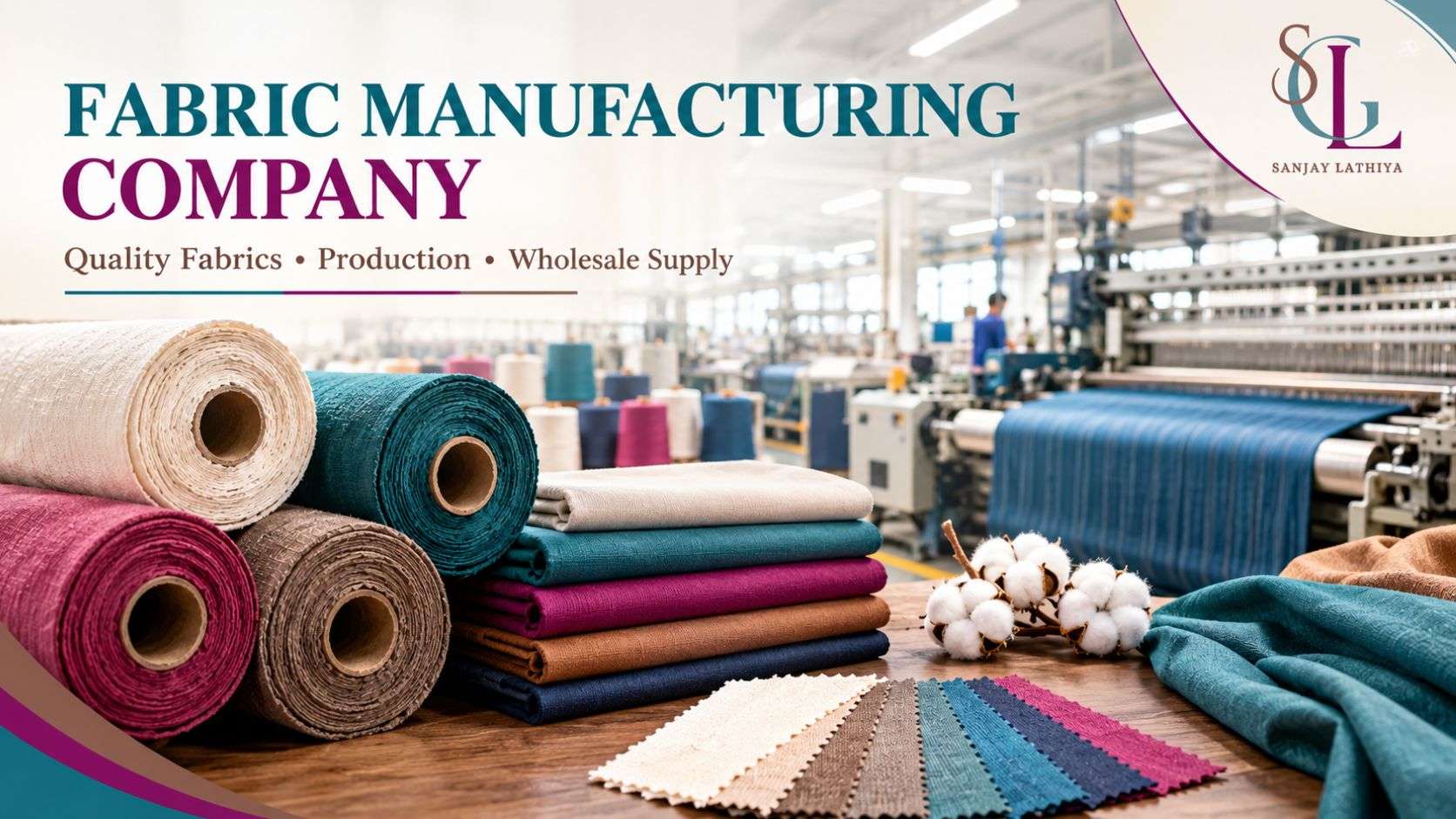
A fabric manufacturing company plays an important role in the textile and fashion industries by converting raw fibers and yarns into finished fabrics for clothing, home furnishings, uniforms, and industrial applications. From selecting raw materials to weaving, dyeing, finishing, and packaging, every production stage influences fabric quality and the final selling price.
For entrepreneurs, garment manufacturers, retailers, and wholesale buyers, understanding the fabric production process can help identify business opportunities, manage costs, and develop reliable supply chains. Whether you plan to manufacture cotton fabric or purchase textiles in bulk, learning how production and pricing work is essential for making informed business decisions.
Fabric Manufacturing Company in India: Understanding the Textile Industry
India has an established textile ecosystem that includes fiber producers, spinning mills, weaving units, knitting facilities, dyeing houses, garment manufacturers, and wholesale distributors. A fabric manufacturing company in India may specialize in cotton, polyester, rayon, denim, knitted fabric, printed textiles, or blended materials, depending on its machinery and target market.
Before selecting a fabric, buyers should consider its intended use, durability, texture, colorfastness, shrinkage, and price. Manufacturers must also evaluate raw material availability, production capacity, labor expenses, energy consumption, and customer demand.
Businesses exploring responsible sourcing can review textile fibers and materials to understand the different fiber categories and material sourcing considerations.
Fabric Manufacturing Companies in India: Types and Specializations
Fabric manufacturing companies in India operate through different production models. Some purchase yarn and manufacture fabric, while others specialize in processing, printing, dyeing, or finishing fabric supplied by another mill.
Common manufacturing categories include:
-
Cotton fabric: Used for shirts, dresses, kurtis, bedsheets, and everyday clothing.
-
Polyester fabric: Popular for uniforms, sportswear, linings, and durable garments.
-
Rayon and viscose fabric: Used for dresses, ethnic wear, scarves, and fashionable apparel.
-
Denim fabric: Manufactured for jeans, jackets, shirts, and other casual garments.
-
Knitted fabric: Commonly used for T-shirts, leggings, activewear, and comfortable clothing.
-
Blended fabric: Combines different fibers to achieve specific performance, appearance, or cost requirements.
When comparing suppliers, request fabric samples, technical specifications, minimum order quantities, production timelines, and payment terms. Verify quality before committing to a large order.
How a Fabric Manufacturing Company Produces Quality Fabric
A professional fabric manufacturing company generally follows a structured production process to maintain consistency and reduce material waste.
1. Raw material sourcing: Manufacturers purchase cotton, polyester, rayon, or other fibers and yarns from suitable suppliers. Material selection affects fabric strength, softness, durability, and production costs.
2. Spinning and yarn preparation: Where spinning is part of the operation, fibers are converted into yarn. Manufacturers buying ready-made yarn can begin production at the weaving or knitting stage.
3. Weaving or knitting: Weaving interlaces yarns to create fabric, while knitting forms interconnected loops. The chosen technique determines stretch, texture, appearance, and suitability for different applications.
4. Dyeing and printing: Fabric may be dyed in a solid color or printed with patterns. Proper process control helps achieve the required shade and appearance.
5. Finishing and quality inspection: Finishing can improve softness, surface appearance, dimensional stability, or other specified properties. Quality checks may cover fabric width, weight, defects, shrinkage, and colorfastness.
6. Packaging and dispatch: Approved fabric is rolled, labeled, packed, and shipped to garment factories, wholesalers, retailers, or other buyers.
Cotton Fabric Manufacturers in Delhi Company: What Buyers Should Check
Businesses searching for a cotton fabric manufacturers in delhi company should compare product specifications, sample quality, pricing, and the supplier's ability to fulfill repeat orders. The wording of this search term is unusual, so buyers may also search for cotton fabric manufacturers in Delhi.
Before placing an order, ask about cotton composition, fabric construction, width, GSM (grams per square meter), dyeing options, shrinkage, and minimum order quantity. Confirm whether the quoted price includes processing, packaging, transportation, and applicable taxes.
A supplier offering a low initial price may not necessarily provide the best overall value. Consistent quality, dependable delivery, and transparent commercial terms can be more important for long-term business relationships.
Natural Fabric Dye Company Manufacturer: Dyeing and Color Quality
A natural fabric dye company manufacturer typically works with dyes derived from natural sources, such as plants and other biological materials, depending on the products and processes offered. Natural dyes can appeal to businesses seeking particular colors, finishes, or material stories, but results vary with the dye source, fabric composition, and processing method.
Manufacturers should assess color consistency, wash performance, lightfastness, dye compatibility, processing costs, and wastewater management before choosing a dyeing method. Natural dyes are not automatically impact-free; water use, mordants, processing chemicals, and waste treatment still require attention.
For technical background, manufacturers can consult textile dyeing and chemical handling guidance when evaluating dye storage, process control, safety, and pollution prevention.
Raw Material Costs, Production Expenses, and Fabric Pricing
The cost of manufacturing fabric depends on the type of fiber, yarn price, fabric construction, order volume, processing requirements, labor, energy, machinery, wastage, and transportation.
A practical costing method is to calculate the cost per meter or kilogram across all production stages.
| Cost component | What to include |
|---|---|
| Raw materials | Fiber or yarn purchases |
| Manufacturing | Spinning, weaving, or knitting charges |
| Processing | Dyeing, printing, and finishing |
| Labor and utilities | Wages, electricity, and water |
| Quality and wastage | Testing, rejected material, and production losses |
| Packaging and logistics | Rolling, packing, storage, and delivery |
| Business overhead | Rent, maintenance, administration, and financing |
Illustrative example: Suppose producing 1,000 meters of fabric costs ₹40,000 for yarn, ₹15,000 for weaving, ₹12,000 for dyeing and finishing, ₹8,000 for labor and utilities, and ₹5,000 for packaging and overhead allocation.
The total estimated production cost is ₹80,000, or ₹80 per meter. If the manufacturer targets a 25% gross margin on the selling price, the calculation is ₹80 ÷ (1 − 0.25) = approximately ₹106.67 per meter, before any additional selling expenses or taxes not already included.
These figures are examples, not current market quotations. Manufacturers should obtain supplier quotes and calculate their own costs before setting prices.
How to Sell Fabric and Build a Wholesale Customer Base
Once production and costing are established, the next step is to identify customers and create a sustainable sales process.
1. Choose a target market. Potential buyers include garment factories, clothing brands, boutiques, wholesalers, uniform suppliers, home textile businesses, and exporters.
2. Prepare a professional catalogue. Include clear fabric images, composition, width, GSM, available colors, minimum order quantity, and indicative prices. Explain customization and sampling options.
3. Set wholesale pricing. Calculate your minimum profitable selling price, then establish quantity-based price slabs. Account for discounts, commissions, credit periods, shipping, and customer acquisition costs.
4. Generate business inquiries. Use a business website, search engine optimization, industry directories, trade fairs, and direct outreach to relevant buyers. Publish useful information about fabric specifications, applications, and ordering procedures.
5. Convert samples into bulk orders. Send samples, confirm specifications in writing, issue a quotation, agree on payment and delivery terms, and obtain approval before beginning customized production.
6. Build repeat business. Maintain consistent quality, communicate delivery schedules, handle complaints professionally, and monitor customer feedback. Repeat orders can make production planning and inventory management more predictable.
Fabrication Manager Jobs Transformer Manufacturing Companies in India
The search phrase fabrication manager jobs transformer manufacturing companies in india relates primarily to industrial fabrication and electrical equipment manufacturing rather than textile production.
However, it highlights an important consideration for entrepreneurs: manufacturing businesses need skilled professionals to coordinate production, workforce scheduling, equipment maintenance, quality control, material procurement, and workplace safety. Textile factories similarly require production managers, weaving supervisors, dyeing specialists, quality inspectors, and supply chain coordinators.
Hiring qualified staff and establishing documented operating procedures can help a textile business improve productivity and maintain product standards as orders increase.
Conclusion: Start and Grow Your Fabric Business
Building a successful textile operation requires more than purchasing machinery or finding inexpensive raw materials. A fabric manufacturing company must select suitable materials, control production costs, maintain quality, and develop dependable wholesale relationships.
Entrepreneurs can begin by researching customer demand, comparing raw material suppliers, testing small production batches, and preparing a detailed cost sheet before investing in larger capacity. If manufacturing is not practical initially, sourcing finished fabric from established mills and selling it to garment makers or wholesale buyers can provide an alternative entry point.
For more business ideas, entrepreneurship insights, and manufacturing-related guidance, explore Sanjay Lathiya's business website.
Call to Action
Planning to enter the fabric manufacturing or wholesale textile business? Start by identifying your target customers, sourcing quality raw materials, calculating the complete production cost, and setting a profitable selling price. Develop a fabric catalogue, approach garment manufacturers and retailers, and build long-term relationships through consistent quality and reliable delivery. A well-planned production and sales strategy can help turn a textile business idea into a sustainable commercial opportunity.