

Depression in Men: Signs, Symptoms, and Treatment Options
September 20, 2025
Depression in Men
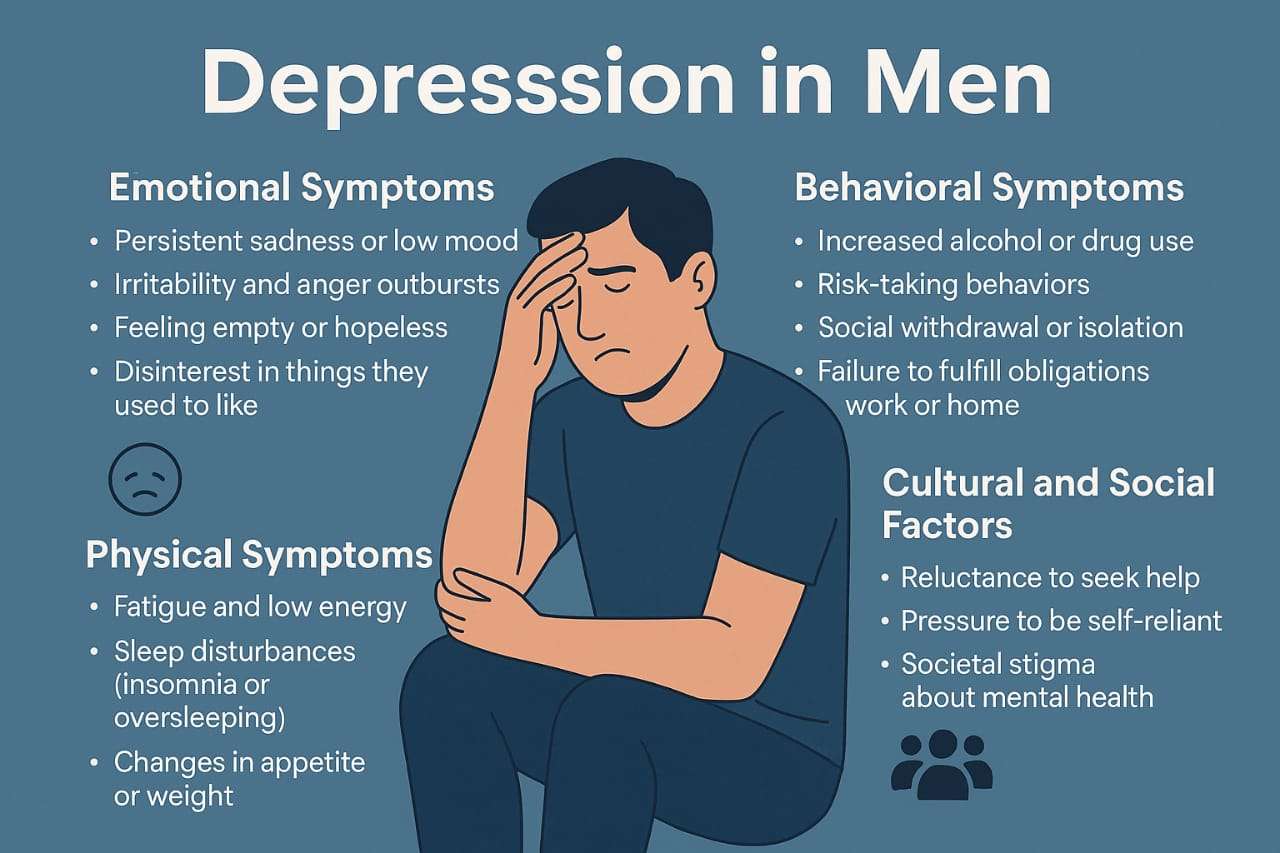
Depression is frequently misunderstood, especially in the case of men’s mental health. Men are frequently discouraged from displaying their vulnerabilities and as a result, may be suffering in silence with mental health conditions. It is important to recognize depression in men and treat it early. Unchecked, depression can take a toll on relationships, job performance and enjoyment of life. Men are frequently told to “tough it out,” which can compound the difficulty of even recognizing the issue. Early awareness and education are key to encouraging men not to be embarrassed about seeking help. Depression is NOT a weakness– it is an illness that needs to be addressed, met with compassion, and treated.
Signs and Symptoms of Depression in Males
Men’s depression can be difficult to spot because the traditional mental health symptoms aren’t always present in some men. Men may cover their stress with a veneer of stoicism, prompting overlooked struggles with mental health in men. Men who are depressed may also have problems with anger, anxiety and irritability that are less often understood as symptoms of depression. The signs are frequently subtle, and they can easily be dismissed as stress or odd personality traits. Early detection and intervention through awareness about these signs of depression in males is needed. Men who recognize those warning signs early are more likely to get treatment that works.
Men’s Mental Health: Challenging the Stereotypes
We teach men at a very young age that crying makes you weak. Terms such as “man up” and “boys don’t cry” can keep men from recognizing their own pain. Men’s mental health is often overlooked because men can also become embarrassed about asking for help due to societal norms, leading to prolonged pain. It is also important to educate society about emotional expressions. Because when we break stereotypes, lives are saved and well-being is improved. Men need to be taught that vulnerability is a normal and healthy part of life.
Depression Treatment for Men
A mix of interventions may be necessary to help men with depression. Mental health professionals advise a whole-person approach. Because everyone’s experience of depression is different, depression treatment must be flexible and individualized. The combination of therapy, drugs, and changes to lifestyle is best for long-term recovery success. Men should be reassured that to ask for help is not a failing, but evidence of taking predictive steps towards wellness.
Mental Health Support for Men
Mental health support for men is a key to managing depression. Even men need inspiration, compassion and connection. Depression is lonely and feels unsurmountable when you don’t have a support system. The writer also says that friends, family and professional groups can provide reassurance and help at trying times. It’s important to be able to confide in someone and not feel so alone in your journey toward recovery.
Breaking the Silence About Depression
A gatekeeper who opens the door to addressing depression not only destigmatizes but, in doing so, empowers help. Breaking the silence about depression helps men feel more comfortable seeking help when mental health is a topic of conversation. And when men speak up about their experiences, they normalize vulnerability and give other men permission to share. Campaigns in the media and the community are an effective method of turning public opinion around. Society is better off when men feel they can safely let a few of their emotions peek out without being judged.
Promoting Awareness Mental health awareness campaigns for men Workplace and school educational programmes Celebrities speaking about their struggles. Efforts to raise awareness can fight old myths. Statistics are no substitute to testimonies on the ground, and authentic life accounts speak louder than figures. School and the workplace can teach men early on healthy emotional habits. Education and awareness can save many from such a fate. Campaigns can also help persuade men to pay attention to their own symptoms, and take proactive steps.
Challenging Gender Norms
Men should be able to show vulnerability without fear of ridicule or attack. But the creation of safe spaces to talk can save lives. Liberalizing gender roles could challenge men to be more supportive and develop healthier coping strategies. Cultural revolution starts with the awareness that emotional transparency is not a sideshow and it is not an indication of weakness. Gradually, these initiatives can shift the culture and lessen the stigma of depression.
Employee Assistance Programs (EAPs)
EAPs offer confidential counseling and wellness resources for workers suffering from mental health issues. They advise on how to deal with stress, how to settle a dispute, and even what to do when battling personal demons. EAPs alleviate apprehension of being judged and offer convenient access to professional assistance. Educating the workforce to EAP can be very beneficial for workplace mental health.Flexible Work Policies
Open schedules, mental health days and supportive management leads to healthy work life. When your personal needs are respected, you feel like you matter. Balancing work with life decreases burnout and increases emotional resilience. Creating a culture in which mental health at work is open for discussion promotes a supportive environment.Depression and Relationships
Depression doesn't just affect the person who is suffering, but also their relationships. Understanding and empathy are critical. Mood swings, of course, or withdrawal can leave partners and family members in the dark. Education and open communication are key to keeping ties strong in this troubled time.Conclusion
Male depression is a very real problem that deserves recognition, empathy, and support. By identifying signs, seeking help and challenging social stigmas, there’s every chance men can start to win the battle of their mind. A focus on open communication and available resources allows for a safe space where men can get help. Mental health, like physical health, is important and asking for help is a sign of strength, not weakness. With knowledge, encouragement, and help a man can lead a rich, emotionally balanced life. Yes, remember you do not have to fight depression alone