

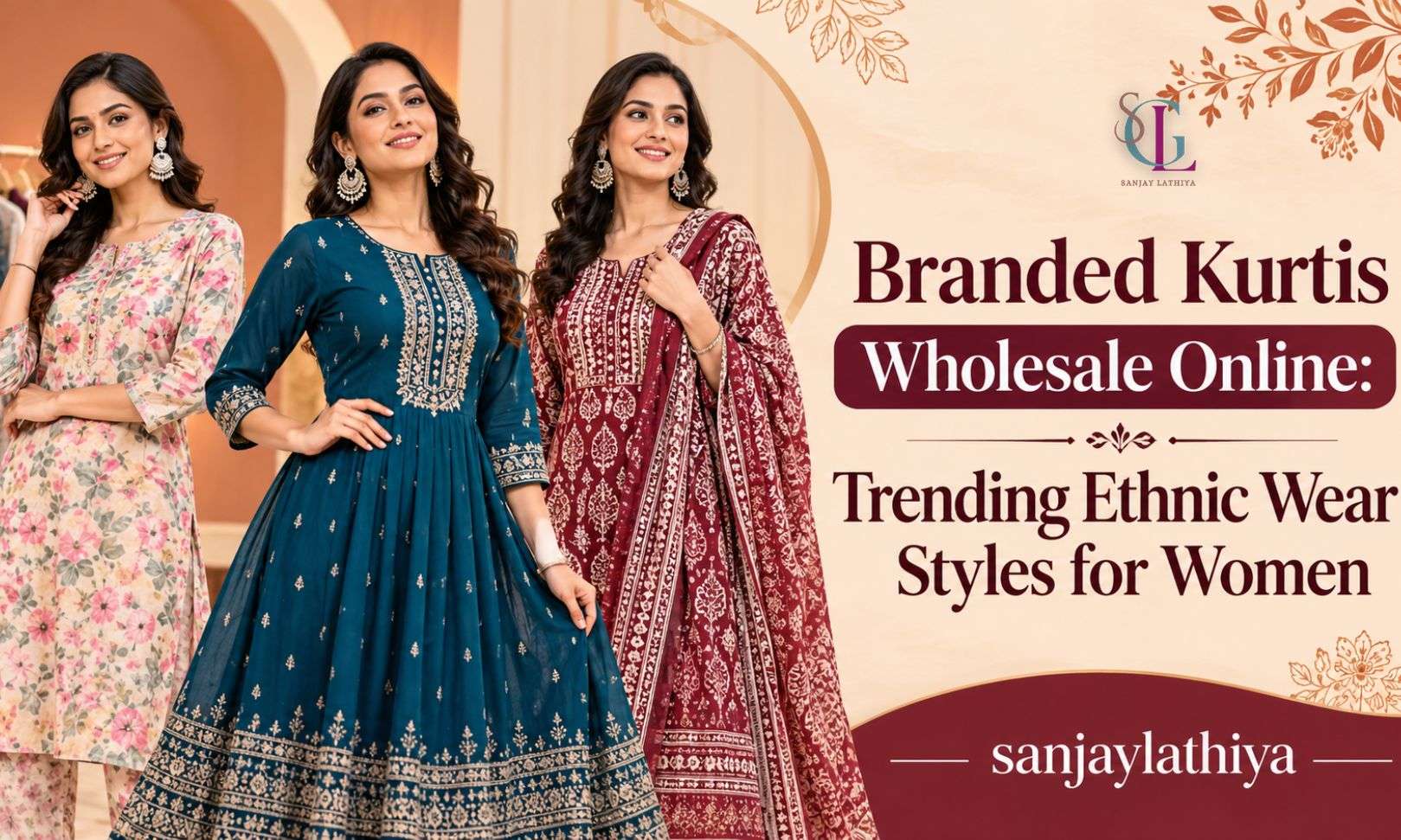
Branded Kurtis Wholesale Online: Trending Ethnic Wear Styles for Women
November 20, 2026
Indian ethnic fashion continues to offer exciting opportunities for clothing retailers, boutique owners, and fashion entrepreneurs. Kurtis are among the versatile wardrobe choices for women because they can be styled for everyday wear, office occasions, family gatherings, festivals, and celebrations. With changing fashion preferences, customers are looking for attractive designs, comfortable fabrics, beautiful prints, and affordable outfits.
For retailers, selecting the right wholesale collection is an important step towards building a successful clothing business. A well-planned collection can attract different customer groups, increase repeat purchases, and help boutiques maintain a fresh product range throughout the year.
Buying branded kurtis wholesale online can make product sourcing more convenient by allowing retailers to explore different styles, compare product specifications, and communicate with suppliers without visiting multiple markets. However, choosing a supplier should involve more than comparing prices. Fabric quality, stitching, size consistency, catalogue accuracy, delivery terms, and product authenticity also matter.
In this guide, we will explore trending ethnic wear styles, buying tips, catalogue selection, wholesale pricing factors, and practical ideas to help retailers make better purchasing decisions.
Why Are Kurtis a Popular Choice in the Indian Ethnic Wear Market?
Kurtis have become an important part of everyday Indian fashion because they combine traditional design elements with modern styling. Women can wear them with leggings, palazzos, trousers, jeans, skirts, or matching bottoms to create different looks.
Their versatility makes them suitable for several customer segments, including college students, working professionals, homemakers, and women looking for festive outfits.
For clothing retailers, this creates an opportunity to offer a diverse product collection instead of depending on a single fashion category.
Some reasons behind the popularity of kurtis include:
-
Versatile styling: Kurtis can be paired with different bottom wear and accessories.
-
Fabric variety: Cotton, rayon, viscose, georgette, and other fabrics offer options for different seasons and occasions.
-
Design flexibility: From simple straight kurtis to heavily embroidered Anarkali styles, there are choices for different preferences.
-
Everyday comfort: Lightweight fabrics and relaxed silhouettes are suitable for regular use.
-
Affordable fashion: Retailers can offer collections across different customer budgets.
These factors make ethnic wear an interesting category for retailers who want to develop a dependable women's clothing collection.
Trending Ethnic Wear Styles Retailers Should Consider in 2026
Fashion preferences change with seasons, occasions, and customer lifestyles. Retailers should therefore monitor popular designs while maintaining a balanced collection of timeless and contemporary styles.
Here are some ethnic wear styles worth considering for your next wholesale purchase.
1. Straight-Cut Kurtis
Straight-cut kurtis are popular for their clean appearance and easy styling. They can be worn at offices, colleges, casual outings, and everyday activities.
Retailers can explore solid colours, subtle prints, embroidered necklines, and side-slit designs. Neutral shades such as beige, black, navy blue, and white can complement more colourful collections.
2. Anarkali Kurtis
Anarkali kurtis feature a flared silhouette that creates an elegant traditional appearance. They are suitable for family functions, festive gatherings, and special occasions.
Printed Anarkali styles work well for casual occasions, while embroidered designs can appeal to customers looking for more decorative outfits.
3. A-Line Kurtis
A-line kurtis offer a slightly flared shape and are available in different lengths and patterns. They can be styled with leggings, straight pants, or palazzos.
Retailers can consider floral prints, geometric patterns, minimal embroidery, and contrast detailing when selecting these designs.
4. Printed Cotton Kurtis
Printed cotton kurtis are practical additions to everyday ethnic wear collections. Floral, block-inspired, abstract, and traditional motifs provide variety for customers.
When buying these products, retailers should examine fabric composition, colour consistency, print alignment, and stitching quality.
5. Kurti Sets with Matching Bottom Wear
Coordinated kurti sets offer customers a ready-to-style outfit. These collections may include a kurti with matching trousers, palazzos, or other bottom wear.
Retailers can maintain different sets for casual outings, office wear, festive occasions, and family gatherings.
6. Festive and Embroidered Kurtis
Embroidered kurtis featuring mirror work, thread work, lace details, or decorative necklines can add variety to festive collections.
Retailers should select designs according to their customers' budgets and local demand rather than purchasing only heavily embellished products.
How to Select the Right Wholesale Collection for Your Business
Selecting a wholesale collection requires a clear understanding of your customers and the type of clothing your business sells.
Before placing a bulk order, consider these important factors.
Understand your target audience: Identify whether your customers prefer daily wear, office wear, festive outfits, premium ethnic clothing, or budget-friendly fashion.
Select suitable fabrics: Choose fabrics according to the intended use, season, comfort requirements, and customer preferences.
Check stitching and finishing: Examine seams, buttons, zippers, necklines, sleeve finishing, and overall garment construction.
Review available sizes: A balanced size range can help you serve more customers. Check the supplier's actual size chart instead of assuming that every manufacturer follows identical measurements.
Compare wholesale costs: Consider the garment price, shipping, packaging, taxes where applicable, and other purchasing expenses before calculating your selling price.
Check supplier reliability: Look for clear communication, transparent product information, consistent quality, and reasonable order policies.
These steps can reduce purchasing mistakes and help retailers develop a collection that suits their business requirements.
Wholesale Kurtis for Resellers: How to Choose Profitable Collections
Choosing the right collection is essential for retailers who want to maintain customer interest and manage their investment carefully. Wholesale kurtis for resellers should offer a suitable combination of design variety, fabric quality, sizing options, and competitive purchasing costs.
Instead of purchasing a large quantity of one design immediately, consider testing different styles in smaller quantities when the supplier permits it.
Here are some useful buying strategies:
-
Start with customer favourites: Stock versatile straight kurtis, printed cotton designs, and simple everyday styles.
-
Include seasonal collections: Add festive, wedding-season, and occasion-based designs when customer demand increases.
-
Maintain different price categories: Offer budget-friendly, mid-range, and premium products to serve different buyers.
-
Check repeat availability: Ask whether popular designs can be restocked and whether the supplier maintains consistent specifications.
-
Evaluate product photographs: Compare catalogue images with actual samples before making a large purchase.
-
Calculate your margins: Include all additional expenses before deciding your final selling price.
Retailers should also maintain a record of which designs sell quickly, which sizes receive more enquiries, and which products generate repeat purchases.
This information can help you make more informed wholesale buying decisions over time.
Wholesale Kurti Catalogue: Designs Every Retailer Should Explore
A well-organised wholesale kurti catalogue helps retailers compare styles and plan their collections more efficiently. It should ideally include clear product photographs, fabric details, available sizes, colours, design information, and applicable wholesale rates.
When reviewing a catalogue, explore the following categories:
| Kurti category | Popular design options | Target customers |
|---|---|---|
| Cotton kurtis | Floral and printed | Everyday wear |
| Straight kurtis | Solid and minimal | Office and casual wear |
| Anarkali kurtis | Flared and embroidered | Festive customers |
| Rayon kurtis | Printed and stylish | Casual fashion |
| Kurti sets | Matching bottom wear | Ready-to-wear buyers |
| Designer kurtis | Decorative and premium | Occasion wear |
What Should a Good Wholesale Catalogue Include?
A professional catalogue should make product selection easier rather than leave buyers guessing about important details.
Check whether it provides:
-
Actual product photographs from multiple angles.
-
Fabric composition and garment specifications.
-
Available sizes and measurements.
-
Colour and design variations.
-
Minimum order quantity, if applicable.
-
Wholesale prices and applicable taxes.
-
Dispatch timelines and shipping information.
-
Return, exchange, and damaged-product policies.
Before ordering a large quantity, request samples if possible. This allows you to check whether the actual garment matches the product photographs and descriptions.
Wholesale Kurtis in Surat with Price: What Retailers Should Know
Surat is an important textile and garment trading centre in Gujarat. Retailers sourcing ethnic wear from this market can explore different product categories, suppliers, and price segments.
However, the cost of a kurti depends on several factors, including fabric, design complexity, stitching, embellishments, order quantity, and supplier pricing.
When searching for wholesale kurtis in Surat with price, retailers should compare products with similar specifications instead of choosing a supplier only because the listed price is lower.
Consider these pricing factors:
Fabric: Different cotton, rayon, viscose, and blended fabrics have different sourcing and manufacturing costs.
Design complexity: Simple printed kurtis may have different production costs from garments with embroidery, lace, mirror work, or other decorative details.
Order quantity: Some suppliers offer different rates depending on the quantity ordered. Always confirm the minimum order requirements.
Stitching and finishing: Better finishing, quality checks, and additional detailing can influence the final wholesale price.
Shipping and additional expenses: Include transportation, packaging, applicable taxes, and other charges when calculating your total cost.
How to Compare Wholesale Prices
Use a simple comparison method before placing an order.
| Comparison factor | What to check |
|---|---|
| Product price | Per-piece wholesale cost |
| Fabric | Composition and quality |
| Size range | Available measurements |
| MOQ | Minimum order quantity |
| Shipping | Delivery charges |
| Quality | Stitching and finishing |
| Return policy | Damaged or incorrect items |
For example, a supplier offering a lower per-piece rate may not necessarily provide the best overall value if shipping costs are higher or product quality is inconsistent.
Retailers should calculate the complete landed cost before deciding which supplier offers the most suitable deal.
Is 100 Rs Kurti Wholesale a Good Option for Retailers?
Budget-friendly clothing attracts customers who want affordable everyday fashion. This is why searches for 100 rs kurti wholesale may interest new resellers, small boutiques, and sellers working with limited purchasing budgets.
However, retailers should understand that a ₹100 wholesale offer does not automatically mean the garment will be suitable for every business.
The final price can depend on the fabric, construction, design, order quantity, available sizes, and seller's terms. Extremely low advertised prices may also refer to selected designs, clearance stock, limited quantities, or products with specific conditions.
Before purchasing, check the following:
-
Is ₹100 the actual per-piece price or a starting price?
-
Is there a minimum order quantity?
-
What is the fabric composition?
-
Are all sizes available at the advertised rate?
-
Are the product photographs accurate?
-
Are shipping charges included?
-
Is the stock ready for dispatch?
-
Can you inspect a sample before ordering?
Tips for Buying Budget Kurtis
New retailers can begin with a limited test order to understand customer response. Compare the actual product quality with its selling price and consider whether the garment meets your target customer's expectations.
A low purchase price can be useful, but the overall value of a product matters more than the advertised number alone.
How to Verify a Wholesale Supplier Before Ordering
Finding a supplier is only the beginning of a successful wholesale purchasing process. Retailers should also verify whether the supplier can provide consistent products and reliable service.
Use this checklist before confirming an order:
1. Check business details: Ask for the supplier's business name, contact information, address, and applicable registration details.
2. Request product samples: A sample helps you inspect fabric, stitching, sizing, and finishing.
3. Confirm stock availability: Ask whether the displayed designs are ready stock or made-to-order products.
4. Understand payment terms: Confirm the payment method, advance amount, balance payment, and invoice details.
5. Ask about delivery: Get an estimated dispatch date, shipping method, and delivery terms.
6. Read the return policy: Clarify how damaged, defective, or incorrect products are handled.
7. Verify brand authenticity: If a supplier advertises branded merchandise, ask for appropriate invoices and proof of authorised sourcing. Avoid products that misuse another company's trademark.
For buyers interested in genuine handwoven products, the Government of India's India Handloom Brand provides information about quality and authenticity initiatives. The Handloom Mark is another useful resource for understanding the identification of authentic handwoven products.
These initiatives relate to handloom authenticity and should not be confused with general commercial clothing brands.
How Retailers Can Increase Sales with the Right Ethnic Wear Collection
Buying the right products is important, but presenting them effectively also influences customer decisions.
Retailers can use these practical ideas to improve their product presentation and customer experience.
Create category-wise collections: Organise kurtis into daily wear, office wear, festive wear, cotton collections, and premium styles.
Use clear product photographs: Show the front, back, fabric texture, neckline, and important design details.
Provide accurate descriptions: Mention the fabric, available sizes, colour options, fit, and care instructions.
Offer styling suggestions: Show how customers can pair kurtis with trousers, palazzos, leggings, dupattas, and accessories.
Promote new arrivals: Use social media, WhatsApp Business, and your online store to share new collections.
Monitor customer feedback: Track which designs customers prefer and use that information for future purchases.
Maintain stock records: Keep track of popular designs, sizes, and inventory levels to avoid unnecessary purchasing.
These strategies can help retailers create a more organised clothing business and build customer confidence.
Why Buying Wholesale Kurtis Online Can Be Convenient
Online sourcing has changed how retailers discover and compare clothing collections. Rather than travelling to several markets, buyers can browse product photographs, review available specifications, and contact suppliers digitally.
For retailers exploring branded kurtis wholesale online, this approach can offer several practical advantages.
-
Convenient product discovery: Explore different styles and categories from one location.
-
Better comparison: Compare fabric details, designs, sizes, and prices between suppliers.
-
Time-saving: Shortlist products without visiting multiple physical markets.
-
Easier communication: Ask about minimum orders, stock availability, and dispatch schedules.
-
Collection planning: Review different categories before deciding what to purchase.
Still, online purchasing requires careful verification. Retailers should confirm the supplier's identity, product details, payment terms, and delivery policy before placing orders.
Conclusion
The Indian ethnic wear market offers many opportunities for retailers who understand customer preferences and select their products carefully. From straight-cut and Anarkali kurtis to printed cotton designs, coordinated sets, and festive collections, a balanced range can help boutiques serve different customer requirements.
Successful wholesale sourcing is not simply about finding the lowest price. It involves evaluating fabric quality, stitching, product photographs, sizing, supplier reliability, and total purchasing expenses.
If you are planning to expand your ethnic wear business, explore branded kurtis wholesale online with a focus on product quality, design variety, and transparent supplier terms. Start by identifying your target customers, comparing available collections, and testing products before making larger purchases.
A carefully selected collection can help retailers build customer trust, manage inventory, and create a stronger presence in the competitive women's ethnic wear market.